• Home
  • About Us
  • Podcast
  • Strategy Guide Wit
  • Contact

Strategy Guide Reviews

A Strategy Guide for your Strategy Guides

  • Reviews
    • Strategy Guide Reviews
    • Video Game Reviews
    • Mini-Reviews
  • Features
    • Interviews
  • News
  • Unboxing Strategy Guides
  • Columns
    • Gaming Diary
    • Corner of Randomness
  • Videos

Game I Most Regret Not Finishing

December 22, 2009 By Keri Honea 1 Comment

As I write this, I’m downloading Final Fantasy VIII onto my PSPgo, which will most likely become yet another Final Fantasy game I will not finish. I always mean to finish them. I get really far in them and then I hit the level grinding, sidequest portions, get bored and quit. Now that I think about it, I have no idea how I finished Lost Odyssey.

But anyway, this got me to thinking about the one game that I most regret not finishing, which is a PC game, King’s Quest VI. This game came with my brand new computer that I purchased with high school graduation money to take with me to college. We had a computer at this time, but it was ungodly old and pathetic, so the capabilities on my new Compaq blew me away. It had 400 MB of hard drive space AND had a CD-ROM. I was in the big leagues.

I had seen the original King’s Quest on a friend’s computer years earlier, but I had no idea that the game was a franchise until I picked up my new computer. I absolutely ate up that game. I even got my dorm roommate so hooked on it that she bought her own copy. We would race against one another (in all our spare time) to try to get further than the other, but we would still offer tips on how to get past certain areas. Please bear in mind that this was before everyone had Internet access (no one had access in the dorms) and the Internet that was out there was not as informative as it is today.

I got made fun of for being a gamer by my boyfriend and his friends, so the game got put away and I never finished it. A few years later, I started to date a guy who liked PC games a little, so I introduced the game to him. I started from scratch and got all the way to the part where I’m supposed to figure out how to get to the Underworld. I never, ever figured that out. Again, there was no GameFAQs back then. My boyfriend asked if he could borrow the game and try on his own, and I let him. Then we had a messy breakup, and I never got my game back. When I asked about it, he said he gave it back to me and that was that.

So I never got to reunite Alexander with the Princess of the Green Isles. I know I was so close as well, and that burns me up the most. I had completely forgotten about this game until recently, GameInformer listed their top 200 videogames ever, and King’s Quest VI made the list. Seeing it on the magazine page brought back my sad feelings of loss.

I need to somehow find this game. I looked on Amazon, but the King’s Quest Collection for Windows XP does not include King’s Quest VI. I suppose my next step is to comb through emulators. No matter what I have to do, this is one game I must find and finish.
Filed Under: This Has Nothing to Do with Strategy Guides!

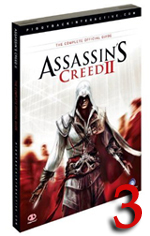
Assassin’s Creed 2 Strategy Guide review

December 21, 2009 By Keri Honea Leave a Comment

Strategy Guide Review Policy:

My goal for these strategy guide reviews is not to discuss whether one needs the guide to complete the game. Every gamer has different strengths and skills, and one may need every bit of a guide, another may need to look up information for quick assistance once, and another may laugh at the idea of ever using a guide, even the online freebies. My goal is to determine whether the guide is 1) helpful in the first place, 2) does it encompass gamers who need hand-holding as well as those who need a quick reference and 3) how much information does it really have.

Review:

This is my first time to deal with a guide from Piggyback Interactive, and I really was not that impressed. While I am willing to admit that this game would definitely not be the easiest to write a guide for, it still doesn’t change the fact that I found most of the guide’s walkthroughs to be unusable.

The guide’s biggest flaw is its design. It’s very artistic and very appealing to the eyes, but while this is very conducive for an artbook, it most definitely is not for a strategy guide. For example, the guide only offers maps of the cities Ezio visited, but provides no maps for any of the walkthroughs, which in many instances, would have been more than helpful and/or welcome. Instead, the guide heavily relies on screenshots to show the player where they should be heading or what they should be looking for. These are occasionally helpful, like in the Assassin’s Tombs, but during missions, they are mostly extremely frustrating and oftentimes provide no assistance.

To make matters worse, the screenshots provided are extremely small, which do not help in deciphering the locations the writers refer to. The screenshots are so small in order to accommodate the other artwork on the pages that had nothing to do with offering a strategy. The artwork should have been replaced with the screenshots themselves, and then the tiny screenshots could have been replaced with maps that detail at least a red path of where Ezio travels in this particular memory. Some of the artwork could still have been used to keep the pages esthetically pleasing, but most of it should have gone in the back as a bonus artbook section.

The guide’s final problem in design lies in its table of contents. The table of contents in the front lists only five sections, and none of these sections are detailed as to what they contain. If you want to find out, you have to flip through the book and use the vertical “tabs” on the outside edge of the pages to find what you are looking for. Again, while this is artistic, it does not help players quickly find what they are looking for. If they want to look up the Achievements or Trophies they can obtain, users will first have to guess if these are listed in the Secrets section or in the Reference section, and then when they get to either section, they will still have to flip through it to find where the Achievements are. As a result, no quick look-up is as quick as it should be.

Fortunately, the writing in the walkthroughs for the most part is simple enough to understand and follow (it was only in a few spots that I had no idea–and still don’t know–what they were talking about), so I could piece together what they recommended Ezio do. Note the words, piece together. While I could usually understand what the writers were trying to convey, the words and directions were often quite vague, even in the sections where the writers provide additional and a deeper strategy, forcing me to rely on myself and what I could see anyway. That’s kind of not the point of a guide. Once again, maps for these missions would have cleared this up.

Now where the guide excels is in the Bonus material. It provides additional maps of each city that detail all the feathers and glyphs and a tear-out giant map that has all the cities with their feathers, glyphs, codex pages, and viewpoints clearly labeled. When I went glyph hunting at one point in the game, I heavily relied on these maps, and they were wonderful. Not only do they label where each feather and glyph were, but they provide screenshots of their locations. As anyone who has hunted feathers and glyphs knows, these are in some funky spots.

The guide also (fortunately for me) has in-depth solutions for each TRUTH puzzle that accompanies the glyphs. I only have one complaint about these solutions, and I fully admit that I’m being nit-picky with it. I really wish that the solutions included explanations for the passcode puzzles. I was able to understand the first couple of these, but after a certain point, I had no idea how to solve them or how these solutions made sense. Just a little nudge in why the passcode is what it is would have been nice for my inquisitive mind.

The biggest bonus that the guide offers (aside from all the pretty, pretty artwork and character designs) is the summary and analysis of the first game as well as the second. It summarizes the plot points of both games, explains each glyph left behind by Subject 16 in the first game, summarizes the second game, explains the cut scenes (such as the big cut scene with Altair and Maria in the middle of AC2), explains the TRUTH, and contains a FAQ session regarding the rather unusual and puzzling ending. While I admit that these are the writers’ own personal thoughts, most likely fueled by hints from Ubisoft, it still helped me wrap my mind around the ending sequences and what is in store for the future of the series.

The secrets that the guide unveils definitely saves it from being completely useless. It’s actually quite unfortunate that the design of the guide detracts from its usefulness so completely. The writing, while rather vague, is mostly fine, but if it only had clearer and larger screenshots as well as individual maps for the walkthroughs, it would not have been nearly as confusing. Due to this weak combination, I ended up not really using the walkthrough sections at all unless I really got lost and mostly used the guide for finding and deciphering glyphs.

Thus, Assassin’s Creed 2: The Complete Official Guide receives a 3/5.

Filed Under: Strategy Guide Reviews

Assassin’s Creed 2 complete!

December 17, 2009 By Keri Honea 1 Comment

Yesterday afternoon I started on the last three sequences with full plans to stop before the final sequence so I could get dinner, spend time with family, work, and then finish the game when Gabe went to bed. The next thing I knew, I activated the final memory sequence and there were no individual memories for me to use to take a break. So I texted Shawn, asked him to pick up dinner instead, and I finished the entire game before he came home with Gabe and food. I am so glad I did, because I’m not sure how well I could have focused on work knowing that I just had one more assassination to go.

What everyone has been saying about the game is oh-so true. Just when you think you know what is going on, the final cut scene in Italy happens and you realize that you have no clue what is going on. It was so well done, though, and it’s really a great sci-fi story. I’m so intrigued now that I want to play the first game–even though everyone tells me not to bother–and I want the handheld games. If nothing else, I want to understand a little more about Absterrgo and what that one cut scene between Altair and Maria in the middle of AC2 meant. I think it was supposed to mean more to me than it did. Which was nothing.

The video from the glyphs meant a little more after I completed the game, although now I’m thinking maybe I should have unlocked that after I finished. Maybe I would have been more blown away by it. I would watch it again, but the game has been packed up and sent to a friend to borrow.

I’ll be taking a break for the next couple of days from gaming so I can focus on all of my notes and write the guide review. According to IGNGuides’ Twitter account, they finished writing their guide last week, so as soon as I finish this guide review, I will move on to IGN’s guide and look for other professional guides.

Then this weekend, I pick back up Uncharted 2. If it’s really as short as everyone says it is, I could possibly have that game finished by the end of year, which is really fitting since it keeps winning Game of the Year awards all over the place.

Filed Under: This Has Nothing to Do with Strategy Guides!

Strategy Guide Writer Interview – Stephen Stratton

December 15, 2009 By Keri Honea Leave a Comment

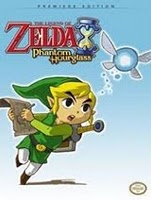
Phantom Hourglass Strategy Guide I am very pleased to announce that I have had the pleasure of interviewing strategy guide writer Stephen Stratton. I have wanted to interview him since my review of the Phantom Hourglass guide, because not only did I find the guide to be most helpful, but also because his writing made me chuckle, particularly when Link found new weapons. He has been in the industry for quite some time, and anyone who is into Zelda *coughcoughlikemecoughcough* will recognize his name on most of the Zelda guides.

But without further ado, the interview with Stephen Stratton.


1. Which strategy guide company do you write for, or are you a freelancer?

I’m a contracted author for Prima Games, and I’ve written guides for Prima for the past 8 years.

2. How did you get into guide writing?

My brother Bryan and I both got in the same way: through a mutual friend and longtime Prima author named David Hodgson, whom we both worked with at a now-defunct videogame magazine/website called Incite.com. About a year after Incite went under, we started working for Prima, having been recommended to them by David. He’s a helluva guy. 🙂

3. What elements do you like to personally ensure go into a guide?

Every guide I write begins with a helpful introductory chapter that sets the tone for the guide and explains how to use the book. Next comes a thorough training chapter that touches on all the key elements of gameplay, teaching the nuances of the game’s mechanics and providing a wide range of tips on how to play with skill. The walkthrough usually comes next, which needs to be well organized and thorough, providing fast answers without getting bogged down in too much narrative (something I’ve had to work on). I like to conclude my guides with several pages of quick-reference checklists at the back for those who just like fast answers. In short, I try to make each guide as versatile and informative as possible, so that the reader can quickly find the information they seek no matter how they choose to reference it.

4. What do you think separates a great guide from a horrible one?

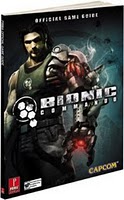
Bionic Commando Strategy GuideGreat guides are very difficult to produce these days, requiring incredible effort from all parties involved. This includes the author(s), the designer(s), the project manager(s), and even the game’s developers, whom we guide makers must often rely upon to get the job done by deadline. But no matter how much or how little support the author gets, there is no excuse for writing a horrible guide – that’s always avoidable. No matter how challenging a project might be, a solid and valuable guide can always be produced if the author takes the time and puts in the effort required. Awful guides that offer little helpful information or have no clear organization to them are the either result of an amateur, or pure laziness.

5. When you first start on a guide project, what are some prewriting steps you like to take in addition to playing the game?

The moment I’m told what my next project will be, I immediately begin researching the game online, then begin outlining what my guide needs to contain, and how to best present it all. I brainstorm as much as possible before the game arrives, because deadlines are often very strict. While playing the game, I’m constantly taking notes in Excel format, jotting down each character, enemy, skill, spell, item, enemy, collectible, and so on as I encounter them. I’ve found that taking copious notes slows down the gameplay phase of the project, but it helps me quickly find information during the writing phase, which is invaluable to me in keeping a rhythm going. Also, I usually end up turning these tables of notes into the checklists that appear at the back of the book. So it’s almost like I’m using the checklists myself while writing the guide.

6. Can you take us through the general process of what it takes to develop and publish a guide?

In short: lots of work! From an author’s perspective, you have to play the game, master it fully, outline a cohesive guide and then write, write, write. Time is always short, so it’s the author’s job to keep everybody else working – the faster I turn in text, the faster it can be copyedited, laid out, and then sent off to the game’s publisher for approval. Corrections invariably come back to us authors, which we implement before the guide can be sent off to print. So it’s sort of like an assembly line that begins and ends with the author.

7. How much time in advance do you prefer to have a game before the final guide deadline? How much time do you actually receive?

Spirit Tracks Strategy GuideIt depends on the size of the game and the support provided, along with the state of the game in the months leading up to its release. A short, straightforward action game with no multiplayer aspect can be handled comfortably in about 2-3 weeks from my end, assuming the game is near final when I get it. For a larger game, like an RPG or sandbox action/adventure, I prefer at least 4-6 weeks. More time to work on a book is always welcome, as it allows me to go into greater detail in the guide. But the reality of deadlines is that they’re often very restrictive. For example, alongside fellow Prima author David Knight, I wrote my most recent Zelda guide (Spirit Tracks) in just 3 weeks, from my first day with the game to my last day of writing!


8. What is your biggest pet peeve when writing a guide?

Corrections, for sure. There’s nothing worse than having a boatload of nitpicky corrections come back at you at the tail end of an exhausting project! It’s something you learn to live with, though.

9. What do you like most about guide writing?

There’s so much to like about this job, but if I had to pick the single best thing, I’d say it’s the awesome people I get to meet and interact with. This is a very unusual job in a very unique industry, so I end up meeting all sorts of interesting and creative folks. I’ve traveled to Nintendo of America countless times, but I always get a chill walking into that place for the first time on a new project. Other perks include getting to play games before they come out, working from home most of the time, and seeing my guides in stores. That’s just too cool for words!

10. Has guide writing affected how you view video games? In what way?

Not really, I still love games, and I’m certain that I always will. But it has affected how I play them. After years of writing guides, it’s become something that I can’t just turn off. I catch myself searching every little nook and cranny of every level to find all the hidden goodies. Then I slap myself and start actually playing the game for fun again!

11. What is your favorite genre of game to play and what is your favorite to write about?

I can get into any type of game as long as it’s well made and inventive. But in my free time, I tend to seek out unusual games, probably because most games that I write about are pretty mainstream. My favorite guides to write are RPGs, strategy games, and action/advetures, because to me, these genres seem to warrant guides a bit more than others.

12. You have an incredibly extensive strategy guide bibliography. Of all the guides you have written, which one is your favorite?

It’s a five-way tie between all five of the Zelda books I’ve worked on. Zelda has always been one of my favorite franchises and every one of those projects was a labor of love.


13. Now which one do you think is the best?

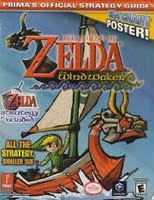
Wind Waker Strategy GuideChaotic: The Official Players’ Guide. Just kidding! I think that my best guide, in terms of how well the whole thing came together, would have to be The Legend of Zelda: The Wind Waker. I’m pretty sure that I invented the whole idea of a “tour” chapter in that guide, which effectively allows you to reference the book in a whole different way outside of the step-by-step walkthrough. If that idea had appeared in previous guides by other authors, I’d never seen it before! Add to that a beautiful layout by Jody Seltzer, guide designer extraordinaire, and you have my best guide to date.

14. Do you have any advice for writers/gamers who would like to break into guide writing?

I sort of fell into this gig, so I’m not really sure how one goes about getting a job like this without knowing somebody in the industry. My brother earned a degree in English, which eventually led to his landing a job as a writer at Incite.com, which in turn became my way into the biz. Did I mention how much I like my brother? 🙂

I can say that this is an extremely challenging job, particularly if you’re not skilled at writing or lack the self-discipline it takes to sit yourself down and work steadily for 12 hours a day, week after week. The job actually breaks down to about 25% playing games and 75% writing, coordinating, correcting, and persevering. It took me a long time to feel confident in my writing, having never gone to college for that purpose. So it’s a tough job for the average gamer to master, but it can be incredibly rewarding if you have a passion for it.


15. Now for the hard question. What is your favorite video game of all time?

That’s a tough one, all right! There are just so many ways to judge games, and I’ve enjoyed so many over the years. But the game that first had the greatest impact on me was the original Legend of Zelda, as it opened my eyes to the fact that games really could take you to a world of pure creativity, discovery, and adventure, and do so in a way unlike any other medium in the world.

16. Do you have anything currently in the works that you can discuss?

I’m actually on vacation right now, having satisfied my contractual commitment for the year with Spirit Tracks. I’m not sure what my next book will be in early 2010, but I’m already looking forward to it. I hope it’s met with rave reviews! 🙂

Oh yeah, no pressure on me, right? Hee. Thanks so much for your time, Stephen! I look forward to all of your future projects, whether they involve Zelda or not.

Filed Under: Strategy Guide Interviews

My Personal Thoughts on Assassin’s Creed 2

December 12, 2009 By Keri Honea Leave a Comment

I’m still plugging away with AC2, and I think–if I keep this same schedule–I can beat this game in the next week. I only have about five more sequences to go, so I have hopes.

But aside from that, quite a few of my friends have asked me what I think of the game and if I would recommend it to them. I’ve had a hard time with both.

Am I enjoying the game? Yes. Do I like the gameplay, um, well, not really. I really liked it at first, but it’s starting to get repetitive, which is what I heard burned out a lot of people from the first game. When the game first started, I was eager to assassinate certain people because of what they did to Ezio’s family. But now that they are all dead, I’m not finding the same motivation in killing the rest of the Templars. Sure, they’re doing some bad things, and I should try to stop them, but it doesn’t have the same emotional meaning as it did in the beginning. So now I’m going through the motions of each memory, and as a result, it all feels the same. Track down this person, and either kill him or follow him to his clandestine meeting and then kill him. Today when I played, I did nothing but hunt down glyphs for the Truth just to do something different.

It’s the setting of the game that I absolutely love. I love running through Renaissance Italy and seeing the country again, even though it’s through the eyes of a videogame. The cities are so well rendered that I knew where a certain short cut was around the Santa Croce because I once walked down that alley and I recognized the layout. I have never experienced anything like that with a game, and I doubt I’ll ever be able to experience it again. This part for me is what makes it a great game.

I admit that I snicker a little bit every time I pull off a sneaky kill, even if it’s just pulling a guard from the rooftop or performing an air assassination. So my favorite thing to do is to rob banks for the Codex pages. I like planning out the best spot to kill the most guards at once so I don’t have to do hand-to-hand combat for too long. That part of the game really, really sucks.

I also really like the fact that the game pushes me to do things game-wise that I normally do not, such as platforming and being sneaky. I’m more of a hack-n-slasher, one that likes to just yell “RARRRRRR!” as I enter a room with my sword swinging wildly, so being sneaky is typically not my forte. Every time I have to sneak around and not be seen in this game (which is quite a bit, since I’m an assassin), my heart races and I can feel my hands sweat. So every time I pull off a sneak attack successfully, you can imagine my excitement.

The same thing happens when I have to do a lot of platforming, like in the Assassin’s Tombs. Actually, I have a love/hate relationship with these areas. I obtain a strong feeling of satisfaction when I complete the Tomb sequences and finally find the damn seal, but I cuss quite a bit during the process. And I call Ezio stupid a lot as well, particularly when he jumps somewhere I did not want him to go. Like down.

But do I recommend the game? I don’t know. The combat is quirky, the missions are repetitive, and there are only two really innovative and distinct aspects of the game–the glyphs and the Tombs–and one annoys the hell out of me. I can honestly say, despite all the positive attributes I’ve already listed, that I would not be finishing this game if I didn’t like its setting so much. The only reason why I wanted the game was because of its setting and I heard good things about the first AC, but everything else about it is just “meh” to me. So I suppose I would recommend it if you like platforming or stealthy games, or liked the first one (but then you probably already have this one), but outside of that, I really can’t recommend it. As far as action games go, I’d rather recommend inFamous or Uncharted 2.

Filed Under: Uncategorized

  • « Previous Page
  • 1
  • …
  • 169
  • 170
  • 171
  • 172
  • 173
  • …
  • 183
  • Next Page »

Follow us!

Subscribe!

Upcoming Strategy Guides

 Nothing here. Come back later. 😢

Latest Strategy Guide Reviews

The Walkthrough by Doug Walsh Review

Red Dead Redemption 2 Strategy Guide Review

Mega Man 11 Strategy Guide Review

God of War Strategy Guide Review

Far Cry 5 Strategy Guide Review

Friends of SGR

  • BradyGames
  • Dan Birlew – Guide Writer
  • Doug Walsh – Guide Writer
  • Future Press
  • Game Enthus
  • GameWires.com
  • Piggyback
  • Press the Buttons
  • Prima Games
  • Racing Games

Top Posts & Pages

  • Unboxing the Breath of the Wild Deluxe Edition Strategy Guide (Video)
  • Unboxing The Legend of Zelda: Breath of the Wild Collector's Edition Strategy Guide (Video)
  • MLB The Show 18 Review
  • Initial Impressions of Final Fantasy XIII
  • Final Fantasy III Strategy Guides: FuturePress v. BradyGames

Copyright © 2026 · Web crafted by Warkhammer


Loading Comments...