• Home
  • About Us
  • Podcast
  • Strategy Guide Wit
  • Contact

Strategy Guide Reviews

A Strategy Guide for your Strategy Guides

  • Reviews
    • Strategy Guide Reviews
    • Video Game Reviews
    • Mini-Reviews
  • Features
    • Interviews
  • News
  • Unboxing Strategy Guides
  • Columns
    • Gaming Diary
    • Corner of Randomness
  • Videos

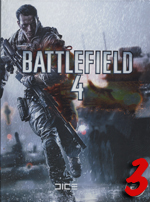
Battlefield 4 Strategy Guide Review

December 5, 2013 By Blake Grundman Leave a Comment

Battlefield 4 Strategy Guide reviewIt is not very often that a guide comes around and knocks the traditional formula on its ass. Then entered the Prima Games’ Battlefield 4 Strategy Guide at stage right, which gleefully overturned the tables that previously held all of your expectations about what a game guide should be. Gone are the days of a laborious single player campaign walkthrough. It isn’t like the developer spent years developing that as an integral component of a cohesive experience, right? After all, who needs that useless garbage when all people really care about in a Battlefield title is the multiplayer experience. Will this new approach bode well for the Battlefield 4 guide, or does the shift in focus take away from what strategy guides are all about?

If there were ever a guide that could be labeled as a grade school textbook, Battlefield 4’s would meet the description to a T. Sure the subject matter might be a bit more on the saucy side, but cover-to-cover, it is the comprehensive end all be all, for what is widely considered to be the most complex and diverse multiplayer shooter on the planet. But every good story has a beginning, and the writers saw fit to properly acknowledge that with an introduction section that covers the legacy of the Battlefield brand. This is also complimented by behind the scenes discussions with the key team members that have been a part of the series since the beginning. Though it seems almost too brief, it is fantastic to get insights into the original goals of the developers, the brand’s evolution and where it is going in the future.

DICE’s tight ties to the book are further evidenced in the “Road to Battlefield 4” section that follows. Each major mechanic section is actually penned by a key member of the game’s design team, including multiplayer lead Thomas Andersson. Each developer spends a significant page count emphasizing what were key modification and/or additions in the most recent outing, such as adjustments to class structures, the new “Levolution” system, “Commander Mode”, vehicles and much more. Having the individuals who essentially owned specific features of the final product break down what makes this newest version so special does wonders for imbuing even the most trivial of components with the passion of those who made it possible. This is a fantastic way to help re-introduce traditional Battlefield players to the new mechanics and inform newcomers what to expect when they first venture into the immense and intense world of online multiplayer.

Next up is the meat of the actual multiplayer guide, but first it is worth mentioning the interesting approach Prima took to the drafting process. Veteran guide writer David Knight has teamed up with four of the best Battlefield players in the world to co-author this massive tome. Though it is a little unclear as to who is writing each individual general commentary segment, there are numerous specific call-out portions that are dedicated to a specific member of the team as a “pro-tip.” These are actually scattered throughout the guide and provide insight into many different strategic elements that take place over the course of a match, but more on that later.

Leading things off is a thirty page “Battlefield Bootcamp” that is dedicated to breaking down all of the key aspect of the game, its mechanics, modes, interactive elements that extend beyond the warzone itself, and most importantly, standard multiplayer tactics. It is imperative that players read this area, especially virgins to the series. Even then, noobs will probably still be eaten alive, but at least they will be able to speak the same language with their online brothers in arms. There is nothing worse than being saddled with a clueless chunk of cannon fodder. This will help prevent you from being that lame duck.

What follows the “101 class” in the ways of online combat are sixty eight pages of infantry information. Some of the key topics touched upon are proper class selections, weapon and perk loadouts, and the various unlock progressions for each unit type. Additionally, there are also several more “pro-tips” for each class, from each of the contributors. It is very interesting to see four varying approaches to using the same variety of soldier. If nothing else, it further demonstrates how versatile and complex the online ecosystem can be in the world of Battlefield. While this alone would be substantial enough to stand on its own, the majority of this section is actually reserved for detailing the title’s countless weapons and their respective modifications. Though it is hard to say if the information in this section is actuate, over a month after its release, it is still at least a valuable reference point for those needing to compare the pros and cons of different firearms.

And what would a Battlefield game be without vehicles? The franchise’s multiplayer suite is probably best known for its extensive use of these mobile weapons of mass disruption. Just like every other chapter, each grouping of motorized mayhem is laid out efficiently, including a list of the equippable upgrades available for purchase and advanced tactics that will utilize them the most effectively. Most of the tactics call-outs are focused towards the seasoned veteran, but even rookies see their benefits in time.

Once this has all been combed through, then comes the most impressive and expansive portion of the entire book: multiplayer map analysis. To put it into perspective, the smallest map commentary still boasts an extremely healthy twenty four pages. Considering that there are ten individual maps covered in the book, this would help explain the collection’s impressive two hundred and seventy pages. All of the stages’ are initially led off with general impressions from the writing staff and explanations of its marque levolution(s). These are then followed with dissections of each multiplayer mode, all the way down to recommended squad compositions throughout a battle. The more objective commentary is also buffered with additional “pro-tips,” from the resident expert writers. While the information contained within is fantastically detailed and almost overly explicit, it did feel like there were many pieces of art that, though beautiful, could probably be deemed superfluous. This sometimes led to pages feeling more claustrophobic or visually distracting than necessary. Everybody loves a good side profile shot of a tank or downed helicopter, but when the game itself features a plethora of them already, it probably isn’t necessary to include these unless critical to the strategy being discussed in the text.

Anchoring this massive manuscript are extremely brief campaign and achievement/collectables section. How brief, you ask? Why, a mere eleven pages. Yes, it is understandable that multiplayer makes up a vast majority of the guide, but why even bother to include even a reference to the single player, when it is going to be glossed over so egregiously. There are any number of explanations as to why this might have occurred, but it doesn’t change the fact that the main character’s name is only mentioned once and all but the introduction page consists of a continuous wall of spreadsheets. Unless Prima has plans of selling a single player guide separately, to call this effort disappointing would be like calling Thomas Edison a tinkerer.

One last piece of the puzzle is the prominently promoted digital/mobile component. Sadly, this two ends up lacking the original content necessary to justify its existence, aside from potentially being updated should new balance changes be introduced into the game. It has yet to be shown if it will be further augmented when new DLC is released, but this might be a step in the right direction. Pouring additional gas on the flame, the single player is still an afterthought. Sure, at least there is now a video playthrough of each stage to watch, but there is no direction, voice over commentary or so much as sliver of additional information, aside from the video timestamp where collectables are uncovered and a list of weapons available in each stage.

For fans that are exclusively consumers of Battlefield 4’s online multiplayer, Prima Games’ official guide will prove to be a wealth of information, the likes of which have rarely existed outside of dedicated fan sites and enthusiast forums. However, those that are focused on a single player walkthrough will be much better served turning to specialty sites online. It is hard to say whether this is a step backwards or simply sidestepping the bigger issue of whether or not print guides for a constantly evolving online experience are even valid in the internet age. Regardless of this author’s opinions on the matter, it still doesn’t excuse neglecting to cover half of such a prominent title, without communicating that to the reader before purchase. Misleading the audience is never a good foot to start out on, so buyer beware.

SGR Rating: 3/5

Author: David Knight, Michael Cavanaugh, Michael Chaves, Marcus Lovejoy, and David Walsh
Publisher: Prima Games
Editions available: Paperback and Collector’s Edition
Acquired via Publisher
Filed Under: Strategy Guide Reviews

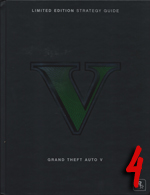
Grand Theft Auto V Strategy Guide Review

October 29, 2013 By Blake Grundman 2 Comments

Grand Theft Auto V strategy guide reviewOpen world games have to be a nightmare for any strategy guide writer to even approach. The depth and breadth of these titles are daunting enough to the player, so lord help the poor souls that have to break down, analyze, and then write about each and every detail of the title’s universe. It probably goes without saying that this task that is certainly not for the faint of heart. With all of that in mind, recently Rockstar Games released the most recent installment in the Grand Theft Auto franchise and BradyGames won the lottery of being able to author and publish the official Grand Theft Auto V strategy guide. Are they up to the task of tackling the massive world of Los Santos or will this tome fall victim to the very variety that has been a staple of the series?

As alluded to previously, GTA V is gob-smackingly gigantic. There are so many experiences to take part in that it would seem nigh impossible to capture it all in a single, concise document. Like most guides of this type, it is best to start at the beginning, detailing the main playable characters. Instead of focusing on any sort of backstory, this section is instead focused on the raw stats of each person, along with their strengths and weaknesses. This is sadly devoid of anything to help place them in context to the rest of the game itself, but that’s why you play the campaign, right? Well that and causing mass mayhem, but more on that later. Following this less than personable introduction to the title, is a laundry list of weapons at the player’s disposal and their associated stats and upgrade costs.

A nice touch included in the introduction is a detailed breakdown of the franchise’s trademark “stars” wanted system. Everything from how to acquire notoriety to observations of what will be pursuing the character are broken down here explicitly. Even more helpful is a section that explains how to actually lower or straight up get rid of stars. Knowing these key strategies will be crucial to progressing in the main campaign. Before venturing into the meat of the title, the last step is to look over all of the vehicles available for use. As one might assume, a game that has vehicle theft in the title features plenty of motorized contraptions of land, sea and air. However it is worth noting that in this section (on pg. 48-49 to be exact) there is actually a typo the reverses the braking and acceleration label on all of the stats charts. Unfortunately it doesn’t swap the corresponding data as well, which could potentially lead to quite a bit of confusion. So take everything found in this section with a grain of salt.

Moving onto the actual campaign walkthrough, the guide goes to great lengths to spell out all of the beats of a mission before it actually begins. While this isn’t necessarily venturing into spoiler territory, there might come a time where some could find the objective breakdown a bit much in the foreshadowing department. Despite this minor hint as to what is coming, each step of the way is dissected in a manner that will adequately prepare the player for what is coming, as well as informing what is needed in order to clear the mission with a gold medal.

If there were a minor nit-pick to the breakdowns it might be that there are plenty of cases where providing any sort of guidance feels like an afterthought, especially if the objective was painfully straightforward. That said, there were plenty of times where minor things such as what not to do in order to insta-fail a mission are not spelled out clearly enough. Nothing is more deflating than failing an objective when a step-by-step walkthrough is splayed out in your lap. Despite mission objectives slightly over-sharing, it feels like the text itself goes out of its way to not give away any of the deep underlying story.

Accompanying the main path of Grand Theft Auto V, there is a bevy of optional missions that are at the player’s fingertips. In fact, some may argue that these diversions prove to be some of the most fun that the title has to offer. The “Strangers and Freaks” section is broken up by contact, and each of their available missions are laid out in chronological order, as they would become available in the campaign’s progression. Each mini-mission is led off with the character that can activate said objective, what needs to be completed in order to unlock it, and a map location signifying where the interaction begins. Though once again minor, it tends to be fairly difficult to discern where a specific point is on the map, due to how zoomed in certain pushpins appear in picture form. This is not the case for every mission, but there are certainly more than a few that will be easier to locate using the game’s mapping system than what is provided in the text. Plus, it once again remains true that the depth of the actual walkthrough itself could leave a little something to be desired. It is one thing to say what is going to happen, it is another thing entirely to explain why it should be done a certain way. Sadly there is far more of the former than the latter.

Alongside the contract missions are randomly generated events that occur organically, while the player is strolling the streets of Los Santos. Under most circumstances these tend to happen in general areas, not in a single specific location. The guide lists out all of these individual encounters and provides a very general level of assistance with how to address the situation. For example, someone is in the process of hijacking a bike. Plow into the person driving the bike with an SUV. Return the bike to its rightful owner. Sure that might be generalizing things a bit, but when objectives are this cut and dry there is no need to elaborate much further than what would be considered to be common sense. In that respect, the information provided proves to more than substantial enough.

The last batch of missions that are given their own sections are the “Hobbies and Pastimes.” Yes, there is actually MORE to GTA V than stealing cars and raising all hell. Why not spend time running drugs, assassinating public figures, collecting bail bond jumpers, skydiving, or even hunting? This is just a taste of the immense number of insanely varied experiences that the poor authors had to try and conceptualize for the reader. Somewhere in between trying to explain an in-game triathlon and a how to play an entire round of golf, it is hard not to feel sorry for the writer. Fortunately this is one of the areas where they do their best work informing the player of how to get the most out of the game. It is hard not to get a chuckle out of turning the page from detailed descriptions of how to past shooting range challenges, to the next page explaining in golf how to execute a proper punch shot from the fringe and the proper context in which it should be used. If there were ever a guide that kept things interesting, this would most certainly be it.

Everything doesn’t fit within the confines of these past for sections falls into a final miscellaneous collection, which wraps up the book. The finer points of picking up “ladies of ill repute,” getting the most out of private dances, and (totally not a joke) sexting, lead off this hodgepodge of ridiculousness that could only be featured within the confines of a Rockstar title. Add in countless collectables scattered throughout the map, special flight stunt missions, and purchasable properties, and this flushes out almost everything that Los Santos has to offer. One area of potential concern are the collectable maps. These call-outs have numbers that correspond to a more detailed image showing a more specific location and description. Though I was not able to find any specific cases of incorrect labeling, it would be very easy for this to occur and there have been a couple of reported cases of this online for this guide. So once again, proceed with caution when using these images and if something doesn’t look right, it probably isn’t.

As vastly comprehensive as this guide ends up being, it was disconcerting to see not even a mention of Grand Theft Auto V’s extremely ambitious online multiplayer. For obvious reasons, namely that this component of the game is STILL broken as of the date of this review, it probably was best left uncovered in the book. However, the lack of any mention whatsoever seems a bit disconcerting. This would be akin to requesting the history of a used vehicle and the dealership just throwing out the page that mentioned it was once washed away in a flood. This is a major component of a AAA release that as far as the reader is concerned doesn’t even exist.

If there was one thing that this work does amazing well, it is cramming an insane amount of content on one page. Every square inch of the parchment is loaded with either commentary or screenshots, both of which are laid out beautifully and uniformly. The flow reading from mission to mission is extremely logical and easy to follow, which is more than can be said for the guide of Rockstar’s previous release, Max Payne. Thankfully more thought seems to have been put into design this time around, and the result is a far more visually appealing experience.

Aside from the somewhat understandable absence of any sort of online coverage and a misprint or two, BradyGames’ glimpse into Los Santos is about as fully fleshed out as could be expected, given the game’s absurd scope. There are certainly areas where walkthroughs could have used a bit more meticulous, but when there are this many missions, it would be easy to start sounding overly repetitive and risk losing the reader’s interest. Fortunately there is more than enough covered within the guide’s stout 440 pages to help prolong many a criminal’s life and keep them far off of the straight and narrow. What else could an aspiring felon ever ask for?

SGR Rating: 4/5

Author: Tim Bogenn and Rick Barba
Publisher: BradyGames
Editions available: Paperback and Collector’s Edition
Acquired via Publisher

Filed Under: Strategy Guide Reviews

The Last of Us Strategy Guide Review

July 23, 2013 By Blake Grundman Leave a Comment

The Last of Us strategy guide reviewAs far as games go, The Last of Us was the swansong of the PlayStation 3, from the studio that had arguably created some of the best games already on the platform. It was no shock that the expectations for the title were sky-high, and justifiably so. For the first time since the dawn of this console generation Naughty Dog had gone back to the drawing board and birthed a new franchise from scratch, which is no small feat to say the very least. In a curious move, the development team veered the project from the action exploration that had been their strong suit, onto more of a traditional survival horror track. Luckily, this genre of game plays directly into the hands of strategy guide readers. Ammo sparseness and lurking clickers be damned when a player is armed with BradyGames’ newest tome, The Last of Us strategy guide. Can it help curb the tide of jugular feasting mutants, or is does it lose the fight against the game’s ever inclining difficulty curve?

It somewhat goes without saying that The Last of Us is far deeper, in terms of game mechanics, that it would initially let on. Perfect evidence of this is the guide’s massive forty page Survival Guide, used to introduce the player to all aspects of the title’s universe. Important aspects of the gameplay including things like crafting items, listening mode, different types of explosives and how to use cover effectively are all very important pieces of the puzzle that are detailed extremely effectively. Alongside these highlights are detailed rundowns of each weapon, its strengths and weaknesses, and the different perks that can be unlocked through the in-game upgrade system. And what would any introduction be without a breakdown of the assorted enemies? Lastly, this area outlines of where each faction appears, as well as provides generic commentary on how they can be effectively dispatched.

With the silly formalities out of the way, the authors rolled up their sleeves and dove headfirst into the walkthrough. Each of the game’s twelve chapters have been broken out into its own dedication section. Complete with overhead views of the map, in-game art footage, and background information not readily apparent to the player, it proves to be the perfect companion to any playthrough. Each step in the walkthrough itself is laid out brilliantly in the text and is accompanied by several thumbnail images to effectively call out other important points of interest such as collectables or upcoming set pieces that shouldn’t be missed. In another neat touch, as new characters are introduced in the story, they are given a brief breakout section where details about how they fit into the overall The Last of Us universe. Sure, it isn’t necessarily anything groundbreaking, but it is a nice touch that helps augment the cohesiveness of the campaign.

Winding hallways and same-ish looking rooms are something that have existed as tropes of game design since the medium’s creation. The Last of Us is not immune to this universal folly. Thankfully the overhead maps are at the reader’s disposal while working through the commentary. Especially in areas like the museum or winding through office buildings, knowing important upcoming landmarks, which are effectively called out in both image and textual form, greatly reduce the risk of inadvertently being turned around. Also helpful are the map’s call-outs where craftable items and ammo can be found. Later in the campaign, it is critical to pay attention to these key details, as they become increasingly scarce as the plot progresses.

Despite being an exceptionally comprehensive walkthrough, even this component is not without its own specific faults. Though every encounter may be covered to the nth degree, the placement of collectible call-outs are occasionally misplaced in the overall layout of the book. Completionists will need to either manually save frequently or read ahead in the text in order to make sure they don’t miss any items behind a cruelly placed auto-save location or the far-too-frequently-occurring door that locks behind the player. Normally this occurs when the highlighted artifact was a page or so behind the overall commentary, resulting in the need to revert to a manual save to get said item. It is suffice to say that these occurrences are irritating. The other, albeit extremely minor criticism, is the fluctuating level of detail that is invested in the strategy aspect of the explanations. Certain areas will give a checklist of steps to complete in order to conquer a tricky encounter, while others will simply call out the number of enemies that can be found wandering in a room, and send the player off blindly into the fog of battle. Yes, the latter is usually the exception to the rule, but when it does happen, it results in quite a bit of head scratching confusion and far more unnecessary carnage.

One last tip of the hat to the authors’ approach to this guide is the fact that they managed to find a way to enhance the game’s overall experience, without feeling the need to inundate the reader with unnecessary plot spoilers. If a stranger were to turn to any page of the walkthrough, other than obviously being at a loss as to the context of the action, they would have relatively little idea what is going on in the story. This is a lost art form that many strategy guide writers have lost sight of in the last couple of console generations and should be applauded.

Next up in the flow of the book is the obligatory collectibles rehash. Sure, if the reader followed the previous one hundred and fifty pages religiously this section may seem a bit redundant, but it is the formatting that makes this a valuable addition. Most collectibles are only allotted small thumbnail images in the walkthrough, so it would only make sense for these items to get much larger shots. If nothing else, these blowups are useful in finding artifacts, pendants, training manuals and comics that are difficult to locate using the aforementioned single, tiny, completely out of context freeze-frame. Another neat touch that stands as evidence of the collaboration between Naughty Dog and BradyGames on this work is a rundown of all of Ellie’s jokes that are hidden in the campaign. These interactions are certainly obscure enough that most likely the player would never encounter them on their own, so it is cute to see these moments highlighted, despite their frivolity in the big picture.

In most modern guides there is one area that falls criminally short: multiplayer. Fortunately, this doesn’t look to be the case this time around. The Last of Us’ Faction mode breakdown is complete enough to make even the greenest of players feel like a battle tested veteran…well, at least that is the case until they get their ass handed to them in a brown paper sack by the legitimate experts eagerly waiting on the other side of the lobby. Everything from clans to proper gear and loadout selection are spelled out, along with key combat techniques that would usually be learned through the ever-embarrassing trial and error process. But let’s be honest, the real stars of this twenty page segment are the multiplayer maps. Along with top-down looks at each area, there is a theoretical analysis of how the battlefields will be played. Might this change over time and patching? Most likely. But it never hurts to have a good idea what to expect, even if it ends up being slightly out of date.

Drawing the guide to a close is a brief call-out to the amount of in-game currency that can be unlocked by achieving certain tasks over the course of playing the campaign. These tags carry over to additional rounds through the game, if the player is glutton for punishment. There is also a list of all items and character skins that can be purchased by these poor delusional individuals. It isn’t exactly going out with a bang, but it will be plenty helpful to those wanting to deck Ellie out in a killer Naughty Dog T-shirt or Jak goggles.

BradyGames’ new The Last of Us strategy guide proves to be a perfect mirror of the game as a whole. It succeeds in areas that have proven to be stumbling blocks for many in the past, while itself still being an imperfect work in its own regard. The most tragic part is that issues like the problematic layout of collectible asides are most likely not the fault of the author, but rather a reflection on the editor. Minor missteps begin to compound over time, especially when the same issue pops up consistently. When these repetitive incidents result in inconveniencing the reader/player, the effect is amplified tenfold. Even with this blatant flub, the guide still manages to deliver a solid overall product that will result in a more enjoyable experience for all parties involved. “It’s dangerous to go alone! Take this.”

SGR Rating: 4/5

Author: Michael Owen and Kenny Sims
Publisher: BradyGames
Editions available: Paperback and Collector’s Edition
Acquired via Publisher
Filed Under: Strategy Guide Reviews

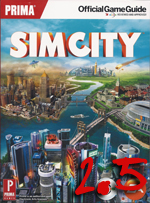
SimCity Strategy Guide Review

April 9, 2013 By Blake Grundman Leave a Comment

SimCity strategy guide reviewThose who are familiar with the most recent entry in Maxis’ storied SimCity franchise are probably just as familiar with its catastrophically terrible launch. Honestly, the only way you couldn’t know about the controversy was if you didn’t have an internet connection. But then again, you wouldn’t be playing SimCity either, right? Regardless of the politics of the matter, at the core of the conflict sits a game that is extremely complex and entirely redesigned from the ground, up. So what could better compliment the reboot of the brand than a SimCity strategy guide? Let’s just hope that the book fares better than its subject matter at culling the rage of PC gaming curmudgeons.

Sometimes it is hard to tread the thin line between being a strategy guide and a glorified manual that the player has to pay for in a bookstore. In many respects, the  SimCity strategy guide tends to have a bit of multiple personality disorder that precariously teeters in between the two very opposite ends of the spectrum. More often than not, item descriptions and specific details about elements in the world are torn word-for-word from the game itself. This might be somewhat unavoidable given the style of game it is trying to inform the reader about, but for Pete’s sake, the author should have made at least some attempt to pen original content. However, there are also whole dedicated strategy sections at the head of every city element sub-category such as roads, utilities, zoning, city services, mass transit, etc. Does the yin and yang manage to balance itself out? Probably not. But honestly, it would be hard to suggest solid play strategies to the player, without sounding a bit like a text box written by the game’s developers.

Actually, the developer Maxis’ aid in the creation of this book is very evident, both from a content perspective, as well as in the special features. For one, almost the entire introduction to the game and mechanics walkthroughs were penned by folks who actually designed the game’s core systems and interactions. Also, while it does seem like there is quite a bit of repeated information from within the title’s tool tips, at the end of each city element’s section there is a call-out featuring another member of the development team. In these areas the developer discusses pertinent hints, as well as topics about the items/landmarks being broken down in that specific part of the text. This was a nice touch that somewhat personalizes what could otherwise be viewed as semi-redundant data.

All of that said, there is a fair amount of explanation in each of these areas, talking about why certain landmarks are important to construct and how they can influence the rest of the city’s fragile ecosystem. It is far from the end-all, be-all, but it definitely provides a good jumping off point for those who are not familiar with how cohesively the entire city interacts with itself. The problem is that these extra detailed sections tend to be rather intermittent, depending upon what the writer deemed to be the most critical. There are far too many cases where whole chucks or page are left with vacant white space, accompanied by a literal copy and paste of text descriptions and statistical information straight from within the game itself.

Scattered throughout the text are the usual “Tip” sections that can be found in most current game guides. Though they might not always provide the most practical information, there usually tends to be some nugget embedded within that will tend to be very useful to even power players. Things like knowing to place different forms of mass transit within two hundred steps of each other, because the Sims are not willing to walk any further to make transfers are great clues that may not reach out and smack the player, but could drastically play a role in how one were to lay out a city. While not all suggestions are quite as useful as something like that, (and heck, it may even been something that is brought to the attention of the player by the game itself over time) getting the jump on this kind of information can help build a more thoughtful and appealing cityscape.

Another important section to pay special attention to is the “Disasters” portion of the guide. It may not be overly large, but anyone who has ever played a SimCity title knows how crippling these events can be, if not handled properly. This area outlines both what to expect when one of these disasters occur as well as what can be done to either brace/prevent the least amount of impact or how to recover in the aftermath. Achievement whores also take note, because all of the possible achievements that can be earned from surviving any particular onslaught are listed at the end of this section. Actually this holds true for pretty much every key section in the book, as well as listed in the “quick reference” at the end of the tome.

There are two main drawbacks from using a guide that is this closely tied to the developer. For one, most of the text about specific game elements tends to be borrowed from the source code, which has been mentioned ad nauseam earlier on. Secondly, with all of the sections written by members of the Maxis team, it is hard to distinguish between what is legitimately helpful information and what is PR-filtered fluff, that provides very little benefit for the lay user. With both of those criticisms in mind, what probably stands out the most is that this is a guide that is very much targeted at new SimCity players. Those that have had experience with prior iterations in the series will be able to learn about some of the newer nuances, but in most circumstances the text is regurgitating common sense.

One last unsettling note about the book is that at the beginning of every new section, there is a call-out in the bottom left corner of the page, reminding the reader to redeem their code for the digital guide. Thankfully this is included at no extra cost, with the purchase of the print guide. Given the nature of SimCity being an online-required game, it stands to reason that anything printed on the parchment could be rendered useless by a single update. Reasons like this tend to play more into the hand of electronic guides, and even though Prima already has one, why wasn’t this strategy guide electronic-only to begin with? At the end of the day it would seem that it would be the more logical and economical approach for all parties involved.

Prima’s official SimCity strategy guide manages to be competent enough to benefit the reader, yet not impressive enough to truly warrant a recommendation. Simply put, there are millions sites on the internet that provide far more up-to-date analysis and guidance, without the burden of a making space on your bookshelf for a mediocre work that often reads more like a curated press release than useful guidance. As is the case with most online centric games, readers may be better served turning to the forums.

SGR Rating: 2.5/5

Author: David Knight and Dorothy Bradshaw
Publisher: Prima Games
Editions available: Paperback and Kindle Edition
Acquired via Publisher

Filed Under: Strategy Guide Reviews

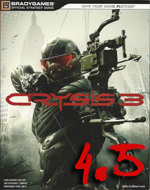
Crysis 3 Strategy Guide Review

March 19, 2013 By Blake Grundman Leave a Comment

Crysis 3 strategy guide reviewCrysis is a brand of first-person shooter that has become synonymous with pushing PC technology to the point that it taps out in virtual agony. Though never the most challenging or impressive gameplay wise, the unique wrinkles that it provided to the traditional shooter had helped the developer Crytek etch out a corner of the market where high production values were paramount above all else. As is the case with most FPS games, it would seem that the “run-and-gun” mentality of most titles would not lend themselves well to strategy guides. If you commonly think this way, oddly enough, this time you couldn’t be more wrong with the Crysis 3 strategy guide.

If chess and the garden variety first-person shooter were to have a baby, the result would be Crysis. Combining the diversely different tech found in the player’s nanosuit with all of the different weapons at the player’s disposal renders the game approachable in virtually every way known to man. Like getting the jump on enemies? Slap on the invisibility perk and shank those bastards like you are the new kid in the prison yard. Prefer to run into the middle of the fray and unleash all hell? Fire up the hardened shell and start throwing some ‘bows. The other two primary skills of speed and strength also work to compliment playing through the campaign in either a stealth or action mode. In response to this flexibility, the Crysis 3 strategy guide’s walkthrough is actually covered twice in the text, breaking down both gameplay options.

Splitting the walkthrough into two pieces is by far the best approach to covering the single-player component. This also makes it easy for the player to switch back and forth between gameplay approaches, on the fly. As long as you are familiar with how a table of contents works, you should be good to go. One important thing to note when comparing these parallel commentaries are that rather large chunks of text are re-used in both sections. While this isn’t really all that horrible considering it is more story based synopsis or observations, it might have been nice to have a different dialog between versions. Regardless, the writing is solid enough that it isn’t that big of a deal in the broad scheme of things.

I personally found the descriptions of interactions throughout the campaign breakdown to be extremely amusing. Using phrases like “start popping heads” to describe sniping is just one of many examples of text used to provide cheeky, yet completely worthwhile analysis of a situation. The call-out sections are also extremely useful when learning how to down specialized (and primarily alien) enemies for the first time. There is both important information that applies to that specific encounter, as well as any others that may come later on down the road. Be sure to pay close attention, because understanding these key concepts pay dividends in the long run.

Thankfully, the enemies are tightly scripted in Crysis 3 . This means that virtually every aspect of the walkthrough is spot on. Everything from weapon drops to enemy locations are spelled out in detail and can be either dispatched or avoided (depending upon which approach the player is using) by following the directions to the T. Rarely ever is there a case where something in the text proves to be inaccurate, which says quite a bit about the time that the author invested in the game. Sure, it is one patch away from rendering the walkthrough nothing more than expensive kindling, but as of right now things seem damn near spot on.

As useful as any guide can be helping a player through the single player campaign, rarely do you find a strategy guide that is even remotely as useful when it comes to the multiplayer portion of the game. The Crysis 3 tome is a rare exception to this rule, dedicating a staggering quarter of the entire text to the often neglected mode. Considering that this is where many would argue that the meat of the overall game lies, it is an extremely welcome change from the norm.

The author really had their work cut out for them in trying to concisely describe each of the title’s numerous multiplayer modes. If you are familiar with online shooters, most of this section will be old hat, but in the case of Hunter and Extraction mode, even seasoned veterans would be wise to take note of some of the knowledge dropped on the pages. It could make the difference between digital life and death. Another nice touch are the different suggested player roles in a team, as well as suggested loadouts for these respective positions. Additionally, every single perk and power-up is discussed, which should help the inner strategist in everyone.

In one final victory for the reader, each map has a full page dedicated to the a top-down view of layout, with certain specific locations called out for spawn points, weapon drops, or other places of interest. These maps are then complimented by a half page writeup, which discusses both strategy and the kind of gotchas that would only come from hours of trial and error. The smart gamers out there would be wise to take all of these pieces of commentary to heart if they plan on getting a leg up on the competition.

If there were one downfall to this otherwise exceptional guide, it would have to be the lack of pages dedicated to showing off the fantastic art assets of the game. Crysis 3 is the type of experience that looks beautiful, so why this wasn’t taken full advantage of is a bit baffling. Yes, these sections are certainly not crucial to the overall value of the book from an actual “guiding” perspective, but why not give the reader the chance to stop and smell the proverbial roses?

Players that are looking to improve on all aspects of their Crysis 3 experience should look no further than this strategy guide. It provides more than enough guidance to the audience, while not inundating them with useless information. Plus, the addition of a stellar section dedicated to multiplayer makes this far and away the most comprehensive guide for a first-person shooter that I have ever encountered. So what are you waiting for? Get down to business and send those aliens packing, thanks to a little help from your buddies over at BradyGames!

SGR Rating: 4.5/5

Author: Michael Lummis
Publisher: Brady Games
Editions available: Paperback
Acquired via Publisher

Filed Under: Strategy Guide Reviews

  • « Previous Page
  • 1
  • 2
  • 3
  • 4
  • 5
  • 6
  • Next Page »

Follow us!

Subscribe!

Upcoming Strategy Guides

 Nothing here. Come back later. 😢

Latest Strategy Guide Reviews

The Walkthrough by Doug Walsh Review

Red Dead Redemption 2 Strategy Guide Review

Mega Man 11 Strategy Guide Review

God of War Strategy Guide Review

Far Cry 5 Strategy Guide Review

Friends of SGR

  • BradyGames
  • Dan Birlew – Guide Writer
  • Doug Walsh – Guide Writer
  • Future Press
  • Game Enthus
  • GameWires.com
  • Piggyback
  • Press the Buttons
  • Prima Games
  • Racing Games

Top Posts & Pages

  • Scribblenauts = Happy
  • Been Jonesing for some RPG Action
  • LEGO Star Wars III: The Clone Wars Strategy Guide Review
  • Monday Gaming Diary: Happy Memorial Day!
  • The Corner of Randomness: Extra Life is Done

Copyright © 2026 · Web crafted by Warkhammer


Loading Comments...