• Home
  • About Us
  • Podcast
  • Strategy Guide Wit
  • Contact

Strategy Guide Reviews

A Strategy Guide for your Strategy Guides

  • Reviews
    • Strategy Guide Reviews
    • Video Game Reviews
    • Mini-Reviews
  • Features
    • Interviews
  • News
  • Unboxing Strategy Guides
  • Columns
    • Gaming Diary
    • Corner of Randomness
  • Videos

Far Cry 3 Strategy Guide Review

January 17, 2013 By Blake Grundman Leave a Comment

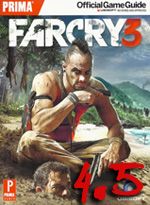
FC3-ratingIn this day and age it is legitimately rare for a AAA game to catch critics off guard. Probably the biggest exception to that rule in 2012 was Ubisoft’s late-November release, Far Cry 3. Not only did the game’s runaway success come completely out of left field, but many sites ended up considering it as a potential Game of the Year. Does Prima’s official guide live up to the same high standards, or does this open world shooter provide too many opportunities for details to slip through the editorial cracks?

First-person shooters tend to be extremely straightforward and provide a rigidly scripted experience for players. For this reason the idea of a guide for a game like Call of Duty is borderline laughable. All players really need to know for this brand of shooter is the continuous progression of, “see bad dude, shoot at bad dude, turn bad dude into fleshy meat blanket, follow blood trail to next pack of bad dudes.” Far Cry 3, in a refreshing vacation from the norm, exists on the polar opposite end of this spectrum. The game features a completely open world and mission structure that leave virtually all decisions in the hands of the player. For this reason, a game guide could prove to be an indispensable way to make the most of each session in the title’s massive sandbox of destruction.

Cracking the cover unleashes a bevy of developer access special features, which demonstrates how close Prima and Ubisoft worked in the production of the guide. Those that are fascinated by the development process will be in for a treat. Included are exclusive pieces concept art, straight from the team at Ubisoft Montreal. Along with a beautiful full two page spread for each of the game’s core characters, complete with fully page portrait, is a neat feature on how the studio came about the model design of the core villain, Vaas. Though most of the information in the descriptions could be gleaned through simply playing through the campaign, it is nice to read through these sections to get a good idea as to how each person fits into the overall universe of Far Cry 3. Plus, to put it bluntly, most of the portraits are a feast for the eye. Wrapping up the “Behind the Scenes” section is a collection of concept art highlighting different aspects of the tropical sandbox’s design. Accompanying the lush visuals are quotes from several key members of the development team, further explaining the images and how they fit into the game’s all-encompassing design.

Once the far too brief peek behind the curtain comes to a close, the introduction continues into the usual nitty-gritty basics of game mechanics such as different attack techniques, methods for reconnaissance, self-healing and a litany of other topics central to the success of a player. Following the predictable approach, this section is followed by breakdowns of each weapon’s stats. Just be aware that this contains details for both the freely available and unlockable firearms, as well as the criteria for accessing the aforementioned locked artillery. After the firepower is well in hand, the hunting of wild game, powering up abilities though the skill tree and the various forms vehicular navigation are all covered in sufficient enough detail to set a player’s mind at ease.

With all of the formalities out of the way, the guide wastes no time jumping into the campaign walkthrough. Early on it is noted that each of Far Cry 3’s thirty-nine story missions are open to being completed in many different ways, but the text tends to lean more towards a more patient, stealthy approach. Under most circumstances the sneaky method mentioned in each mission write-up not only provides the player with a good way to start each section, but along with it, the reasoning WHY it is the best way to go about accomplishing an objective. The additional narrative helps support the author’s logic, and also helps teach players the best way to handle similar scenarios. Also, pay close attention to the many “TIP,” “CAUTION,” and “NOTE” call-out sections, because oftentimes these share information that might not necessarily be pertinent to the specific mission, but may help save time down the road.

There are a couple of specific elements that the entire campaign walkthrough does exceptionally well. For one, the reader isn’t ever at a loss for in-game screenshots illustrating the specific points being discussed in the text. No need for image hunting here, because the layout is extremely effective in assuring the reader never has to look any further than the text margin. Tying up the up the layout with a neat little bow is the use of larger, most likely developer provided art assets, to fill what might have otherwise be unoccupied white space. Secondly, the body of commentary finds a way to strike a fantastic balance between effectively explaining how the mission fits into the context of the entire plot, while not allowing it to muddy the instructional portion of each set piece.

Along with the straightforward storyline comes a collection of additional missions that can be completed at just about any point during a playthrough of Far Cry 3. The individual missions are organized by their objective type, which include side story missions, scoring challenges, wild game hunts, and assassinations, just to name a few. Each quest is broken down in the most straightforward manner possible, many consisting of only a paragraph or two, along with what the payout or unlockable is upon completion. Most times this is really all that is necessary in order to steer the reader in the right direction.

As is usually the case with single player focused games of this nature, the multiplayer section is practically non-existent. After a brief description of each playable character in the co-op mode, key multiplayer concepts are tentatively delved into. Features such as leveling, airdrops and the flash drives awarded post-match are all afforded a couple of paragraphs, mostly consisting of restating the obvious. The last piece of the multiplayer breakdown is spelling out the objectives of the four match types. For some reason there are no specific multiplayer maps discussed. Perhaps maps are overlooked due to the map editor that ships with the game, but regardless, the complete lack of any sort of commentary or acknowledgement of the obvious absence seems odd.

Fortunately the disappointment of the previous four pages (yes, multiplayer is only four pages long) is short lived, thanks to the massively comprehensive outpost and radio tower segment. Every single one of the game’s thirty four outposts are analyzed concisely, showing both its location on the world map, as well as sharing valuable information as to the best methods of infiltration. Additional overhead shots of the area can further help players indulge their inner Paton, even planning out their own ambitious scheme of attack. It is worth noting that squeezing two outposts per page works well for a layout most of the time. However, when a given description is overly brief there tends to be rather large sections of the page left unutilized. The radio tower section unfortunately continues using this arrangement to breakdown most of the sprawling map’s eighteen key communication locations. Much like the outposts, these points are called out on a world map, along with a location screenshot and brief commentary on the most effective approach to scaling the tower. Though the design of these cumulative pieces tend to leave quite a bit of wasted space on the page, what is contained will be more than enough to set a player well on their way towards map navigation supremacy.

And what would a thorough guide be without a collectables section to round out the book? Each of the one hundred and twenty relics are numbered on the world map, which in turn ties into their number listing in the text. To go along with a textual description of each hiding place is a screenshot to provide players with additional context of where to look in regards to all of the foliage draped surroundings. Additionally, there are twenty letters from deceased military personnel scattered throughout. These are given the same detailed treatment of the previously mentioned relics.

Writing and designing a guide for an enormous world like Far Cry 3’s must assuredly be an exhaustively time-consuming task. Fortunately the author was more than up to it. Aside from the occasional lapse in page design, the book manages to provide extremely relevant guidance to the reader, without overwhelming them with too much information. Despite being slanted towards the stealth approach, much of the direction provided is useful to any gameplay methodology. Even when considering the blatantly transparent multiplayer portion, the quality of everything else more than helps it recover brilliantly. Those looking to venture into the tropical wilds of Far Cry 3 should definitely make sure to have this tome in their pack.

SGR Rating: 4.5/5

Author: Thomas Hindmarch
Publisher: Prima Games
Editions available: Paperback
Acquired via Publisher
Filed Under: Strategy Guide Reviews

Max Payne 3 Strategy Guide Review

July 31, 2012 By Blake Grundman Leave a Comment

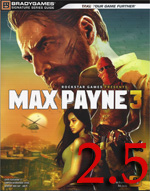
Max Payne 3 strategy guide reviewMax Payne is one of those franchises that you have to love. Staring the game’s namesake, Max Payne, as a shit-out-of-luck cop trying to make sense of his life, the series has been widely acclaimed by critics and fans alike. It was so popular, in fact, that it was very loosely adapted into a film released in 2008. This year marked the return of the dysfunctional gumshoe, to a level of praise that echoed of the original installment. With Rockstar at the helm this time around it was essentially business as usual and critics devoured it with enthusiastic fervor. Can BradyGames’ Max Payne 3 strategy guide for the game live up the brand’s prior levels of success, or is it better discarded like a junkie in an alley?

What would a guide be without a strong introduction to the game mechanics? Thankfully the reader will never have to find out, because the authors knocked it out of the park. Though the standard experience in Max Payne 3 differs little from other installments in the series, newcomers will find breakdowns of painkillers, bullet time, (or as they like to call it, shootdodging) cover usage, and kill cams to be fairly useful. Even though it isn’t unlocked until after completing stages throughout the campaign, this section also steps through the variety of different Arcade modes that eventually become available. Some may consider this to be slightly out of sequence, but in all reality, the introduction is probably the most logical location for this to reside. Wrapping up the chapter is a comprehensive analysis of every firearm in the game containing key bits of information such as rate of fire, damage, clip size and caliber. Armed with the introduction’s knowledge, any player would be adequately prepared to pump adversaries so full of lead that they could be used to draw a stick figure.

Next up is what could be considered the meat of this tome, the campaign walkthrough. Each chapter, which just so happens to conveniently correspond with a numbered chapter in the story line, starts out with a brief synopsis of what is happening in the plot and the overarching mission objectives. These first couple of pages are amongst the most stylish and well laid out sections of the entire guide, complete with numerous vibrant screenshots. Unfortunately, what follows doesn’t quite live up to the same level of organization.

In order to tackle sections in a more comprehensive manner, chapters are broken up into what amounts to logical slices of the map. Contained inside these subsections are extremely detailed walkthroughs that demonstrates how obsessively scripted the enemies are. Everything from where enemies will emerge from, what character types they will be and even what weapon loadouts they will have is spelled out explicitly. The tactics necessary to dispatch these cronies are broken down in a matter-of-fact way, that almost takes any surprise out of the game. But if you are using a guide to begin with, what else could you ask for?

Some of the other tidbits of information that can be found in each map segment are lists of every weapon available, as well as the location of all collectables and golden weapon pieces. As is the case with every chapter introduction, there are an incredible abundance of screenshots at the reader’s disposal. The problem is while these shots are pleasing to the eye, probably a third of these images are completely unnecessary. What results is an extremely cluttered layout that is far too busy for the eye to parse all at once. If they were attempting to model the walkthroughs after a graphic novel style, it was a smashing success.  However, when reading for content, this chaos tends to cause more harm than good. Organization criticisms aside, the actual text on the page is an greatly detailed and extremely thorough documentation, but it isn’t done any favors by the constantly shifting layout that feels as if they tried to cram too much on a single page.

Just in case the reader happened to miss the collectibles that were already shown once in the campaign, once the walkthrough is complete, there is a section dedicated to all of the clues and golden gun pieces that were already pointed out in the text. This is a baffling decision considering that in most cases the EXACT SAME image is shown, along with a very similar, if not completely echoed commentary on each item. If this was not information that was already presented earlier in the book, then this section would make complete sense, but when you are just re-cropping the same image and re-wording the same information, it reeks of trying to pad the content.

Wrapping up the guide is a rather brief thirty two pages dedicated to the game’s multiplayer mode. Considering that this is the first time that any kind of multiplayer has appeared in a Max Payne title (other than what was originally slated to be included in the first installment, but was scrapped in order to get it out the door) you might think that the author might have seen the need to fill out this area in more detail. Giving them the benefit of the doubt, this may have been the result of never being able to play multiplayer prior to launch.

What actually is present is the traditional rundown of different game modes, mechanics, and avatar customizations. Bursts, which are essentially the equivalent to “perks” in other popular online shooters, are discussed in a lackluster generic fashion, with no attention being paid to how they can be utilized strategically in battle. Once again following the multiplayer trend of only containing surface level statements that mean relatively nothing, the weapon details also prove to be a fairly useless collection of information that seem uninformed at best. The most damning evidence of the author never playing the multiplayer is the map segment. Here you would think that each stage would be broken down, noting different strategies, strong points or weapon spawn locations. Instead, the reader is treated to a single black-and-white image of each stages floor plan. THAT’S IT! In a day and age where multiplayer is king and can prolong the lifespan of a game indefinitely, this should be a refund-worthy offense. When all that could be mustered was a single screenshot, this shows a blatant disregard for the reader and represents a critical failure in the publication that is inexcusable.

At best, BradyGames’ Max Payne 3 strategy guide is a roller coaster ride of highs and lows. If the reader were to consume the campaign walkthrough as only a document, it could be considered to be an overwhelming success. On the other side of the coin, a cluttered and “screenshot happy” layout undoes any triumph that the text accomplishes. Add in the barely present multiplayer section that is insultingly bare bones, and you have a recipe for a guide that underachieves on virtually every level. If this guide were a debutant that Max had to protect, he would probably just sell her to the enemies for booze money. At least then he could have something useful to consume.

SGR Rating: 2.5/5

Authors: Tim Bogenn and Rick Barba
Publisher: BradyGames
Editions available: Paperback
Acquired via Publisher
Filed Under: Strategy Guide Reviews

Diablo III Strategy Guide Review

June 21, 2012 By Blake Grundman Leave a Comment

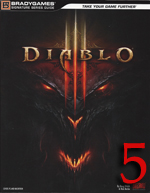
Diablo III strategy guide reviewWhen setting out to review a game with the depth and breadth of a Diablo III, the authors have to be approaching the task with a hole in the pit of their stomach the size of the Grand Canyon. Not only is this the highly anticipated sequel to one of the most successful–and still widely played–PC games of all time, but it also contains a level of complexity that is unparalleled amongst its peers. Oh, and let’s not so quickly forget that the game has been in development hell (no pun intended) for over a decade. Suffice to say that BradyGames had their work cut out for themselves with their Diablo III strategy guide.

By virtue of Diablo III randomly generating everything from level layouts to enemy positions to loot drops, it is amazing that the guide is as comprehensive as it is. Their key seemed to be setting aside the unknowns and focusing on what will always remain the same, namely, the different character (hero) classes, the numerous enemy types, and the seemingly never ending well that is Blizzard’s loot chest. From there, the authors continued to drill down until they hit pay dirt in a big way.

The book starts out by breaking down all of the game’s core mechanics in a level of detail that would leave even a Diablo virgin (God help your poor soul) feeling like a Rhodes Scholar. Among the key elements detailed are leveling, choosing what loot to gather vs. discard, managing and picking effective party members, and online coop play. There is even a specific section dedicated to ancillary party members, their specific perks, and what skills they will learn as players level. And here is the scary part: this section only represents roughly about 3% of the overall text.

Next up is the absurdly deep analysis of each of the five hero classes. Each hero is split up into sections discussing the character’s specific weaponry, armor, and skills. Further exemplifying the insanity of depth in the guide, every skill, both actively employed by the player and unconsciously applied to modify status effects, are given the utmost attention. Details passed along are things like levels unlocked, tactics that can be applied to its use, runes that will have an additional effect when equipped, and the five additional permutations to the skill that can be unlocked and applied throughout the leveling process. Everything is present to help players make the best possible decision with their characters, plus a little bit of added clairvoyance as to what can be expected as the game progresses.

What follows this up is the actual walkthrough of every one of the campaign’s thirty-one quests. Each mission is broken up into its individual objectives, with vague details about what can be expected intermixed throughout the text. It seems as if these sections are specifically worded to avoid being a specific “point A to point B” walkthrough. As a reminder, the maps, enemy positioning, and loot containers are randomly generated, so the only specifics that are passed along are new enemies that may be encountered, the steps in between objectives, and basic strategies for accomplishing each quest’s few scripted encounters. Be sure not to forget to pay special attention to the bonus objectives that are spelled out, because the additional loot drops and experience net could pay off down the road.

One thing that the guide does exceptionally well is calling out boss encounters and providing players with the best approaches to slaying the usually overpowered adversary. The enemy’s expected hit-point count, XP level, and attacks are spelled out explicitly, along with their special traits and resistances. This is one of the rare areas where specific strategy and tactics are provided to the player, which can in turn prove to be tremendously helpful.

After digging through four acts worth of campaign direction, players are most likely curious about how they can apply their specific skills and items acquired throughout. For this reason, it only makes sense that the next area breaks down the different artisans and crafting options at the player’s disposal. Though you can go through the entirety of the game using only dropped loot, sometimes it is good to know what other options are available and when these elements can be upgraded.

Did you know that all of those goofy generated item names like “Chilling Bow of Infinity,” actually mean something extremely specific under the hood? Despite sounding like complete gibberish to most, the next section breaks down every item, as well as its specific pre- and post-fixes, to paint the complex picture of what is nothing more than glorified spreadsheet math. For those with the propensity to dig into these agonizingly complex details, looking for the perfect piece of loot, there will be more than enough to sink your teeth into. Along with spelling out the specific item modifiers, each base weapon is examined, pointing out its required level for use, damage per second, and other min-maxing data that moisten the loins of gamers that work as accountants during the daylight hours. Lastly, all armors and legendary drops are examined, following the trend of providing more than enough numerical stats to make a hardcore fan’s heart skip a beat. Don’t get us wrong, having more data at our disposal is not a bad thing, it’s just an overwhelming amount of information to tackle when it’s staring back at you from the page.

The final major section of the guide is dedicated to the uncountable number of foes that can, and will, be encountered through the expansive campaign. Each and every named adversary is looked at, in alphabetical order, sharing critical information such as likely locations where they can be encountered, their levels and hit point counts, damage that can be administered, and special moves, all seperated by difficulty level. Once again, if you are a person that loves to pour over statistics, you will have years’ worth of digging at your fingertips.

While looking through the ridiculous amount of information contained in the book, despite it being downright impressive, it was hard to shake a single lingering worry: What if the first update turns all of this data on its head? The game has already seen three updates, one of which is supposed to address the balance and difficulty. It will be interesting to see if these figures still hold true six months, hell, even six weeks from now! But this is a risk that you have to be willing to take when investing in the medium of print.

Regardless of whether the statistics are still valid down the road, this is still a solid companion to anyone who would be considered to be a hardcore Diablo fan. The use of art scattered throughout is exceptional, the layout is streamlined and well thought out, and the written text reads like a well informed textbook. Simply put, this is a must-own for everyone who has eagerly started a second playthrough of the game or collectors who strive to expand their knowledge of the universe. There is more than enough to satisfy everyone, so get out there and raise some hell!

SGR Rating: 5/5

Authors: Doug Walsh and Rick Barba
Publisher: BradyGames
Editions available: Paperback and Collector’s Edition
Acquired via Publisher

Filed Under: Strategy Guide Reviews

Star Wars: The Old Republic Strategy Guide Review

February 8, 2012 By Blake Grundman Leave a Comment

Star Wars: The Old Republic Strategy Guide ReviewStar Wars: The Old Republic has been the collective wet dream of Force wielding nerdlings since they first completed Knights of the Old Republic, many, many moons ago.  Before you even ask yourself, “Hey wasn’t there a Knights of the Old Republic 2?” just perform a Jedi mind trick on your own skull in order to wipe clean all memories of that abomination. Eight years later, the RPG masters over at BioWare are once again ready to return to the land that Lucas built, and this time you will have the company of a million or more of your closest padawans. Who says nerds have no friends?

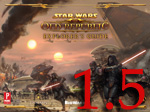
Just as the Sith or, depending on the class you chose, Jedi start getting on your nerves, Prima is here to the rescue with their officially licensed Star Wars: The Old Republic – Explorer’s Guide. At risk of sounding overly cynical, please take note that at no point is the publication referred to as a strategy guide. This is only worth mentioning because, quite frankly, if you are looking to this single work to be the definitive, end-all, be-all, for The Old Republic, you obviously understand nothing about massively multiplayer online games. But more on that later. All that is really worth knowing upfront is that the book is greatly lacking in the “strategy” department.

By virtue of an MMO being on online game, everything within the actual game world is in flux… constantly.  Frequent bug fixes, balance updates and even content additions can greatly modify both the look and feel of any and all facets of the game. Feel like your weapon is suddenly weaker than you last remember it?  Chances are that you have fallen victim of a nerfed sidearm. But don’t worry, within a couple of days a new patch will be released, turning the world on its collective head, all over again.

With a inconsistent world like this, it would seem nigh impossible to compose the perfect book to cover all aspects of The Old Republic’s universe.  Instead, the Explorer’s Guide is designed as more of an atlas to each world in the game’s initial release, with a brief amount of strategy mixed in for good measure.  Is it enough to satiate the hardcore MMO min-maxer?  Not a snowball’s chance in hell. Fortunately, that is what the internet is for.

First off, the book opens up with a grand total of twelve pages describing the title’s eight classes, along with a list of the top five ways to survive as one of these characters.  Also, just so players don’t feel slighted, there is a list of three of each classes’ strengths and weaknesses.  This sums up the entirety of the strategy guidance contained between the covers… SERIOUSLY!  For those keeping track at home, that means that a grand total of twelve of the three hundred and fifty one pages were dedicated to teaching.  Simply put, even if the balance of the combat and/or item system was constantly shifting, it is certainly worth spending more than 3% of the publication on.  this is shameful and borderline negligent.

If this Explorer’s Guide was in fact meant to be an atlas, this is greatly evidenced by the next two hundred and ninety two pages, which consist of nothing more than planet descriptions and maps of every single area in the initial release.  Furthering the overall lack of direction provided, each planet’s description is vague enough that it could have been scrapped directly from within the game itself.  Sure, they may point out a few key points of interest, but nothing other than a general, “You might want to visit here and do stuff.”  Heck, that previous example is probably more specific than most sections in the text.

Once you get past the snooze-worthy planet breakdowns, the maps prove to be the one semi-helpful component of the book.  Each map shows what kinds of enemies will be encountered, roughly how many will be in each group, and an estimate what level each enemy should be.  The problem is, some of the maps are too crowded and busy to actually be able to comprehend what is going on.  When maps are so zoomed out that the enemy markers cover more of the image than a kid with chicken pox, you might have a problem on your hands.  While this is not always the case, it happens frequently enough to warrant noting.  Criticisms aside, the maps can still be somewhat helpful if attempting to locate a quest or two that could be sneaking under the radar.

The final twenty-nine pages (index excluded) is a section dedicated to concept art from the game.  As a fan of the lore and universe, it is hard to deny the appeal of this area, but is seems to provide a very clear glimpse into the actual formation of this book.  In order to have enough access for the very tight lipped folks at BioWare and LucasArts to turn over this kind of content, the authors and editors must have had very tight ties to the developer.  In many cases, this work seems to suffer from lack of freedom to express themselves.  This might explain the virtually non-existent guide content.  Is the concept art awesome to look at and fawn over?  You bet!  But really, this cements the book’s purpose as more of a collector’s item than any kind of productive aid.

The overall lack of text and strategy in the Star Wars: The Old Republic – Explorer’s Guide could absolutely be a by-product of the game’s universe always being in flux.  That said, there are many other ways that this could have been approached, that would be far more helpful to gamers.  Heck, for all we know, those maps could have been deprecated by the time the game left Beta.  For this reason it is pretty much impossible to recommend this guide without it weighing heavily on the conscience.  If you are really looking for actual in depth analysis for The Old Republic, remember that everyone’s favorite physician, Dr. Google, always has your back.

“This is not the guide you are looking for…”

SGR Rating: 1.5/5

Author: Michael Searle
Publisher: Prima Games
Editions available: Paperback
Acquired via Publisher
Filed Under: Strategy Guide Reviews

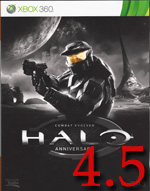
Halo: Combat Evolved Anniversary Strategy Guide Review

December 15, 2011 By Blake Grundman Leave a Comment

Halo Combat Evolved Strategy Guide ReviewWhat would a holiday release season be without a visit from everyone’s favorite Spartan?  Ten years ago the original Halo: Combat Evolved helped introduce the masses to Microsoft’s Xbox.  A decade later 343 Industries has returned to the hallowed ground, looking to shine new light into the launch title that helped teach an entire generation to appreciate first person shooters on a console.  On a more personal note, the original Halo was also the first video game guide that I ever purchased.  Granted, I no longer actually own it, which actually saddens me as a Halo aficionado.  So when I was extended the opportunity to review the Halo: Combat Evolved Anniversary guide, it was no-brainer that I would jump at the chance.

Looking back, it is amazing how far guides have come.  This is why it was even more thrilling that the guide for Anniversary edition is a perfect example of how to construct a piece of instructional literature.  First off, the book itself is separated into three main sections: Campaign, Firefight and Multiplayer.  Luckily before the campaign even kicks in there are thirty five pages dedicated to the back story of the universe, as well as detailed descriptions of every character, vehicle and weapon that will be encountered.  Along with helping to place all of the key players within the Halo Universe, it also contains meticulous analysis of how to approach encounters with each enemy.

Now aided by the back knowledge of the world, the campaign walkthrough is divided into numerous easily digestible chunks.  Each section header contains very useful information such as what types of enemies will be encountered, recommended weapons, a difficulty rating from one to five, and an overview of what successful strategies will aid the player.  This is then a jumping off point for a much more thorough description of what lies ahead, complete with corresponding maps and screenshots.

Every description is well written and in many cases provides the player with multiple suggestions of how to approach an encounter.  If there was one aspect to Halo that worked in the favor of the authors it was the game’s explicitly scripted combat structure.  For this very reason, pretty much every time, the text on page will result in success.  To top it all off, for those that are achievement hunters, areas that contain special achievements based off of the players actions are highlighted, allowing everyone to snag what would otherwise be obscure gamerscore points.

Among the special callout paragraphs within the campaign are special “Spoils of War” and “Avoiding the Fight” pieces.  Don’t worry, the “Spoils” are not spoilers at all, in fact they are actually sections that break down where to find hidden health packs, overshields, and performance perks.  As for “Avoiding the Fight” it is just as the name implies–ways to avoid whole sets of encounters.  Though it should be noted that many times these strategies are far more risky and depending upon the difficulty level that is being played, could have a far lower success rate than sticking to the script.

For those who have completed the campaign the next logical step would be to jump into the fray of Firefight.  Fans of the Halo franchise should be more than a little familiar with the popular horde based gameplay; but for the uninitiated, the guide has your back.  Everything from the layout of the heads up display, effective loadout construction, and strategies for surviving against wave after wave of incumbent shotgun fodder are laid out right off the bat.  Once players have the concepts down there is a breakdown of the seven different variations as well as what opposition will be contained in each different wave.

Though all of this information is nicely constructed and easy to use, the breakdown of each individual map is where the Firefight guide is worth its weight in gold.  Recommended weapon loadouts and critical weaponry caches are laid out on an overhead map of each stage.  This is followed up in more detail within the text, consisting of several different strategies for putting the Alamo to shame, round after round.

Unless you have been living under a rock for the last ten years, what set the original Combat Evolved apart from the competition was its amazing multiplayer suite.  Let’s just say that some things will never change, because multiplayer is still a core part of what makes the franchise great.  Much like the other two segments to the book, before delving into each map, the entirety of the multiplayer experience is spelled out to the nth degree.  Heck, there is even a callout that is dedicated to how to effectively use voice chat to a player’s advantage!  Of course this is all depending upon being able to get in a word edgewise amongst the hordes of homophobic and racist tweeners.

Reading the tactics portion of the multiplayer guide is something that shouldn’t be scoffed at, even for veterans.  Because of Anniversary Edition‘s multiplayer component being pulled from Halo: Reach, the core concepts explored here can be applied far beyond the walls of this single game.  Methods to effectively play defense, snipe and use power-ups should be required reading for anyone stepping into a matchmaking hopper.

The guide goes as far as to break down each weapon and vehicle over again, accounting for the fact that there are new additions to the arsenal, not contained in the single player.  Plus, for those items that make a repeat appearance, it addresses that the balance can feel drastically different between the two modes and describes how to effectively compensate.  All of these are critical bits of data that when combined with a little skill, could prove to be the difference between victory and defeat.

Armed with everything that one could ever want to know about multiplayer, this area is followed up with top down views of every retro map, containing the base spawn locations of every weapon and power-up.  These maps are shown several different times, highlighting the different spawning locations and strategies, depending upon the mode being played.  Calling these walkthroughs exhaustive wouldn’t be doing them justice, because there is virtually nothing that is left out.  There is no player that would be too experienced to not be able to come away without learning something new.

As another welcome addition, the guide goes on to also goes on to delve into the maps and DLC that were a part of Halo: Reach as well.  Was it necessary for this to be added to the guide to make it a must purchase?  No.  Is it an amazing show of fan service that should be applauded?  Absolutely!  BradyGames has gone above and beyond to make this the most definitive multiplayer companion ever, and succeeded brilliantly.

While the guide goes above and beyond the call of duty (no pun intended), in many respects there was one small area nestled at the end of the book that sticks in the craw a bit.  Labeled as a “Spoilers” section, this area contains the whereabouts of all of the hidden skulls and terminals scattered throughout the campaign.  The main issues are that first of all this doesn’t actually contain any spoilers, and second of all it is completely separate from the actual walkthrough.  If players are not on the ball, they could be forced to replay the entire campaign again in search of these objects.  Those who actually know better and chose pursue everything to completion in one playthrough are forced to flip back and forth between the front and back of the book in order to glean the full experience.  This greatly tarnishes the readability of the walkthrough from cover to cover.

Despite containing one rather drastic flaw, each section of the Halo: Combat Evolved Anniversary guide could stand on its own as a singular retail product.  The attention to detail, depth of knowledge, solid strategic advice and amazing artwork help to define this book as being well worthy of carrying the Halo name.  This is a must-own for every Master Chief fan.

SGR Rating: 4.5/5

Authors: Thom Denick, Michael Lummis, Ben Pease, Jim Morey, Kenny Sims, Doug Walsh, Philip Marcus, Rich Hunsinger, and Sea Snipers
Publisher: BradyGames
Editions available: Paperback
Acquired via Publisher

Filed Under: Strategy Guide Reviews

  • « Previous Page
  • 1
  • …
  • 3
  • 4
  • 5
  • 6
  • Next Page »

Follow us!

Subscribe!

Upcoming Strategy Guides

 Nothing here. Come back later. 😢

Latest Strategy Guide Reviews

The Walkthrough by Doug Walsh Review

Red Dead Redemption 2 Strategy Guide Review

Mega Man 11 Strategy Guide Review

God of War Strategy Guide Review

Far Cry 5 Strategy Guide Review

Friends of SGR

  • BradyGames
  • Dan Birlew – Guide Writer
  • Doug Walsh – Guide Writer
  • Future Press
  • Game Enthus
  • GameWires.com
  • Piggyback
  • Press the Buttons
  • Prima Games
  • Racing Games

Top Posts & Pages

  • Scribblenauts = Happy
  • Been Jonesing for some RPG Action
  • LEGO Star Wars III: The Clone Wars Strategy Guide Review
  • Monday Gaming Diary: Happy Memorial Day!
  • The Corner of Randomness: Extra Life is Done

Copyright © 2026 · Web crafted by Warkhammer


Loading Comments...