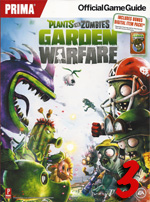
 When Popcap Games decided to take on the tower defense genre with Plants vs. Zombies back in 2009, it was safe to assume that it was met with a fair share of skepticism. Fortunately not only did the studio do a fantastic job winning over gamers on every playable platform of the era, but they managed to continue to grow that audience with their recent free-to-play sequel on both iOS and Android. So when it was announced that Plants vs. Zombies: Garden Warfare would be making the jump to third person shooter with the help of DICE, you can imagine that people were more than a little curious to see what Popcap had up their sleeve. Can Prima Games’ Plants vs. Zombies: Garden Warfare strategy guide manage to help ease tower defense fans into the world of class/squad based shooters, or will supporters of the franchise be left slowly sauntering out to pasture?
When looking into the future of the Plants vs. Zombies series, you would be hard pressed to predict that their next logical turn would’ve been jumping into the shooter space. The overlap between the squad based shooter audience and strategy/tower defense fans would most likely be fairly limited, hence the reason that Prima Games’ team really had their work cut out for them. Thankfully, the Garden Warfare game itself was designed with approachability in mind, so the writing team did their best to follow suit and start with the building blocks and then move on from there. This plan worked out fairly well, but the result was a series of hits and misses, accompanied by a disappointing online implementation. But how did they get there, you ask? Let’s start at the beginning.
As with any guide, the ever-predictable “How to Play” section leads things off and covers general controls, ability slots, and simple mechanics like strafing, reloading and jumping. Sure those might seem like a given to anyone familiar with shooters, but with the existing fanbase of the Plants vs. Zombies brand, it makes sense to spell things out explicitly. Additionally, elements like the HUD design, menu navigation and special attacks are detailed. Closing the intro out are overviews of the different game modes, hints on how to improve skills through the game’s coin and card pack system, and a breakdown of how to beat adversaries to both the literal and figurative punch. Also, it is important to mention that the mode page is very good about detailing the differences in mode availability between the Xbox 360 and Xbox One version, because there are several features missing from the 360 release.
Diving right into the action, the next mini-chapter outlines the Xbox One exclusive Boss Mode. The extremely brief collection of 4 pages very roughly outlines what can be expected from this top-down mode and features extremely rudimentary explanations of what perks can be unlocked at different sunlight levels. This “me-too” area to start out the book is both lacking enough screen shots or even information describing what is actually going on, and will most likely end up leaving readers (especially those on Xbox 360) confused as to what exactly is being described in the text.
Luckily, the weak start is followed up by something that at least applies to every version of Garden Warfare: the class breakdowns. Each type of both plant and zombie is spelled out, along with their numerous variants. For example, the standard peashooter has a fire, ice, toxic, commando and stealth variants. The details area of each base class variant consists of two rather large screenshots that take up easily three quarters of the page, with very small text sections that highlight the ammo type, damage style, reload speed and best use case scenario. Also, a callout will also run down the upgrades that are exclusively available to the sub-class. Though the initial class information is very helpful, the majority of the sub-class sections look almost like glorified screenshot galleries, meant to pad the size of the guide. Simply put, get ready to see a ton of unoccupied white space on each page. All of the information contained in the sub-class details could have most likely been summed up on a single, page-spanning chart for each class. This proceeds to go on for seventy five pages, which accounts for almost a third of the guide’s pagecount.
Next up on the hit list is another mini-chapter dedicated to the game’s “Sticker Shop” unit customization system. All of the separate types of sticker “packs” are explained in a way that will help understand the patience vs. payout dynamic that comes from purchasing different types of packs. One particularly important selection of text breaks down the critical differences between consumable vs. customizable items and why the distinction is so critical, as well as what kinds of items are included in each. Lastly, it closes with a basic overview of the stickerbook, and how that relates to the unlocked characters, items, and tattoos that are available once players shift back to the combat.
Team Vanquish is the first genuine mode that gets serious attention in this guide. The glorified team deathmatch is led off with talk of the slightly modified “classic” version of the mode, which consists of only the base classes, and utilizes none of the upgrades or customizations made available through the sticker system. Following that callout is a set of “must knows” for succeeding in vanquish. Many of the items on that list are once again common sense to veterans of the genre, but to the newcomers that this title may entice, it may be useful.
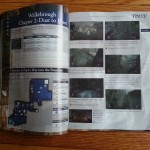
As opposed to the sub-class breakdowns, in the map overviews, the screenshots are welcome, plentiful, and effectively used to demonstrate specific points from the commentary. All of the maps included in this section have several call-out “points of interest,” selections that are specifically tied to a collection of screenshots and full-text explanations as to why these locations are so important. Items such as key choke map points, areas of cover or sniping overlooks are all mentioned, as well as way to avoid falling victim to said mini-arenas of combat.
The Gardens and Graveyards segment of the guide continues along the same lines, once again leading off with a primer, meant to lay down hints for success, specific to both the plant and zombie factions. Also, the map breakdowns have a very similar look and feel, though they also spell out key map locations that are unique to the mode such as zombie spawn points, turrets, cannons, and teleporters. Much like the guide for DICE’s earlier multiplayer shooter, Battlefield 4, the Gardens and Graveyards phases are also broken down intuitively, helping both friend and foe gain the upper hand across what could be as many as 7 different phases and map shifts. This is definitely where the book begins to hit its stride, because almost every hint stated in the text are evergreen pieces of information that are immune to the types of balance tweaks that spell doom for many physical guides.
Wrapping up the actual strategy portion of the book are forty pages dedicated to the Co-op Garden Ops. This hybrid of tower defense and horde is a plants-only mode, so the guidance is quick to point out the difference between common, shielded, armored, hero, special and boss zombies, as well their biggest attacks. The problem is, for the higher level zombies, there is very little said about how to actually dispatch them. These are the critical bits of information that guides are most useful for and the answers are nowhere to be found. Thankfully the requisite map coverage lives up to the quality delivered in the earlier sections and proves to be its saving grace.
After the appendices that list off all of the unlockables and achievements, which is oddly packaged at the end of the co-op segment despite applying to all game modes, we get to my favorite part: behind the scenes coverage. What follows are twenty pages of concept art, and an interview with members of Garden Warfare’s development team. Call me a nerd for enjoying a sneak peek behind the curtain, but it is always interesting to see what was going on through a title’s development process. Will it be at all helpful to the gamer? Not really, but fans will most likely enjoy seeing how the game evolved into what they ultimately ended up playing.
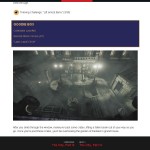
One last piece of this equation is the evolution of the guide in electronic form, which is used to cover the new maps and modes included in Garden Warfare’s subsequent downloadable content. Unfortunately the only one of the DLC map guides is what might be considered complete and only features overhead shots, with commentary for the “points of interest.” The more granular shots associated with the callouts are no longer there, which is a genuine disappointment, because it makes it far more difficult to discern the context of where locations are on the map, especially while in the thick of the action. In the case of the Cactus Canyon map included in the Zomboss Down DLC in particular, there aren’t even points of interest or written hints, just maps and an excuse that says updated coverage is coming soon. Over a month after the content’s release, this is inexcusable. Let’s hope that content is in the pipeline, because what is the purpose of an e-guide if it isn’t updated?
As a game, Plants vs. Zombies: Garden Warfare is an interesting attempt to switch gears with an entire brand. Much like the game itself, Prima Games’ Plants vs. Zombies: Garden Warfare strategy guide had both high and low points, that ended up resulting in a mediocre end product. While far from terrible, instances of content padding, compounded with unhelpful boss descriptions, and unfinished online content resulted in an ultimately unpolished end product.
SGR Rating: 3/5
Author: Alex Musa and Geson Hatchett
Publisher: Prima Games
Editions available: Paperback
Acquired via publisher