• Home
  • About Us
  • Podcast
  • Strategy Guide Wit
  • Contact

Strategy Guide Reviews

A Strategy Guide for your Strategy Guides

  • Reviews
    • Strategy Guide Reviews
    • Video Game Reviews
    • Mini-Reviews
  • Features
    • Interviews
  • News
  • Unboxing Strategy Guides
  • Columns
    • Gaming Diary
    • Corner of Randomness
  • Videos

Bulletstorm Mini-Review

October 3, 2012 By Keri Honea Leave a Comment

Bulletstorm

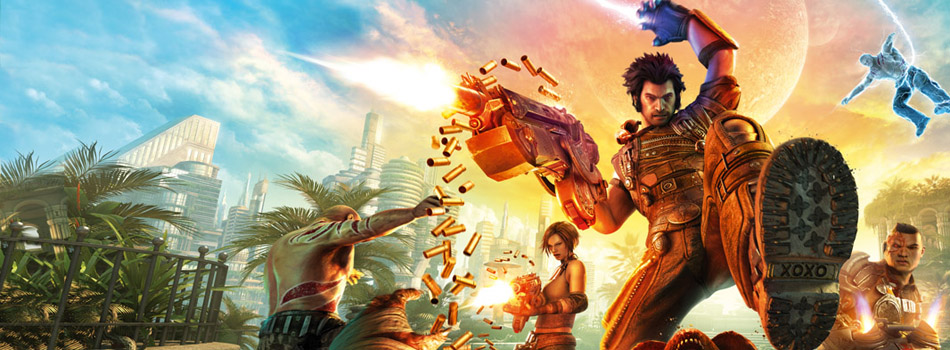
Bulletstormis one of those games that I’ve always wanted to try after hearing my co-hosts on the EvilCast podcast go on and on and on about how insane it is (See also Saints Row The Third). I bought it when it went on sale, and it sat in my stack of shame for some time. Recently, I had a bit of a personal tragedy, and I wanted something over the top, silly, and yes, a little violent.Bulletstormwas promptly moved out of the stack and into my Xbox 360, and it did not disappoint.

Bulletstorm is so incredibly, delightfully ridiculous, from the gameplay to the dialogue, that it’s virtually impossible to not have fun. Well, that’s not true. I suppose it wouldn’t be fun to those who are easily offended, don’t like dick jokes, and don’t enjoy creative headshots. But if you’re a shooter fan, and you don’t get offended that easily (hey, Call of Duty fans!) then Bulletstorm should be right up your alley.

It’s a first-person shooter that completely focuses on creative kill shots. Any creative kill you make earns points (nicely called “skillshots”) that you can spend on weapons, ammunition, and weapon upgrades. If you do nothing but regular ol’ headshots and shots to the chest, you won’t rack up many points and therefore won’t be able to unlock or upgrade your weapons properly, if at all. Different guns have different skillshots, so by simply swapping out weapons you pick up, you can pull off some hilarious skillshots without much effort. The fun with skillshots comes with the ability to kick and leash opponents. Early on in the game, the main character, Grayson Hunt, picks up what they call a leash, which is an electric whip of sorts that allows Grayson to leash enemies toward him or pull down objects in the environment. He can even use to pick up weapons he can’t reach. Grayson can also kick enemies away, which is great for both stopping enemies from shooting at you and great for kicking them off of high places–which leads to a series of skillshots, depending on where you kick them off of. Kicking and leashing also slows down the action for a little bit, thereby allowing players to more easily make that headshot or aim for a certain part of the body to earn other skillshots. For example, a shot to the throat is called the “Gag Reflex,” and if you shoot an enemy in the balls and then kill him, it’s the “Mercy” skillshot. I swear I’m not making this up.
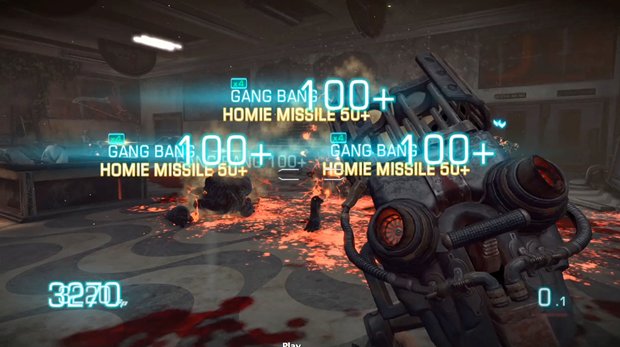
Bulletstorm Skillshots

The dialogue is as over-the-top as the skillshots. I played rugby for a few years, my husband is a former rugby player, and my husband is in the military, and I swear I have never heard so many dick jokes in my life. I turned on the subtitles so I wouldn’t miss a single crazy thing said while I was laughing so hard. I’ve actually turned some of the dialogue into text tones and ringtones on my phone because they’ve made me laugh so hard. My phone is now a weird conglomeration of Gears of War and Bulletstorm tones…I should just slap on an Epic Games logo and move on.

Surprisingly enough, the story was pretty good as well. It wasn’t as deep as something like Spec Ops: The Line by any stretch of the means, but it never once felt convoluted, it made sense, and as the game went on, it got pretty serious. It was amazing to learn that there was a reason why all of these crazy, insane, and twisted-looking humans were on the planet. It was nice to see that there was a reason why General Sarrano was hovering near the planet in the first place. They could have made the story completely happenstance, but they chose to give some meaning to the craziness, and it was a nice touch.

Bulletstorm wasn’t nominated for any Game of the Year awards for 2011 that I’m aware of, and that’s most likely because of its insane and violent nature as well as its okay story, but it’s still an incredibly fun romp. If you need something silly and just fun, I can’t recommend Bulletstorm enough.
Filed Under: Mini-Reviews

Professor Layton and the Last Specter Mini-Review

September 27, 2012 By Keri Honea Leave a Comment

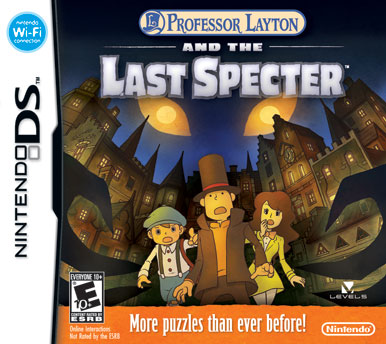
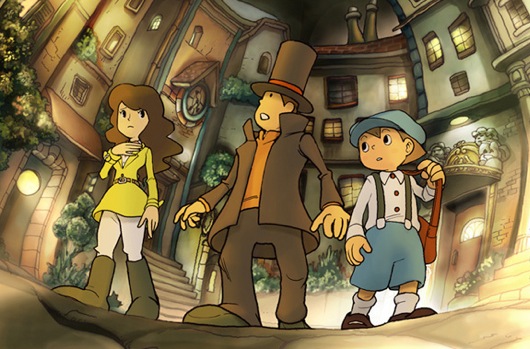
Professor Layton and the Last Specter box artI’ve been a huge fan of the Professor Layton games since they first released, even though the stories have consistently jumped the shark more progressively than the last. Professor Layton and the Last Specter is the fourth game in the series, but it’s a prequel to the first game. It tells the story of how Professor Layton and Luke first met and developed their friendship. It also has the most bizarre and unimpressive story to date as well.

For those unfamiliar with the Professor Layton games, the core gameplay is all based on solving puzzles and riddles. Some of the puzzles are wordplay, others are little games, and others require some basic knowledge of math. They’re typically fantastic brain teasers that make you feel inept at first but award you with a great sense of accomplishment when you solve the puzzles without using hint coins. The first Professor Layton game tied the story to the puzzle-solving gameplay brilliantly, and none of the games have done as well to date. In a way, it isn’t fair, because the story of the first game centered on Layton’s ability to solve puzzles. In the end, it all made sense why the villagers kept handing him puzzles to solve. None of the other games have done that, and if they all did, they wouldn’t feel unique. However, as the games have progressed, the manner in which Layton is handled puzzles has felt lazy, and this game sparked this feeling of laziness more often than the games before. For example, many of the townspeople Layton came across would simply say, “Hey, I can’t solve this puzzle, do it for me,” or “I’ll give you the info you want if you solve this puzzle.” Why don’t you just say tap here for a puzzle?

I didn’t enjoy the puzzles of this game very much either. I felt that far too many required math, something I really hate, and way too many required basic knowledge of geometry and trigonometry for my liking. There’s a reason why I majored in English in college, and not math or science. In reality, there were probably only 10 puzzles that required geometry of any kind, but that was way too many for me. I like riddles, word games, visual puzzles, and the occasional number game. Please don’t ask me to draw angles to calculate how a bird flies.

Professor Layton and the Last Specter

As a result, I kept GameFAQs open at pretty much all the time so I wouldn’t waste hint coins on puzzles I wasn’t going to take the time to solve. In the past, I sought out GameFAQs as a last resort. This time, I didn’t care. It shouldn’t be that way for a game based on puzzles.

I kept going through the game for the story. The stories always won me over in the end, no matter how crazy they were in the beginning. This one failed me all the way through. The story this time was about a Specter (yes, obviously) who randomly appears during the night in the town of Misthallery and destroys everything in its path where it appears. A mysterious oracle has been able to warn the police where the Specter will appear so that the townspeople of the area can be evacuated, but it’s not stopping the Specter from appearing and wreaking havoc. The mayor of the town is an old friend of Professor Layton’s, and he has asked the young archeologist to come investigate. It’s worth mentioning that the mayor’s son is Luke, Layton’s soon-to-be apprentice.

It started off interesting enough, but I was permanently lost when the Loch Ness monster appeared. And no, that wasn’t the Specter, so that’s not a real spoiler. From that point on, the game tried to take the player down an emotional road that the player really had no emotional attachment to. The ending was supposed to be sad, but I just couldn’t get sad, and this is someone who tears up at virtually any hint of sadness anywhere. No, really; I cried while reading the end of The Fall of Reach.

Professor Layton and the Last Specter

So ominous…or something…

Will I get Professor Layton and the Miracle Mask when it releases this Fall? Yes, because I’m not going to turn my back on a series for one bad game. Let’s be serious; I’m still buying Kingdom Hearts games, so obviously it takes 5-10 bad games for me to walk away.

Filed Under: Mini-Reviews

Transformers: Fall of Cybertron Mini-Review

September 21, 2012 By Keri Honea Leave a Comment

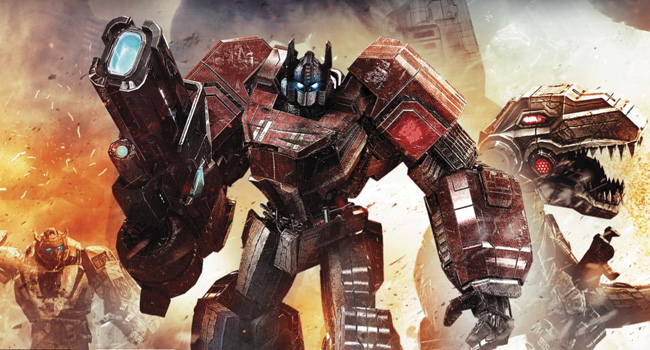
Transformers: Fall of Cybertron

I had a great romp with Transformers: War for Cybertron, and its sequel, Fall of Cybertron, was a great continuation of the romp through nostalgia. Even better, FoC seemed to have fixed many of the complaints I had with WfC, especially when it came to the odd difficulty spikes and the overall game mechanics. Driving and flying were much tighter and smoother, and you have no idea how great it is that all Transformers can dash away–even Megatron’s mega-slow ass.

The game also has quite a bit more features from its predecessor. There are actual collectibles, and they actually contribute to the game in a fun way. The following is an excerpt from my review on Gaming Angels.

The collectibles system and types of collectibles have also greatly improved over its predecessor. In WfC, the game’s ideas of collectibles were shooting down any insignias of the opposing faction that the player happened to see around the levels. Now players collect weapon blueprints and audio files, which are really scattered and hidden and force a bit of exploration on the part of the player if you are a completionist. The audio files are little audio diaries that members of the Autobots and Decepticons have recorded that offer a little bit of insight into the story and to their own personal feelings. For example, an audio file found early on was recorded by Grimlock, where he explains why he left his post. Without that audio file, the player will never really know why Grimlock left outside of Jazz and Cliffjumper’s assumptions as they look for him. A special set of audio files also details Shockwave’s experiments on Grimlock’s team and how they became the Dinobots.

The blueprints, however, can be used to purchase new weapons for characters. Unlike the first game, FoC has a store! Players can purchase weapons, swap out weapons, purchase upgrades for said weapons, purchase health packs and weapon accessories, and purchase perks. The perks include the ability to move more quickly, better shielding for vehicles, and more overall health, just to name a few.

Of course, most importantly, FoC has so many delightful callbacks to the 1980s, it made this retro-fangirl nearly shed a tear or two, especially hearing “You’ve Got the Touch” as the ending credits rolled. Ah, how many young’uns will that be completely lost on? No matter; this game and its prequel were made for the original fans, and it has made original Transformers fans, such as myself, very, very happy.

You've Got the Touch

As I said in my full review, that you should read, Transformers: Fall of Cybertron is great if you take it as it is with no expectations other than a fun, nostalgic experience. You will not, repeat, you will not find anything groundbreaking here. It’s about a dozen hours of a good-natured whaling on other robots. What more do you really need?

Filed Under: Mini-Reviews

Guild Wars 2 Strategy Guide Review

September 20, 2012 By Chris Nitz 1 Comment

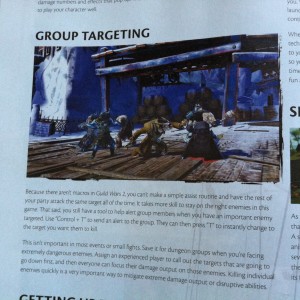
Guild Wars 2 strategy guide reviewReviewing a guide for any MMO is a tricky bit of work. These types of games constantly change and so info in the book quickly becomes outdated. There is also the issue that almost all of these games guide the player along lower level areas while introducing tidbits of the games various mechanics in small chunks, which most commonly happens between levels 1 to 20. What BradyGames has done with their Guild Wars 2 strategy guide is make a textbook for the MMO 101 class.

BradyGames starts this guide out with some lore on the Guild Wars 2 universe, and I enjoyed this greatly as I never fully played the original Guild Wars or any of the subsequent expansions. This portion gave me some history on world events, the races and their trials and tribulations, and how the world got to be so crazy. I actually read this portion twice just because it intrigued me and brought me that much closer to the game world itself.

From there, the strategy guide dives into the basics of multiplayer online games. I am talking these are basics down to what leveling is and slaying monsters works. Anyone that does not know what pulling or kiting is; this is the section to study. For those that this is not their first go-round in an MMO can skip right on by, as there is nothing new or earth shattering covered here.

The guide then moves into each profession, along with what weapons unlock what skills. I strongly recommend looking through this section before embarking into creating a character as this is a decent glimpse into how each profession works and what their roles in group battles are. This actually saved me a bit of time as I was able to see what I wanted to play and what fit my play style best. Each skill includes a blurb on what it does along with any cool down to consider. Do note that cool down times change as this game ages and profession balances drop into place, so do not always expect this info to be 100% accurate.

As with all MMOs, there is plenty to do for people that just want to make in-game items. Sadly, this is where the guide drops the ball with a measly six-page spread dedicated to helping players get their craft on. Sure, making stuff in GW2 is not overly complicated, but in my eyes, it deserves a bit more than this.

The guide then dives into the world and monsters players can encounter while playing. I have to be honest in that I never used this section. NCsoft did a wonderful job of making each area somewhere I just roamed and explored. Outside of some vista points and strategically place points of interest, the game itself encourages players to roam around and participate in quests and world events. I had a hard time trying to stick to some sort of script while I played and so I just closed the book here and immersed myself in the scenery while slaying countless enemies. From a new user point of view, this does provide some insight into how the game works but again, it is just some repetition of what the game already provides through various help screens and tutorials.

BradyGames does their best to enlighten a gamer on how player-vs-player works, but this is something that is only mastered through countless hours of play. The basics of how to conquer a fortress and rudimentary concepts of staying alive on the battlefields flow from page to page. This is a starting point that newcomers should look through, but the master sensei decrees one hour of practice every day to be an necessity on the stage of world dominance.

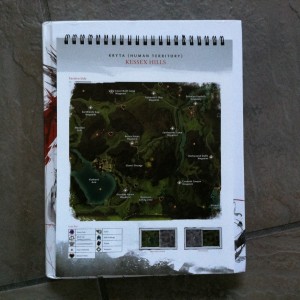
We finally arrive at one of the most used portions of the guide, and that is the maps of each area. I found myself here more than any other as I worked for the 100% completion bonuses of each area. While the guide does a nice job pointing out Asura Gates, points of interest, and quest hearts, it lacks showing where each vista point is. I do not need a breakdown on how to obtain every vista, but knowing their general location would help. The lack of these on the maps is a letdown and does diminish their value some.

If you are totally new to the world of Guild Wars, or have NEVER touched an MMO before, then theGuild Wars 2strategy guideis going to be of some use to you. However, veterans may find the maps handy but those are also freely available online and some even include videos on how to obtain the harder points of interest and vistas. I found the lore portion to be great and highly entertaining, yet I also found the crafting section to be weak and useless. I recommend that anyone considering this guide to head to their local bookstore and flip through the pages before dropping hard earned money on it as this is made for a very niche audience.

SGR Rating 3/5

Authors: Michael Lummis, Kathleen Pleet, Edwin Kern, Kurt Ricketts
Publisher: BradyGames
Editions Available: Collector’s Edition and Paperback
Acquired via Publisher

Filed Under: Strategy Guide Collector's Editions, Strategy Guide Reviews

Transformers: Fall of Cybertron Strategy Guide Review

September 14, 2012 By Keri Honea 1 Comment

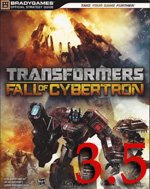
Transformers: Fall of Cybertron strategy guide reviewFor the most part, the Transformers: Fall of Cybertron strategy guide is okay. Much like the game itself, the strategy guide does nothing to really go above and beyond what is expected for an action game. The general walkthroughs exist, collectibles are listed, and multiplayer maps are presented. While all of the information is correct, the strategy guide never took that extra step in giving the player everything possible to complete the game to 100% for Achievements and Trophies. In this day and age, this is a downright necessity for all console strategy guides–with the exception of guides for Wii-only games. In addition, typos and really odd ways of saying Transformers’ names suggest that not much research or quality assurance went into the guide either. Yes, all of the information within the guide is accurate, but the Transformers: Fall of Cybertron strategy guide as a whole lacks that extra polish and completionist material that makes it truly a useful guide.

Transformers: Fall of Cybertron strategy guide

So convenient!

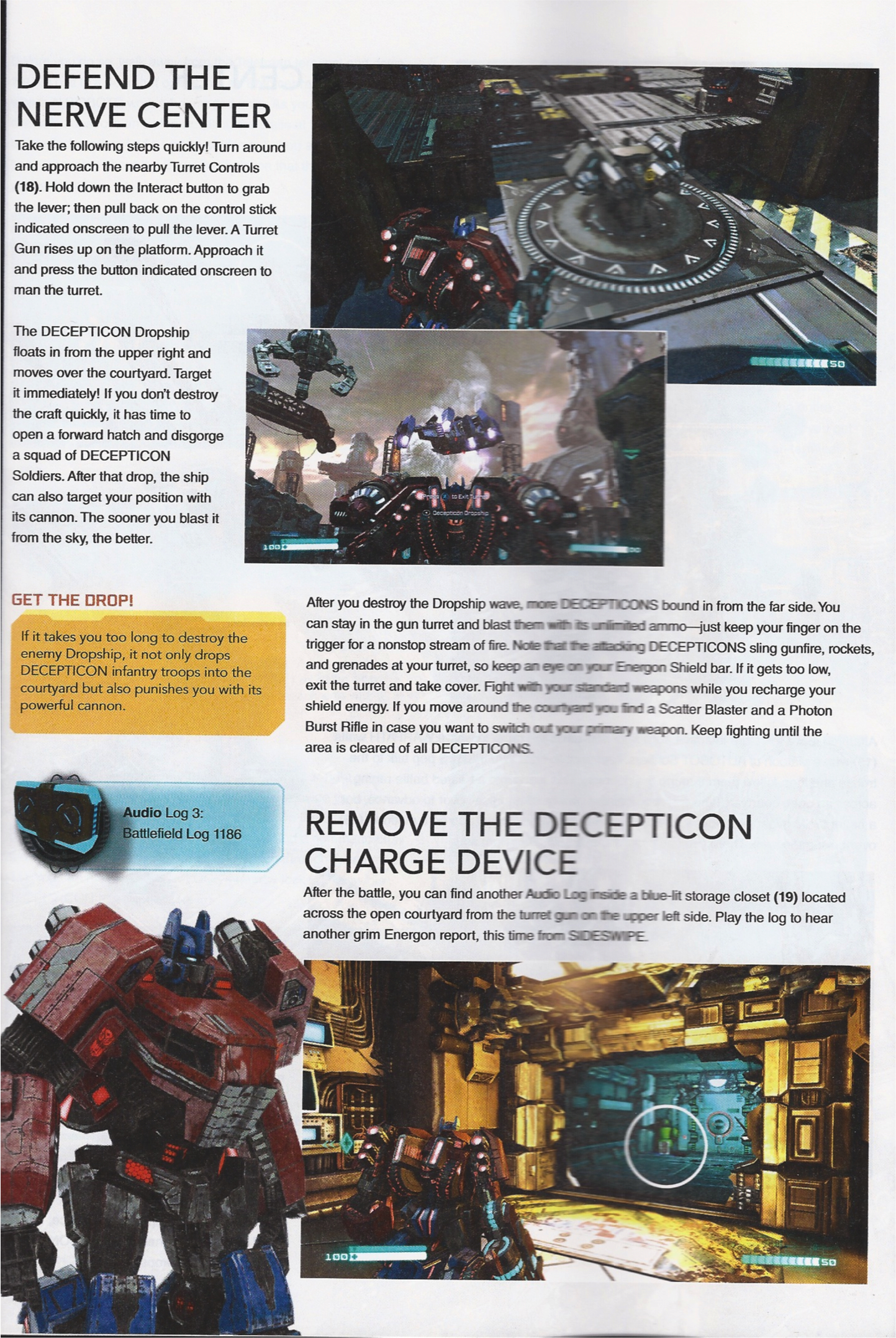
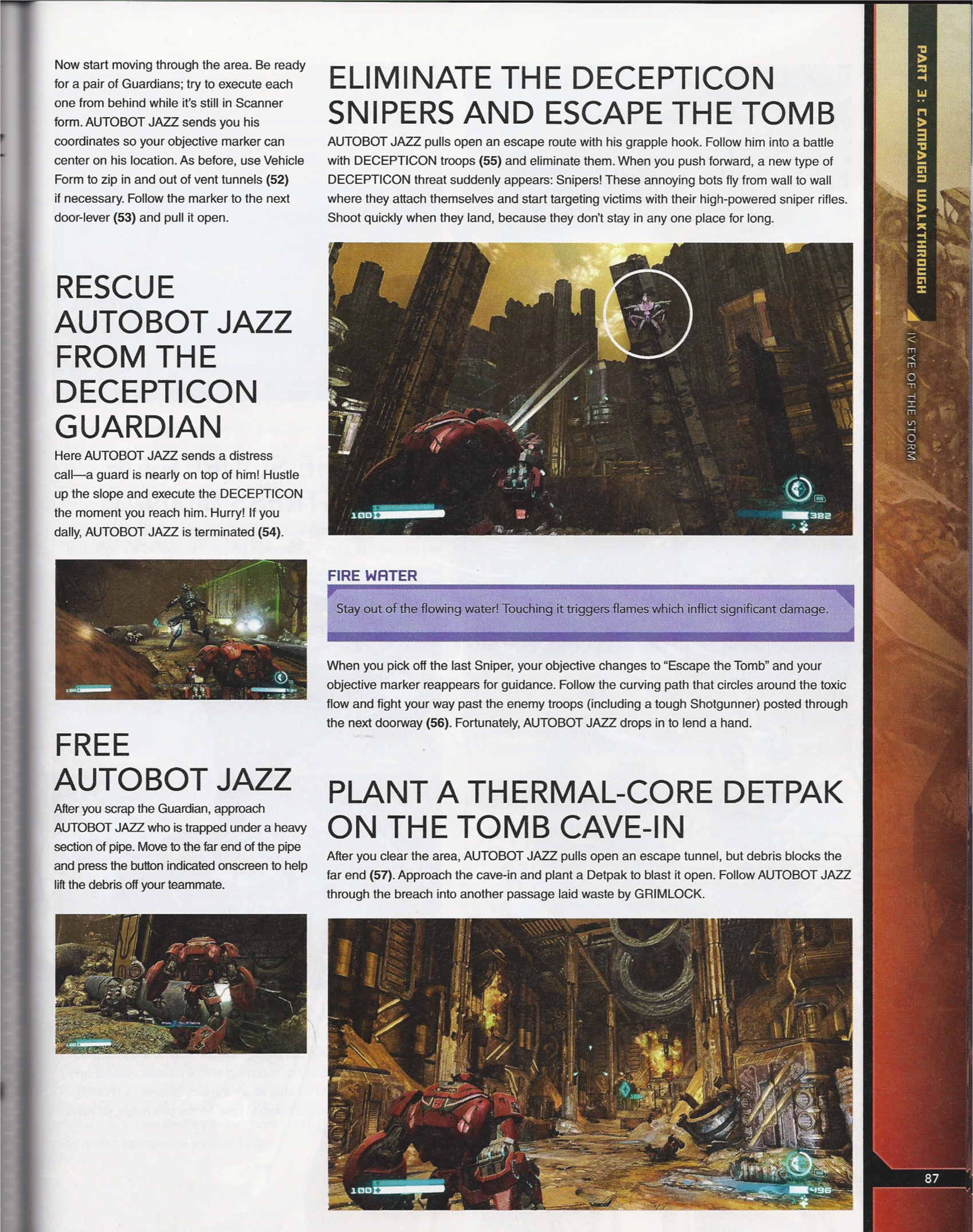
The walkthroughs themselves are impeccable. like War for Cybertron, Fall of Cybertron (FoC) is pretty linear as where to go with a straightforward story and mission parameters. This time around, though, FoC has more collectibles, and as a result, the layout of the levels is far more conducive to exploration. There are two sets of collectibles, audio files and blueprints, and while some are strewn out in the middle of the player’s path, several require venturing to the roads less traveled by. Players who follow the strategy guide by the letter will pick up every collectible their first try without a problem. Even if you miss a few, the game allows you to play any chapter at any time, so it’s simple to backtrack and pick up wayward blueprints and audio files. As an added bonus, the guide included a screenshot of where the collectible is, which was immensely appreciated, especially when I got lost in the corridors a time or two.

The strategy guide was also really great at pointing out any Easter Eggs and little fun morsels the developers threw in just for fun. For example, there are a few times where Soundwave and his tape deck minions spy on Autobots, and unless you know where to look, you’ll miss them entirely. They don’t add anything to the story or even to the gameplay, but it was funny to catch Soundwave spying on me and hear him yell, “Autobots inferior! Soundwave superior!” as he ran away. Also, I would have completely missed Frenzy running on a conveyor belt in Soundwave’s lab like it was a treadmill, if not for the guide. Again, it doesn’t add anything, but it’s fun, like most Easter Eggs. In this case, the Easter Eggs were arcade mini-games that were quite well hidden in a few of the levels.

Transformers: Fall of Cybertron strategy guide

Autobot Jazz? Really?

While the Fall of Cybertron strategy guide did so many things well, it’s hard to overlook so many things that came off as lazy and sloppy. For example, the fact that the write misspelled Arcee’s name as “Acree” when pointing out her random pinup poster is a bit unforgivable. This is the one time in the entire game/guide that she is even mentioned, and it’s in a callout box in gold…highlighting the mistake for the world to see. I cringed when I saw it. No other Transformers’ names were misspelled, but I’m really curious as to why a couple of the Autobots’ names contained “Autobot” before the name, as shows in the image on the left. Why in the world would he be called “Autobot Jazz”? I gave the guide the benefit of the doubt before I judged too harshly, and checked to see what the game called him, both in spoken dialogue and in the subtitles. In both instances, he was just called Jazz, thereby making it incredibly ridiculous for the guide to label him this way. The guide called him “Autobot Jazz” in every instance, not just one or two times. “Autobot Ratchet” received the same treatment. Oddly enough, no Decepticons were given the “Decepticon” prefix before their names.

The biggest disappointment of the entire guide was the lack of Achievement/Trophy help. Each chapter charges players with a specific challenge to get a random Achievement/Trophy. For example, in Chapter III, the special  Achievement requires players to “take out a cluster of eight Decepticons using Metroplex’s Air Strike.” The strategy guide never once calls attention to this Achievement in the walkthrough. It never mentions the player can get a special Achievement here, never suggests the best spot to try to snag it, and never suggests a best method to go about doing it. In the back of the guide, where the Achievements are listed in a nice table, the guide offers zero advice on how to earn each Achievement. What is the point of having a strategy guide if there are no strategies for how to obtain 100% in Achievements and Trophies? For many people, this is all they want out of any form of help in the first place.

This lack of Achievement/Trophy support clouded over most of everything else the Transformers: Fall of Cybertron strategy guide did very well, and the sloppiness with the Transformer names only darkened the clouds. As much as the strategy guide nailed the walkthroughs and the hunt for collectibles, it didn’t go that extra mile to give the player all the tools needed to complete the game to 100%. In the end, it left me with lots of disappointment.

SGR Rating: 3.5/5

Author: Rick Barba
Publisher: BradyGames
Editions available: Paperback
Acquired via Publisher

Filed Under: Strategy Guide Reviews

  • « Previous Page
  • 1
  • …
  • 32
  • 33
  • 34
  • 35
  • 36
  • …
  • 57
  • Next Page »

Follow us!

Subscribe!

Upcoming Strategy Guides

 Nothing here. Come back later. 😢

Latest Strategy Guide Reviews

The Walkthrough by Doug Walsh Review

Red Dead Redemption 2 Strategy Guide Review

Mega Man 11 Strategy Guide Review

God of War Strategy Guide Review

Far Cry 5 Strategy Guide Review

Friends of SGR

  • BradyGames
  • Dan Birlew – Guide Writer
  • Doug Walsh – Guide Writer
  • Future Press
  • Game Enthus
  • GameWires.com
  • Piggyback
  • Press the Buttons
  • Prima Games
  • Racing Games

Top Posts & Pages

  • Monday Gaming Diary: Keeping the LEGO Marvel's Avengers in Focus
  • Weekly Poll: How Many Video Games Do You Play at Once? Redux
  • Strategy Guide Cover of the Week: Final Fantasy X
  • Why Should I Buy? Unboxing The Witcher 3: Wild Hunt Complete Strategy Guide
  • Halo: Reach Strategy Guide Review

Copyright © 2026 · Web crafted by Warkhammer

Loading Comments...