• Home
  • About Us
  • Podcast
  • Strategy Guide Wit
  • Contact

Strategy Guide Reviews

A Strategy Guide for your Strategy Guides

  • Reviews
    • Strategy Guide Reviews
    • Video Game Reviews
    • Mini-Reviews
  • Features
    • Interviews
  • News
  • Unboxing Strategy Guides
  • Columns
    • Gaming Diary
    • Corner of Randomness
  • Videos

The Last of Us: Remastered Strategy Guide Review

August 14, 2014 By Brad Hilderbrand Leave a Comment

The Last of Us: Remastered strategy guide reviewWith the rerelease of The Last of Us on the PS4, the folks at BradyGames are in an interesting position. On the one hand, the base game is fundamentally the same, so how do you create a strategy guide that players will find useful? If someone already has the guide for the PS3 version of the title, is there value in picking up the new version for The Last of Us: Remastered?  Unfortunately, just like in the post-infection landscape Joel and Ellie find themselves roaming, there are no easy answers.

The Last of Us: Remastered strategy guide starts off with some basic gameplay info and survival tips, which makes it invaluable for newcomers but less so for returning vets. The section covers important gameplay elements like scavenging parts and items for weapon upgrades and crafting, as well as a breakdown of the various enemy types and the weapons you’ll be using to stay alive. If this is your first foray outside the Quarantine Zone then this section is chock full of important intel. However, for those who have braved the infected-strewn landscape before there’s nothing really important to see here. The only thing which seasoned players might reference are the tables laying out how much it costs to upgrade the various weapons in various ways so they can easily plan which improvements they want to go for first or if they need to save up for a while to get a critical upgrade for a favored gun.

The guide then transitions into the single-player walkthrough, providing not only general navigation info, but also combat tips and collectible locations. What’s nice about the layout is that each section and set piece is given its own map and walkthrough, so you won’t have to flip back several pages in order to find critical info. What’s less impressive is that sometimes the info is ordered strangely, and missable collectibles and moments aren’t mentioned until after you’ve already passed them.

For instance, in order to get the “That’s All I’ve Got” trophy you have to listen to all of Ellie’s jokes, which only trigger in specific situations. The first of these comes as you get ready to transition from one part of a map to another, right before you climb over an obstacle. The strategy guide will tell you to go ahead and move to the next part of the map, but immediately after will mention that you need to stand in a specific, now inaccessible, area to get Ellie to tell her joke. At this point you’ve already missed your opportunity, and have to reload an earlier save (if you thought to create a manual save at a seemingly arbitrary point) or, much worse and more likely, restart the entire chapter in order to get the event to trigger. Frustratingly, this isn’t the only time in the game when something like this happens, and I found myself missing key collectibles and items because I didn’t read ahead, which you shouldn’t be expected to do in a step-by-step guide.

I also found the combat tips rather hit-or-miss, as the guide is useful when dealing with 2-3 foes, but often falls apart when facing larger groups. The guide assumes you’re favoring a stealthy strategy, which is good considering the relative scarcity of ammo. While you often get specific info on how to eliminate the first couple foes in a group, info on taking out the rest can be vague and unhelpful.

An example, early in the game Joel finds himself in an office building facing a large infected presence, including your first run-in with a very dangerous Clicker. Seeing as it’s early in the game you have little in the way of ammo and no character upgrades, and I’ve always found it to be one of the more challenging battles consider Clickers can kill you instantly if they manage to grab you. The strategy guide provides solid advice on taking out one enemy without being seen, as well as choking out a second. After that though you’re simply told to find some way to finish off the two remaining lesser infected before attacking the Clicker. The thing is, the last 3 enemies are grouped together, and it’s nearly impossible to lure one of them away without also alerting the others. Every time I played this section, even with the guide at hand, the encounter ended with me frantically sprinting around the floor trying to get enough space to reload my gun and shoot the now-alerted foes as they gave pursuit. Similar scenarios played out in other tense situations, and every time I left the fight injured, low on ammo and frustrated by a lack of specific instruction.

One upside to the single-player portion of the guide is that it includes all the DLC missions (which come packed in with the Remastered edition), so you have a full rundown of how to survive the bonus content as well. These stages get the same treatment as the primary single-player campaign, so there are plenty of maps and item callouts. Again, there are shortcomings here. Some enemy encounter strategies are frustratingly vague, and you may once again miss optional collectibles or moments because the guide doesn’t mention them until you’ve moved on.

While the single-player portion of the guide can be spotty, it shines when it comes to the multiplayer. The Factions mode provides a unique twist on traditional competitive multiplayer, and the guide does a great job explaining how it works, its objectives and the events that come up as you play. Factions can be a fairly dense mode and if you don’t understand the metagame you may find yourself winning battles but losing the war. If you’re following the guide though you should be able to cook up a solid strategy to keep your allies alive and survive long enough to “win” the mode.

Accompanying the great overall info is a full breakdown of all the maps and what strategies are most likely to be effective. It’s easily to quickly reference the guide with the map you’re about to play and then tweak your loadout into something that best suits the environment. You’re also given numerous weapon and perk combinations to fit various gameplay styles, so you should be able to find the optimal loadout for whatever class of character you prefer.

As great as The Last of Us: Remastered is, the guide can’t live up to the lofty bar the game itself has set. While the multiplayer portion is exceptionally helpful, the single-player sections are unimpressive. Also, this is a very bare-bones book, with no additional artwork, developer interviews or added content beyond walkthroughs and strategies. While you can debate the usefulness of such things in a book that is first and foremost supposed to be about helping you beat a game, considering this is a title that’s already been released once – and that a large portion of the userbase has already played – you need something more to hook people’s attention. Even some general tips on how to take a great screenshot in Photo Mode would have been worthwhile.

The Last of Us: Remastered strategy guide serves its intended purpose, but doesn’t really find a way to shine. It’s that coworker at the office who does enough to not get fired and be generally reliable, but never sticks their neck out and tries something noteworthy or unique. You may find the guide useful for a few particularly tricky encounters or nabbing all the extra loot, but it’s not one you’ll proudly display on your shelf.

SGR Rating: 3/5

Author: Michael Owen
Publisher: BradyGames
Editions available: Paperback
Acquired via publisher
Filed Under: Strategy Guide Reviews

The Wolf Among Us Mini-Review

July 25, 2014 By Keri Honea Leave a Comment

wolfrevcover

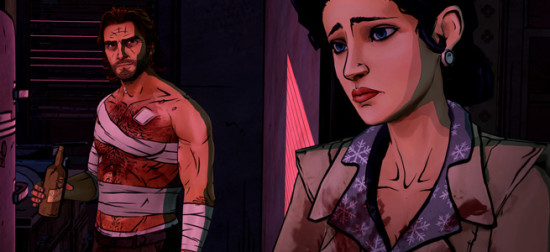
I loved Telltale Games’ The Walking Dead, but after the first season, I couldn’t handle it emotionally anymore. I was tired of the nightmares, tired of sobbing when kids were killed, and tired of playing a game that kept me constantly on edge. I’ve missed out on the second season, but I still wanted another amazing experience like it. Telltale seems to be the master of storytelling with its episodic point-and-click adventures, so I was always intrigued by The Wolf Among Us. I’d heard it was good, but I also wanted to wait until it was complete, as I know I have very little patience for waiting. I binge on almost all forms of media lately, from comics to TV shows, and now episodic video games.

Fortunately for me, that’s exactly how Action Trip wanted me to roll with my review–play it all at once and write up the review on that experience.

And holy cow what an experience it was.

I best describe the gameplay as a cross between the point-and-click gameplay of The Walking Dead and the exploration and mystery-solving of Murdered: Soul Suspect. The story, however, is like nothing I’ve ever experienced before, and I can’t emphasize its greatness enough. I need that second season like now. Here’s a snippet from my review:

As expected with a point-and-click title, the story its best overall facet, but the game mechanics are sound enough to not blemish or take away from any part of Bigby’s tales. In many ways, the gameplay reminded me of a mix between Murdered: Soul Suspect and the point-and-click style of The Walking Dead. Whereas The Walking Dead had a few somewhat complex puzzles and intense action scenes, The Wolf Among Us has a stronger focus on exploration and piecing together clues. Occasionally Bigby will have to rough up suspects or chase them down, which throws the player into a few QTEs, much like The Walking Dead. However, I never once felt as stressed or on the edge of death if I made one mistake as I did with The Walking Dead. Since The Walking Dead, is about survival and The Wolf Among Us is about solving a mystery, shifting the style of gameplay around a bit not only fits the game’s tone, story, and mood, it separates it from simply being a clone of The Walking Dead.

Simply put, if you’ve been putting off The Wolf Among Us for whatever reason or haven’t considered playing before, stop what you’re doing and download the game now. Of course, if you hate point-and-click adventures, feel free to walk away. But the rest of you, especially you story gamers out there, you need this in your life.

Filed Under: Mini-Reviews

Titanfall Strategy Guide Review

July 16, 2014 By Blake Grundman Leave a Comment

Titanfall strategy guide reviewIt goes without saying that the folks over at Respawn have been fighting an uphill battle since the studio’s inception. Originally birthed out of the strife and subsequent implosion of Call of Duty developer Infinity Ward, Respawn set out to create a new IP that bank in on what the team’s design strength: multiplayer. And thus, Titanfall was born, as an online-only multiplayer FPS. Can Prima Games’ Titanfall Strategy Guide manage to live up to the high standards established with their well crafted Battlefield 4 guide or will the print version fall victim to the constantly evolving state of online titles?

Before even cracking the cover of the Titanfall Limited Edition hardcover guide, it would be a tragedy to overlook how fantastic the exterior of this book looks. The sleek cover art spans across both the front and back of the binding, featuring an amazing rendition of a hulking Titan, with its pilot perched on its arm, overlooking a sun-bleached cityscape vista. The game’s title is the only typeface on the cover, and only appears in the top-right corner as an afterthought, probably in an effort to not draw attention away from the amazing piece of artwork

Cracking the cover treats the reader to a beefy behind the scenes look at Titanfall, clocking in at more than thirty pages. There are interviews with several key members of the development staff, including the likes of Respawn CEO Vince Zampella, Lead Artist  Joel Emslie, and Game Director Steve Fukuda, just to name a few. The very thoughtfully constructed section provides an impressively candid look behind the curtain that runs the gamut from talks about the difficulty of starting a new studio and IP from scratch, to admissions of moral issues early on in the development process. Each interviewee has a series of questions that are structured around their specific role on the project, which ends up painting a very in-depth picture of the entire game, from damn near every angle possible.

Of course, both in-game assets and concept art are interspersed throughout the intro. The layout of this particular segment of the book is very flexible, adjusting margins and column sizes to give extra room for artwork to “breathe,” while still not giving the impression of excessive white space on the page. Overall, this turns out to be one of the better featurettes in recent memory.

After all of the fun has come to end, it is time to get down to the nitty gritty and tear into the actual introduction. The next fourteen pages initiate the reader into the game, its universe, and the mythos surrounding the conflict that players are dropped into. This wraps up with the actual campaign overview, which also marks the first actual advice that the book doles out, in the form of light team tactics recommendations on each stage of the “storyline.” The matter-of-fact presentation of this information almost trivializes the mission’s objectives, instead opting to point the reader in the best way to accomplish an overall victory by working together as a team. This guidance seems to work fairly well if team members are on the same page, but it is also far more effective when used in tandem with the later map section.

Ironically, all of this information has been dolled out, without ever explaining to the reader the core game mechanics and controls. That actually comes as the very next segment of the text. Though it can almost be assumed that if you are playing Titanfall this isn’t your first FPS rodeo, it still seems like this “Pilot Certification” section may have been better served appearing in the introduction, before actually delving into information about the campaign structure. Key concepts like the control scheme, and a rundown of each stage of the pre-game tutorial make up the majority of the next twenty six pages

An important area not to miss in “certification” is the breakdown of the new mechanics introduced by using Titans like effective shield use, the three different equipible tactical abilites, and titan auto-pilot. Also be sure not to miss out on information about the persistent elements such as burn cards, loadout customization and minion usage. There are several invaluable “Developer Tip” callouts that further detail what otherwise might be considered mechanics that you would have to experience in-game first, in order to fully understand. Newcomers should be sure to get all they can from these very valuable chunks of information. Lastly, the different combat scenarios such as “Titan vs. Pilot” or “Pilot vs. Minion” are all spelled out, from both side of the conflict. The tactical information provided is the kind of evergreen advice that would only otherwise come from logging countless hours of trial and failure. Taking a few of these notes to heart before stepping foot in the multiplayer will help to shave hours of unnecessary frustration from the reader’s life.

Tactical information then gives way to over fifty pages of information about the different pilot classes, their specific strong suits, and Titanfall’s impressive lineup of on-foot weaponry. Most firearms are given an impressive two pages of real estate, to give the reader an in-depth analysis of strengths and weaknesses, the in-game unlocks associated with the item and kill counts of how many shots it takes to kill equally sized adversaries, when aiming at either the head or torso. There are also performance charts that give general info about damage, accuracy, range and rate of fire, but there are no pieces of numerical data to back up the chart’s scale. Most likely this is a conscious choice, made to keep the information in the guide relatively correct, even after the development team makes balance adjustments, post-release. This is a clever way to get around this obvious shortcoming of print media in a digital age, but the lack of any sort of scale somewhat renders these graphs moot.

“Pro Tips” from the guide’s team of writers/pro gamers or developers usually lead off the second page, and contain key tidbits about how the weapon in question’s effectiveness can be maximized through uses of different modifications or burn cards. This is all concluded by a list of every challenge and the number of experience points that are rewarded for completing said task, for that given firearm. All-in-all, though some of the information is purposely vague to avoid being rendered invalid over time, there are still plenty of reasons to read up on your gear of choice, in order to craft the perfect loadout for the reader’s specific style of play.

Wrapping up the pilot analysis are a series of custom designed loadouts, meant to emphasize the different playstyles that can be used in teamwork scenarios. Featuring names like “Defender” and “Hacker,” it is pretty easy to figure out who these bundles are targeted. What is more interesting is checking out the profession players’ loadouts. These tend to be more eclectic hybrids, that straddle the line between playstyles, but provide much more flexibility in a evolving game scenario.

The same level of detail applied to the pilots and their weaponry is also applied to the different titans and their weaponry. Different customizable titan elements such as kits, chassis, and ordinance join the typical weaponry sections. These are laid out very similarly to their equivalents in the pilot portion of the text, with the exception of lacking the pro tips callouts. Easily the most valuable portion is once again the concluding loadout suggestions for each mech. Considering that this is a fairly new experience for multiplayer shooters, both newcomers and veterans of the genre will find plenty of new information to glean from these scant four pages. But good things in live come in small packages, right?

Then we get to the actual meat of the guide: maps. One hundred and eighty of this guide’s three hundred and thirty pages, which is well over half of the book for those of you keeping track at home, are tied up in map analysis. This is not a bad thing by any stretch of the imagination, especially given the lack of any form of genuine single player content in the game itself. It just helps illustrate how this guide very much lives by the mantra, “a picture is worth a thousand words.”

Every map in the game is led off with a two primer containing a kill/death heatmap, giving the reader a basic idea of where most of the slaughter will take place and a full page, top-down view of the map. From the map, there are a series of key landmarks that are called out in image form along the the binding of the left page, but not explained why they are so important. Be sure to remember those points, because they will come in handy in the pages that follow.

Once the foundation has been laid, the same layout of a blown up and numbered map on the first page, flanked with a legend at the bottom, and second page of tactics are repeated on loop five times. Why five times, you ask? This is done to emphasize the different strategies for each of Titanfall’s five core modes. It is a testament to Respawn’s forward thinking design that this is so necessary, but in each case there is very little repeat in the strategy sections between each mode. Make sure to take note of the pro tip callouts, because it tends to give a bit of a glimpse into the mind of a high level player. If readers can begin to think like like these skilled players, they will ultimately be a better teammate.  Also, be sure not to miss the zipline location and parkour hints embedded throughout. Utilizing these moves take a bit of practice, but have the potential to provide players with an instant jump on the competition.

Bringing the guide to a close is the standard quick reference guide of achievements, experience scoring charts and reprints of details on the different burn cards. In one neat conclusion, the last page before the credits is crammed full of last minute developer tips, not already included in the text. Though some of these concepts are rather simplistic and almost, “well, duh…” there are enough gems scattered throughout to warrant a quick skimming.

The last of the lose ends in regards to Prima’s Titanfall Strategy Guide is their online based eGuide. Unlike the previously reviewed Plants vs. Zombies: Garden Warfare guide, it Titanfall counterpart seems far more up to date. All of the maps included in the Expedition map pack have been added to the guide, though they have notably left out strategies for the Attrition and Pilot Hunter gametypes. Maybe the maps don’t support these modes, but it would have been nice to see some sort of explanation in the primer as to why they are absent. It is also worth noting that Respawn went on the record at E3, stating that at least two new modes will be coming to the game this fall. Hopefully all of the existing maps included in the book, as well as in the DLC will be updated with new coverage pertaining to these modes. However, given their hit-or-miss updating history of eGuides, I am not holding my breath.

The sum total of the Prima Games’ Titanfall Strategy Guide ends up being one of the more helpful guides released, as of late, while still providing a very stylistic presentation. The book’s effective use of art to both illustrate key points as well as just showcase the game’s fantastic artwork is what helps set this apart from other, more lackluster efforts. When combined with the great guidance from professional players as well as the developers, this is the perfect companion to any aspiring Titan pilot. Hopefully its electronic incarnation will continue to evolve with new DLC and uphold the same level of quality put forward in this stellar guide.

SGR Rating: 4.5/5

Author: David Knight and Michael Cavanaugh
Publisher: Prima Games
Editions available: Paperback and Hardcover
Acquired via publisher

Filed Under: Strategy Guide Reviews

Watch Dogs Strategy Guide Review

July 8, 2014 By Matthew Green 4 Comments

Watch Dogs strategy guide reviewThe world of Watch Dogs is a pretty big place. Start wandering the streets of Chicago as Aiden Pearce and it won’t be long until a compelling event draws the player’s attention. It could be a main story mission, it could be a side mission, it could be a mini-game that does it. It could be one of the mysterious investigation prompts scattered all over the city. It could be an online invasion or a digital trip. There’s so much to do in the city that it’s easy to become overwhelmed and a bit disoriented. How does one cut through all of the dazzle to the heart of a mission? Prima Games has put together a surprisingly detailed strategy guide for Watch Dogs which outlines not only every main story mission, but all of the extra side material as well. It may not be necessary for everyone, but the Watch Dogs strategy guide can be an indispensable companion to those who use it properly.

I wanted to explore Chicago on my own terms and at my own pace, so I made it a point not to over-rely on the strategy guide. I wanted to be surprised by every trick and curve the game tossed my way, so my method was to attempt a mission, feel free to fail it a few times, and only turn to the strategy guide if I was absolutely stumped. The first time I flipped open to a trouble spot, I was immediately impressed by the writing structure. The instructions don’t just outline how to complete a mission, they are presented in multiple play styles. Where applicable (which is most of the time), there are a variety of ways to complete a task based on the player’s preferred method. Do you go in guns blazing? Would you rather sneak around in the shadows to dodge enemies? Maybe you’re more the type that would rather climb up high, look down on the area, and remotely control the objects down below. No matter how you want to progress, the strategy guide lists a detailed set of directions for each mission and notes the approximate difficulty of each method. I was impressed by the attention to detail, and most of the book is made up of this section. Naturally there were parts of each mission’s guide that I did not use since I had to choose a method and see it through to the end, but I would rather be overprepared than underprepared.

There’s more going on in this strategy guide than just detailed directions. There’s a handy chart of all of the drivable vehicles in the game, a list of all key hacking locations, a guide to the online contracts mode, a set of basic tips for controlling Aiden, overhead maps of key areas marked with helpful icons to identify useful items and vantage points, and appendices listing available experience and skill points. Essentially, this strategy guide blows the game apart and details everything you’d need to know to take Chicago by storm. There’s even an access code included to reach the online ebook version of the strategy guide that is updated as new downloadable content and patches are released.

It’s difficult to criticize the strategy guide for its informational content, but I do have an issue with how it’s presented. There’s so much information packed within the strategy guide, so much splashed on to every page, that it’s difficult to find the exact mission I needed help in completing. I spent more time turning pages than I did actually reading them. Worse, when trying to pinpoint exactly which page I needed, I often overshot my destination and ran into spoilers. There are color tabs printed on the side of the actual book to give a quick guide to which section of the book is where, but all of the main mission pages are noted by the same yellow color. I’d have preferred for the mission pages to be further denoted by different colors for each act so I wouldn’t accidentally stumble across a major story point beyond where I intended to read. It’s a small problem, admittedly, but what good is information if I can’t access it easily?

Overall I found the Watch Dogs strategy guide to be highly useful if a bit difficult to locate what I wanted to know quickly. That said, with so much to do and so much ground to cover, it’s helpful to have a printed co-pilot offering advice when needed.

SGR Rating: 4/5

Author: David S.J. Hodgson
Publisher: Prima Games
Editions available: Paperback and Hardcover Collector’s Edition
Acquired via publisher

Filed Under: Strategy Guide Reviews

Murdered: Soul Suspect Mini-Review

June 24, 2014 By Keri Honea Leave a Comment

Murdered: Soul Suspect

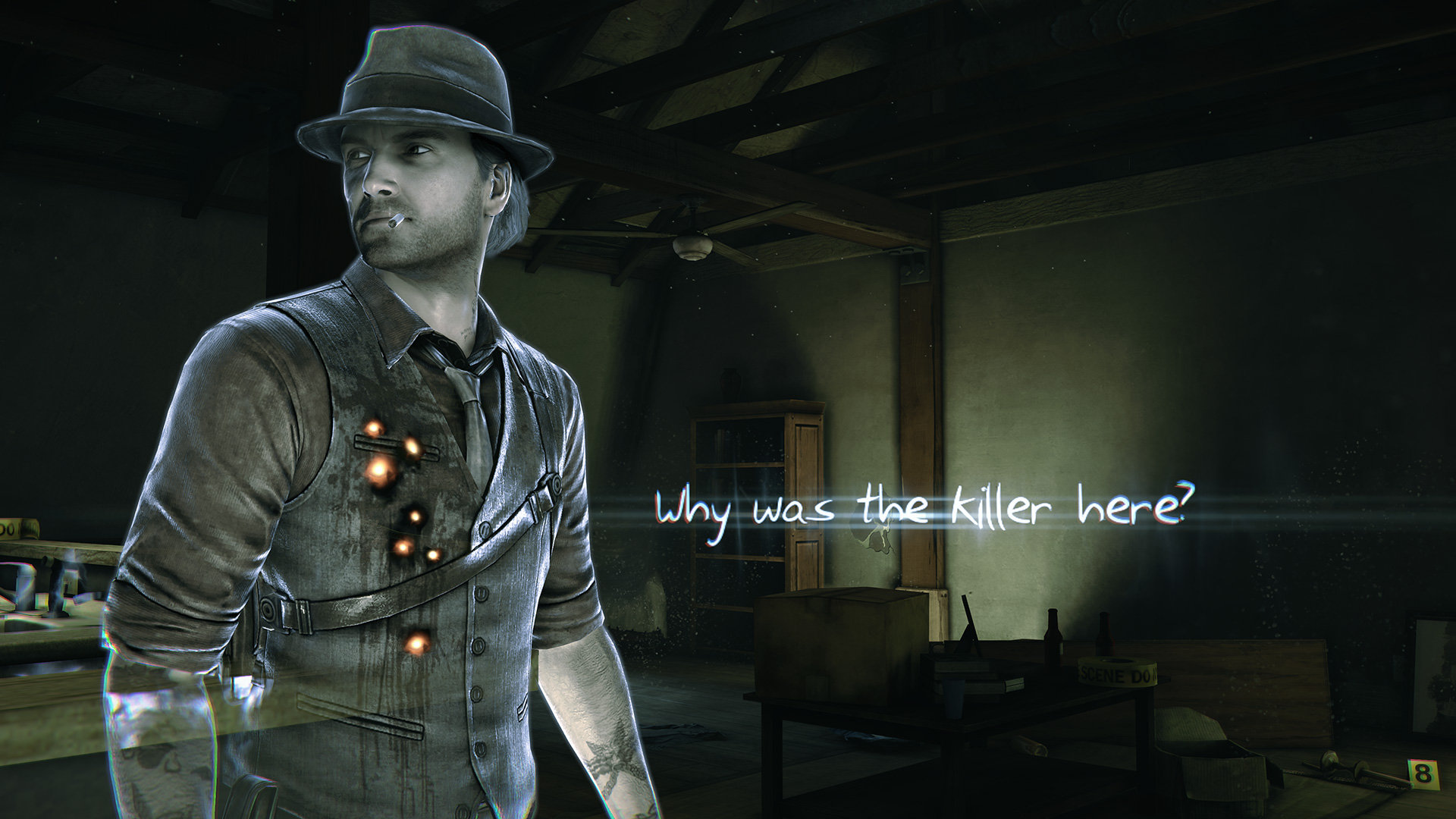
Murdered: Soul Suspect has gotten rather unfairly beaten up in reviews. It’s essentially an exploration game, one that reminded me a lot of Gone Home but with a far more interesting story, because this one really was about solving a murder. As the recently deceased Detective Ronan O’Connor, the player has to run all over Salem, Massachusetts to uncover clues and solve the Bell Killer murder mystery that has plagued the town. I fully admit that it sounds a lot like the movie Ghost, but that’s no reason to preemptively hate it. Fact is, Murdered: Soul Suspect is the perfect game for the story-gamer.

The only action the player has to participate in is executing demons that roam the afterlife. The demons are former spirits that were never able to move on, so they’ve become demonic beings that do nothing but absorb other wandering souls. Of course, they can only be taken out via stealth, so running and hiding in other ghosts’ residues and patience are the only ways to defeat them. These things terrified the ever-loving bajeezus out of me. Every time I walked through a wall and heard one scream, my heart stopped and I made Ronan back track as fast as ghostly possible.

Here’s a bit from my review on ActionTrip.com:

Gameplay is roughly 90-95% exploration. You’re a detective, and that means doing detective things. You search for clues. You interrogate people, whether it’s by talking to ghosts or eavesdropping on police interrogations. You sort out the pieces of the puzzle, figure out what which clue is most important–not all of them are relevant, after all–and unravel what really happened in each situation. Sometimes Ronan will do this for the main story, and sometimes he will do this to help other ghosts solve their own predicaments.

Solving a case question is not difficult, especially if you do gather all of the available clues. But even if you guess wrong, you will not get a fail state. Instead, you have to try again, and you lose points for each guess. The fewer guesses you have to make, the more proficient Ronan’s detective skills become, making finding clues and drawing conclusions a slightly easier task. However, like I said, it’s not really difficult, so I couldn’t tell you if a severe deficiency in points significantly affects Ronan’s abilities. Considering that the primary focus of the game is to tell an interactive story, featuring a fail state of this type would remove the player too much from the experience and would be, if you think about it, kind of pointless.

Of all the clue hunting there was in the game, I loved the collectible hunting the most. Each area had its own set of collectibles, and if you found them all, you learned of a murder mystery or ghost story that occurred in that location. It had absolutely nothing to do with the story, but they were very entertaining tales, much like the stories told in Lost Odyssey, but at least I didn’t need a box of Kleenex for these.

And you know, I loved the collectible-hunting so much, I went back to the game and found all of my missing collectibles for that Platinum trophy. That’s how much fun I had with this game.

But don’t think that because I’m praising it that it doesn’t have any faults. The game isn’t perfect at all, and there were problems that drove me insane, such as the lack of an in-game map. I cannot tell you how much this would have been helpful.

If you like exploring and games that focus on story, then I cannot implore you to check out Murdered: Soul Suspect enough. It was such a welcome break from all of the action games available right now, and as a story-gamer, this was an absolute paradise for me.

Filed Under: Mini-Reviews

  • « Previous Page
  • 1
  • …
  • 15
  • 16
  • 17
  • 18
  • 19
  • …
  • 57
  • Next Page »

Follow us!

Subscribe!

Upcoming Strategy Guides

 Nothing here. Come back later. 😢

Latest Strategy Guide Reviews

The Walkthrough by Doug Walsh Review

Red Dead Redemption 2 Strategy Guide Review

Mega Man 11 Strategy Guide Review

God of War Strategy Guide Review

Far Cry 5 Strategy Guide Review

Friends of SGR

  • BradyGames
  • Dan Birlew – Guide Writer
  • Doug Walsh – Guide Writer
  • Future Press
  • Game Enthus
  • GameWires.com
  • Piggyback
  • Press the Buttons
  • Prima Games
  • Racing Games

Top Posts & Pages

  • Thursday Gaming Diary: Host Switching
  • Monday Gaming Diary: Keeping the LEGO Marvel's Avengers in Focus
  • Monday Gaming Diary: Getting Reacquainted with Handhelds
  • The Corner of Randomness: Bad Embargo Timing
  • Medal of Honor Warfighter Strategy Guide Review

Copyright © 2026 · Web crafted by Warkhammer

Loading Comments...