• Home
  • About Us
  • Podcast
  • Strategy Guide Wit
  • Contact

Strategy Guide Reviews

A Strategy Guide for your Strategy Guides

  • Reviews
    • Strategy Guide Reviews
    • Video Game Reviews
    • Mini-Reviews
  • Features
    • Interviews
  • News
  • Unboxing Strategy Guides
  • Columns
    • Gaming Diary
    • Corner of Randomness
  • Videos

Mario Kart 8 Strategy Guide Review

June 19, 2014 By Chris Nitz Leave a Comment

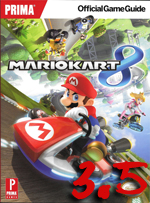
Mario Kart 8 strategy guide reviewIf there is one game worth putting a Wii U on the “Must Buy List”, I’d have to admit that Mario Kart 8 is that game. The amount of fun I am having with this title is ridiculous. Heck, it even brought on a rash of Luigi Death Stare videos. For kart racing fans new and old that, it’s time to practice your best drifting skills while checking out the Mario Kart 8 strategy guide from Prima Games.

They're so cute when they're young!

They’re so cute when they’re young!

The guide starts with all the basics, and this is one stop everyone will want to take as the controller breakdown is here. This game allows for five different control schemes on three controllers, which can be daunting if you’re trying to figure out which setup is best for you. After that, it is all about the mechanics of the courses. Things such as boosting, gliding, the new hover mode, and item descriptions find blurbs here. What really impresses me are the charts detailing what the chances are of acquiring a specific item depending on race position and game mode. This is something I still come back to study as I try to work on my online score.

Once the basics are done, it’s onto the racers, karts, and kart customizations. Characters have small descriptions that give readers an idea of how that person will behave on the track. This also includes all the unlockable drivers. No Stig wannabe is complete without a killer ride, and this is where the kart area comes into play. I enjoyed seeing all the options I would have available, and it made me want to play more just so I could unlock a specific tire to go with my Wild Wiggler kart body. Of course all the bodies, tires, and gliders contain stats on where they excel and where they lack in performance or handling. If nothing else, this is just a fun area to look at and play master designer while eating a bowl of cereal.

The bulk of the guide goes into the races themselves. Tracks are broken down by cup and then by new or old course. Each stage begins with details on what to watch out for, such as no guardrails or obstructions on the road. Complimenting this is a suggestion on what the best racer and kart setup is. From there the track is then handled by Grand Prix more or Time Trial mode, both with correlating maps depicting the changes based on mode.
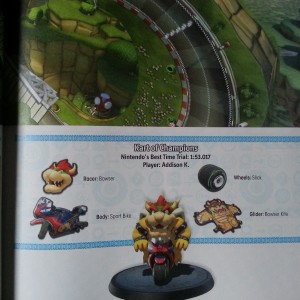
But Shy Guy is sooooo much better!

But Shy Guy is sooooo much better!

This is the area readers will want to pay attention to the small snippets of info. Those that are having a difficult time beating a specific stage will find where shortcuts are hidden, where the best points to boost are, and if it is worthwhile to glide a long distance or just land quickly to obtain a coin or item box. While nothing a book says can improve skills on the track, it is nice to see where the shortcuts are so I don’t look like a fool bouncing off something that I thought was an advantage, but was merely a fence….or worse, the ledge to the pit of doom.

The last few pages go to the battle mode and the maps correlating with it. Those who want to collect every stamp the game has to offer will also find a full list of those so you can keep track of what is left to collect.

My biggest issue with the Mario Kart 8 strategy guide is the navigation of it. I find it would have been useful to color code the sides of the pages to match what cup they were focused on. I spent too much time flopping around trying to find a specific cup, and then hunting down the track on top of that. It’s a small gripe, but one that would have made things easier on the reader.

To those who are just starting to consider jumping into this fun racing world, well, just buy the Mario Kart 8 strategy guide. Sure, your spot on the leaderboard will still depend on your ability to master the fundamentals, but you’ll be well ahead of the curve in knowing each track and how to tackle it. Even if it is as simple as picking the suggested character for a course while you unlock everything, this guide is well worth the investment. I think it’s time I go give more people that Luigi Death Stare!

SGR Rating 3.5/5

Author: Alexander Musa
Publisher: Prima Games
Editions Available: Paperback
Acquired via Publisher
Filed Under: Strategy Guide Reviews

Transistor Mini-Review

June 6, 2014 By Keri Honea Leave a Comment

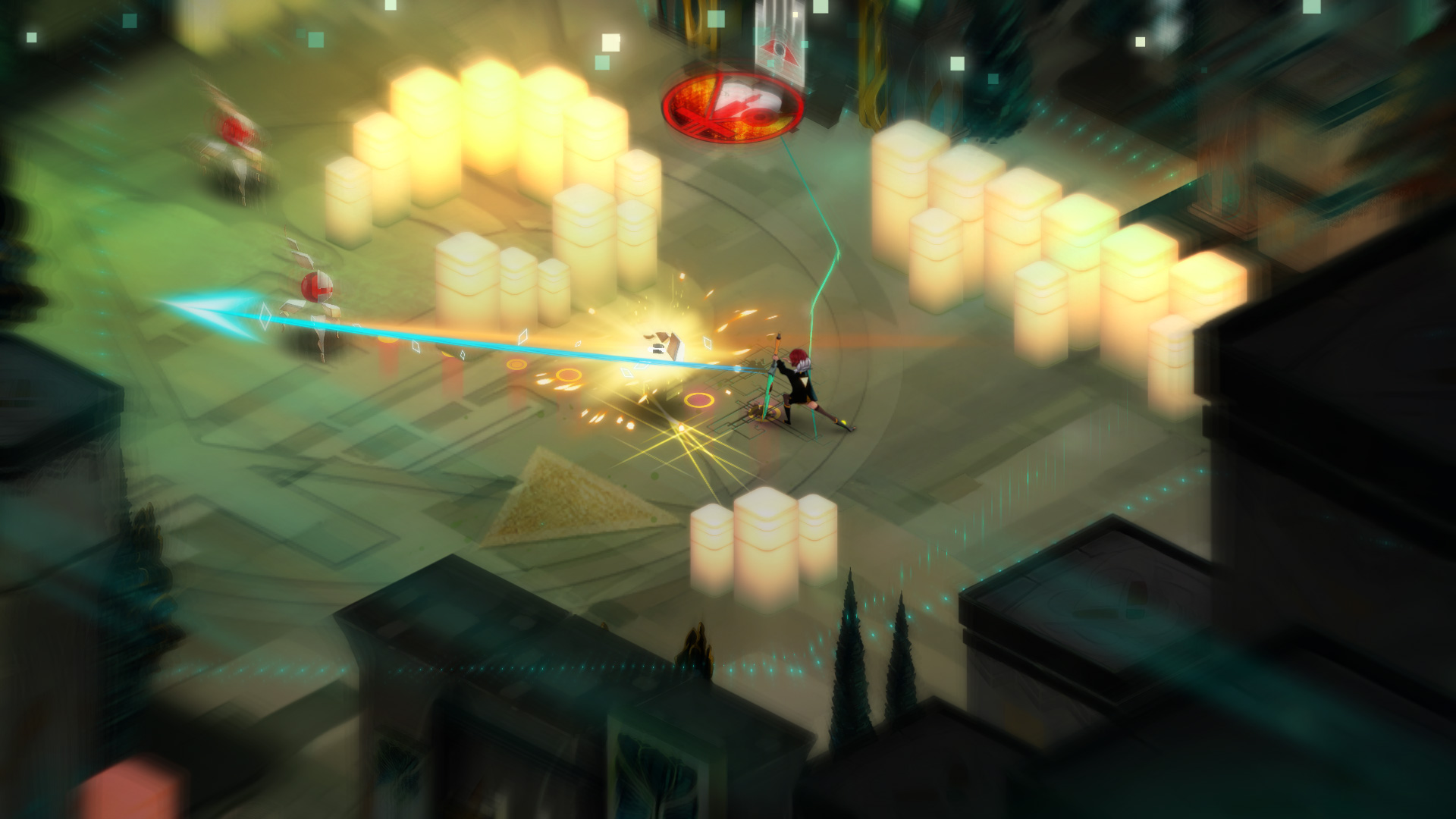
transistor2It has been an insane last couple of weeks for me, review-wise. I put out two game reviews last week, and I’m fervently working on one more before I head off to LA. The second game I reviewed last week was Transistor, a game I had a lot of high hopes for after loving what I saw at PAX East in 2013.

I’m not sure if it is because this is the second depressing game I’ve played in a row or what (Wolfenstein was so depressing), but Transistor didn’t resonate with me at all. I get that the story was supposed to be “told” in a manner where the player had to piece the puzzle together, but when it was all spread out before me, it fell flat. The gameplay didn’t do it for me, the story didn’t do it for me, and I really wasn’t happy with how linear it was with no side questing options.

Here’s a bit more from my review on ActionTrip (ignore the hateful comments…or jump in, whatever):

The gameplay is quite fun at first, but near the end, you know what the magic combination is for the last few enemies, introducing a strong level of monotony. It’s briefly interrupted by the final boss, but it doesn’t take long to figure out how to crack his code either. The emphasis in the game is obviously on the art direction, story, and overall presentation, with which I’m normally just snazzy, but this time, I needed more with the gameplay, even if that meant side quests or seeking collectibles. Keeping the path so linear with relatively simple gameplay did not make me eager to continue my gaming sessions; it only made me want to get to the end sooner.

At least the game’s visual and audial effects were quite aesthetically pleasing. You can’t help but be mesmerized by the beautiful, painting-esque art style and the dulcet tones of Darren Korb’s melodies. The sword provides all of the dialogue, save for a few of Red’s songs, and his narration fits in with the flow of the game better than any other narration attempt I’ve heard with a game. He’s never overbearing, annoying, or that repetitive, and unlike some narrators or talking heads in games, he knows when it’s best to keep quiet. Most importantly, he knows how to make subtle suggestions that maybe you’ve already gone this way before or you’ve been dallying one area for too long without making the player want to duct tape his mouth (if swords had mouths).

I know I’m vastly alone in this opinion, and I’m okay with that. I didn’t like BioShock Infinite either, and I was really alone in that too.

Well, we can’t agree on everything, or how boring would the world be?

Filed Under: Mini-Reviews

Wolfenstein: The New Order Mini-Review

May 30, 2014 By Keri Honea Leave a Comment

2506721-nazis

I haven’t played a Wolfenstein game since Wolfenstein 3D back when I was in college. And when I say played, I really mean watching my boyfriend at the time play it with his friends. I was into Doom II and couldn’t be bothered with petty Nazi killing. I don’t remember much about the game except for mecha-Hitler, red dots filling up your screen when you got shot (it was the best they could do for blood spatter back then), and opening a door to see a massive Nazi with a chaingun waiting for you, right there behind that door.

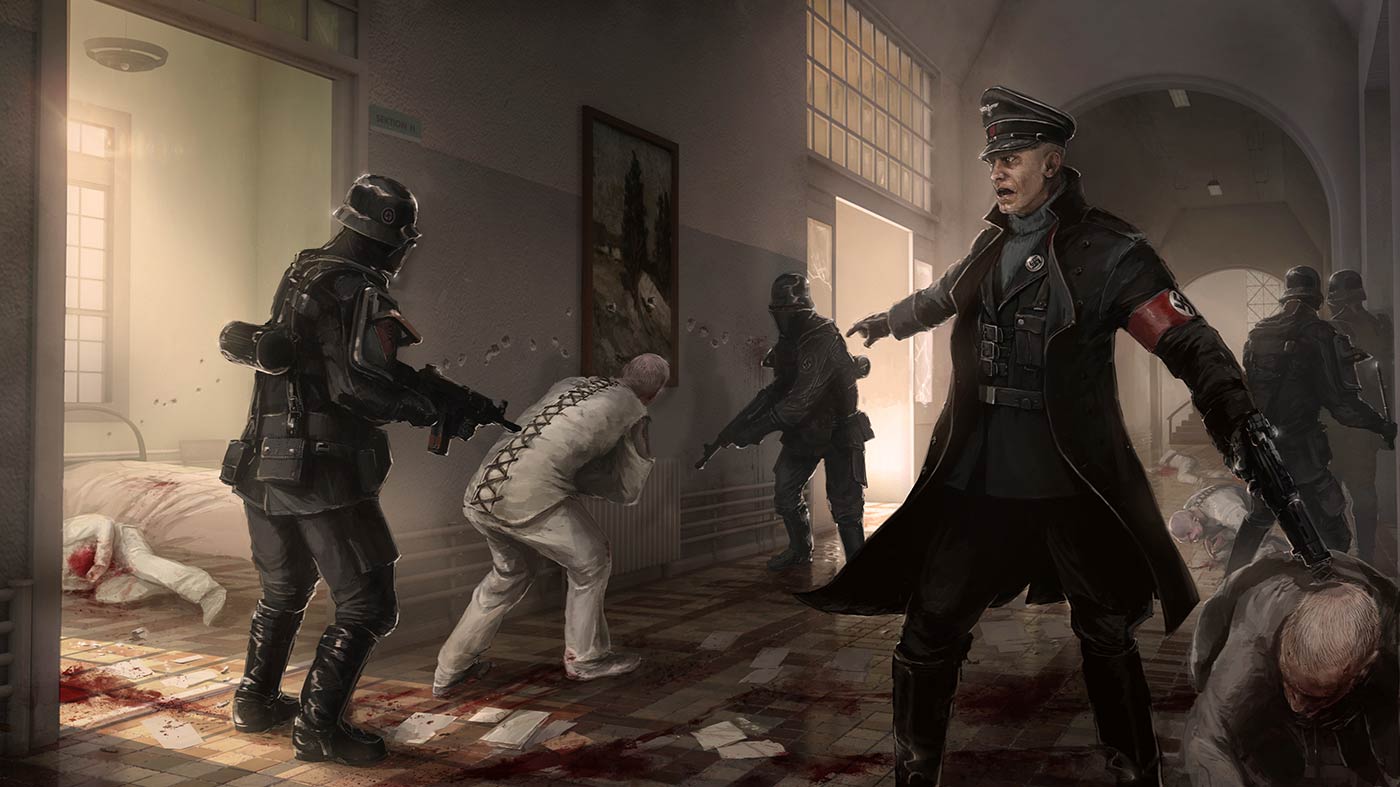
Even though I wasn’t a die hard fan of the franchise, I was still super excited about Bethesda and Machine Games’ reboot of the series in Wolfenstein: The New Order. The game was a delightful combination of incredibly dark and depressing themes (it is set in an alternate reality where the Nazis win WWII, so not much to be happy about there) and silly reflections. For example, hero BJ Blaskowicz never really stops talking to himself about what is going on during his missions. Sometimes it’s super cereal, sometimes it’s really dark reflections on his past, and sometimes it’s hilarious commentary on what is going on around him. And then there are the glorious Easter Eggs for Wolfenstein 3D.

I reviewed the game in full for Action Trip. Here’s a snippet of my gushings.

As silly as a lot of the game was in terms of plot devices and Easter Eggs, it was balanced out incredibly well with the horrors of Nazi atrocities, something the developers did not spare the players from witnessing. You may laugh at one minute, but the next may find you with your hand covering your mouth in shock. In this balance, the next iteration of Wolfenstein was executed extremely well, giving it a fun combination of a serious first-person shooter without forgetting its roots or how absurd typical set pieces for first-person shooters are.

Yes, I absolutely loved it. the shooting mechanics were smooth, the perk system added a layer of depth that helped me tailor the game to how I wanted to play, and the fact that you can make a choice that alters your game’s story was a nice surprise. Just…just don’t expect it to be the happiest story in the world. And from what I hear, don’t try to play it on PC.

And if you want to see me absolutely suck at playing games, check out my first run through the Wolfenstein 3D Easter Egg.

Filed Under: Mini-Reviews

Plants vs. Zombies: Garden Warfare Strategy Guide Review

May 23, 2014 By Blake Grundman Leave a Comment

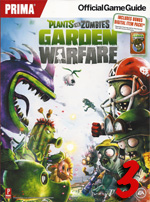
Plants vs. Zombies: Garden Warfare strategy guideWhen Popcap Games decided to take on the tower defense genre with Plants vs. Zombies back in 2009, it was safe to assume that it was met with a fair share of skepticism. Fortunately not only did the studio do a fantastic job winning over gamers on every playable platform of the era, but they managed to continue to grow that audience with their recent free-to-play sequel on both iOS and Android. So when it was announced that Plants vs. Zombies: Garden Warfare would be making the jump to third person shooter with the help of DICE, you can imagine that people were more than a little curious to see what Popcap had up their sleeve. Can Prima Games’ Plants vs. Zombies: Garden Warfare strategy guide manage to help ease tower defense fans into the world of class/squad based shooters, or will supporters of the franchise be left slowly sauntering out to pasture?

When looking into the future of the Plants vs. Zombies series, you would be hard pressed to predict that their next logical turn would’ve been jumping into the shooter space. The overlap between the squad based shooter audience and strategy/tower defense fans would most likely be fairly limited, hence the reason that Prima Games’ team really had their work cut out for them. Thankfully, the Garden Warfare game itself was designed with approachability in mind, so the writing team did their best to follow suit and start with the building blocks and then move on from there. This plan worked out fairly well, but the result was a series of hits and misses, accompanied by a disappointing online implementation. But how did they get there, you ask? Let’s start at the beginning.

As with any guide, the ever-predictable “How to Play” section leads things off and covers general controls, ability slots, and simple mechanics like strafing, reloading and jumping. Sure those might seem like a given to anyone familiar with shooters, but with the existing fanbase of the Plants vs. Zombies brand, it makes sense to spell things out explicitly. Additionally, elements like the HUD design, menu navigation and special attacks are detailed. Closing the intro out are overviews of the different game modes, hints on how to improve skills through the game’s coin and card pack system, and a breakdown of how to beat adversaries to both the literal and figurative punch. Also, it is important to mention that the mode page is very good about detailing the differences in mode availability between the Xbox 360 and Xbox One version, because there are several features missing from the 360 release.

Diving right into the action, the next mini-chapter outlines the Xbox One exclusive Boss Mode. The extremely brief collection of 4 pages very roughly outlines what can be expected from this top-down mode and features extremely rudimentary explanations of what perks can be unlocked at different sunlight levels. This “me-too” area to start out the book is both lacking enough screen shots or even information describing what is actually going on, and will most likely end up leaving readers (especially those on Xbox 360) confused as to what exactly is being described in the text.

Luckily, the weak start is followed up by something that at least applies to every version of Garden Warfare: the class breakdowns. Each type of both plant and zombie is spelled out, along with their numerous variants. For example, the standard peashooter has a fire, ice, toxic, commando and stealth variants. The details area of each base class variant consists of two rather large screenshots that take up easily three quarters of the page, with very small text sections that highlight the ammo type, damage style, reload speed and best use case scenario. Also, a callout will also run down the upgrades that are exclusively available to the sub-class. Though the initial class information is very helpful, the majority of the sub-class sections look almost like glorified screenshot galleries, meant to pad the size of the guide. Simply put, get ready to see a ton of unoccupied white space on each page. All of the information contained in the sub-class details could have most likely been summed up on a single, page-spanning chart for each class. This proceeds to go on for seventy five pages, which accounts for almost a third of the guide’s pagecount.

Next up on the hit list is another mini-chapter dedicated to the game’s “Sticker Shop” unit customization system. All of the separate types of sticker “packs” are explained in a way that will help understand the patience vs. payout dynamic that comes from purchasing different types of packs. One particularly important selection of text breaks down the critical differences between consumable vs. customizable items and why the distinction is so critical, as well as what kinds of items are included in each. Lastly, it closes with a basic overview of the stickerbook, and how that relates to the unlocked characters, items, and tattoos that are available once players shift back to the combat.

Team Vanquish is the first genuine mode that gets serious attention in this guide. The glorified team deathmatch is led off with talk of the slightly modified “classic” version of the mode, which consists of only the base classes, and utilizes none of the upgrades or customizations made available through the sticker system. Following that callout is a set of “must knows” for succeeding in vanquish. Many of the items on that list are once again common sense to veterans of the genre, but to the newcomers that this title may entice, it may be useful.

As opposed to the sub-class breakdowns, in the map overviews, the screenshots are welcome, plentiful, and effectively used to demonstrate specific points from the commentary. All of the maps included in this section have several call-out “points of interest,” selections that are specifically tied to a collection of screenshots and full-text explanations as to why these locations are so important. Items such as key choke map points, areas of cover or sniping overlooks are all mentioned, as well as way to avoid falling victim to said mini-arenas of combat.

The Gardens and Graveyards segment of the guide continues along the same lines, once again leading off with a primer, meant to lay down hints for success, specific to both the plant and zombie factions. Also, the map breakdowns have a very similar look and feel, though they also spell out key map locations that are unique to the mode such as zombie spawn points, turrets, cannons, and teleporters. Much like the guide for DICE’s earlier multiplayer shooter, Battlefield 4, the Gardens and Graveyards phases are also broken down intuitively, helping both friend and foe gain the upper hand across what could be as many as 7 different phases and map shifts. This is definitely where the book begins to hit its stride, because almost every hint stated in the text are evergreen pieces of information that are immune to the types of balance tweaks that spell doom for many physical guides.

Wrapping up the actual strategy portion of the book are forty pages dedicated to the Co-op Garden Ops. This hybrid of tower defense and horde is a plants-only mode, so the guidance is quick to point out the difference between common, shielded, armored, hero, special and boss zombies, as well their biggest attacks. The problem is, for the higher level zombies, there is very little said about how to actually dispatch them. These are the critical bits of information that guides are most useful for and the answers are nowhere to be found. Thankfully the requisite map coverage lives up to the quality delivered in the earlier sections and proves to be its saving grace.

After the appendices that list off all of the unlockables and achievements, which is oddly packaged at the end of the co-op segment despite applying to all game modes, we get to my favorite part: behind the scenes coverage. What follows are twenty pages of concept art, and an interview with members of Garden Warfare’s development team. Call me a nerd for enjoying a sneak peek behind the curtain, but it is always interesting to see what was going on through a title’s development process. Will it be at all helpful to the gamer? Not really, but fans will most likely enjoy seeing how the game evolved into what they ultimately ended up playing.

One last piece of this equation is the evolution of the guide in electronic form, which is used to cover the new maps and modes included in Garden Warfare’s subsequent downloadable content. Unfortunately the only one of the DLC map guides is what might be considered complete and only features overhead shots, with commentary for the “points of interest.” The more granular shots associated with the callouts are no longer there, which is a genuine disappointment, because it makes it far more difficult to discern the context of where locations are on the map, especially while in the thick of the action. In the case of the Cactus Canyon map included in the Zomboss Down DLC in particular, there aren’t even points of interest or written hints, just maps and an excuse that says updated coverage is coming soon. Over a month after the content’s release, this is inexcusable. Let’s hope that content is in the pipeline, because what is the purpose of an e-guide if it isn’t updated?

As a game, Plants vs. Zombies: Garden Warfare is an interesting attempt to switch gears with an entire brand. Much like the game itself, Prima Games’ Plants vs. Zombies: Garden Warfare strategy guide had both high and low points, that ended up resulting in a mediocre end product. While far from terrible, instances of content padding, compounded with unhelpful boss descriptions, and unfinished online content resulted in an ultimately unpolished end product.

SGR Rating: 3/5

Author: Alex Musa and Geson Hatchett
Publisher: Prima Games
Editions available: Paperback
Acquired via publisher

Filed Under: Strategy Guide Reviews

Dark Souls II Strategy Guide Review

May 13, 2014 By Chris Nitz Leave a Comment

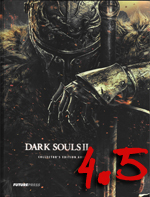
Dark Souls 2 strategy guide reviewMy love for the Dark Souls franchise runs deep. The amount of hours I have logged farming materials while racking up countless deaths all while getting lost in the beauty of these games is ridiculous. Thankfully, Future press is here to make life easier in this brutal world. They rocked the first Dark Souls strategy guide, and they repeated that greatness with their Dark Souls II strategy guide.

The strategy guide starts with the game basics, and this is not something that even veterans of the series will want to skip. Dark Souls II brought in some new mechanics as well as modifying some of the more basic controls. This section goes into great depth about stats, classes, online play, and even some New Game+ planning tips. Seriously, this does make character development that much easier, especially for those players looking to dive into NG+.

So simple and yet so useful!

So simple and yet so useful!

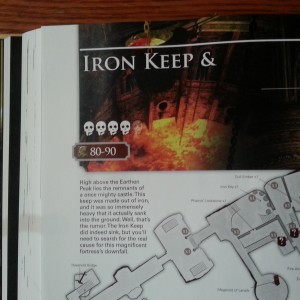
From here, the guide goes into the walkthrough of the game. This area will inundate readers with a massive amount of information and handy tips. Each new area begins with a difficulty rating and suggested level. This alone stopped me from exploring too deep into places I had no right in going with my noob destroyer of evil. There are also maps, enemies, and important items referenced right at the start. It makes navigation, both in the game and in the strategy guide, much easier.

Once I dove into the actual coverage for each zone, I found a copious amount of information. Numbers on the various maps correlate to paragraphs explaining tactics for handling certain enemies or cluing me into world events or ambushes setup around the next corner. While Future Press could not save my terrible dodging or parrying skills, they managed to help keep my frustration levels to a minimum, which probably led to fewer broken controllers.

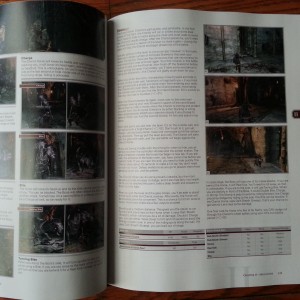
One big change from the first Dark Souls guide is that enemies now show up at the end of their corresponding location as opposed to a big section in the back. Every baddie has a brief bit of history followed by strategies on how to kill it. Rounding this out is a table that shows hit points, souls, item drops, and if the enemy will respawn or not. While I like a big index of enemies, this new layout feels more organic and makes for a lot less page flipping when researching new areas.

For me, the best part of the walkthrough is the boss battle details. These are far more than just the basic watch for this and attack here. Every boss battle contains a crazy amount of in-depth details of the battle. All the attacks the boss can make comes with a blurb describing what it does, how to notice it, how to avoid it, and what might come next. Wrapping all this up is an overall strategy that helps sum up the one to two pages of information and general tactics on how to approach this difficult impasses. This is something I studied long and hard before attempting these brutal fights.

Up next are the chapters detailing equipment, magic, and items. I spent a good chunk of time just reading about various weapons and how to obtain them or what the benefits were from upgrading. Every weapon and armor piece comes with a small description, stats, repair costs, and what materials players need to reinforce it. It also includes a handy picture so readers know what the item looks like. There are many things to find and use in this game, so be prepared to spend a good amount of time just trying to find the right armor and weapon combo to make life that much easier.

SO MUCH INFO!!

SO MUCH INFO!!

Closing out the strategy guide is the extras area. This is not just where to find Easter Eggs or a listing of achievements. No, this area dives into the lore or NPCs, invaders and how to vanquish them, trophies/achievements and how to actually obtain the harder ones, and a great section on the Covenants. For players looking for game history, this is where you will find it.

As was the case with the original Dark Souls guide, this is not something that is going to hold your hand and tell you exactly what to do next. This game is insanely open for exploration, and so the strategy guide is more like an encyclopedia. I found the index was my best friend as I hopped from area to area to grind souls or farm items. I must also caution that this is not something one quickly glances at for tips. I would sit at a bonfire, read what I needed, and then jump into the game. Consider this something you use to study for an exam, not something you quickly glance at and put back down.

I cannot recommend this guide enough. Yes, this does require readers to spend some time digesting the vast amount of information that it provides. However, that time spent researching will easily make life that much better, aaaand probably save a broken controller or two. Now, I have some titanite to go farm.

SGR Rating 4.5/5

Authors: Bruce Byrne, Franz von Eisenheim, Lucas Hofstatter, Marcus Sanders (ENB), Moe Murad, Usman Niazi, Wil Murray
Publisher: Future Press
Distributor: BradyGames
Editions Available: Collector’s Edition
Acquired via Distributor

Filed Under: Strategy Guide Reviews

  • « Previous Page
  • 1
  • …
  • 16
  • 17
  • 18
  • 19
  • 20
  • …
  • 57
  • Next Page »

Follow us!

Subscribe!

Upcoming Strategy Guides

 Nothing here. Come back later. 😢

Latest Strategy Guide Reviews

The Walkthrough by Doug Walsh Review

Red Dead Redemption 2 Strategy Guide Review

Mega Man 11 Strategy Guide Review

God of War Strategy Guide Review

Far Cry 5 Strategy Guide Review

Friends of SGR

  • BradyGames
  • Dan Birlew – Guide Writer
  • Doug Walsh – Guide Writer
  • Future Press
  • Game Enthus
  • GameWires.com
  • Piggyback
  • Press the Buttons
  • Prima Games
  • Racing Games

Top Posts & Pages

  • Thursday Gaming Diary: Host Switching
  • Monday Gaming Diary: Keeping the LEGO Marvel's Avengers in Focus
  • Monday Gaming Diary: Getting Reacquainted with Handhelds
  • The Corner of Randomness: Bad Embargo Timing
  • Medal of Honor Warfighter Strategy Guide Review

Copyright © 2026 · Web crafted by Warkhammer

Loading Comments...