• Home
  • About Us
  • Podcast
  • Strategy Guide Wit
  • Contact

Strategy Guide Reviews

A Strategy Guide for your Strategy Guides

  • Reviews
    • Strategy Guide Reviews
    • Video Game Reviews
    • Mini-Reviews
  • Features
    • Interviews
  • News
  • Unboxing Strategy Guides
  • Columns
    • Gaming Diary
    • Corner of Randomness
  • Videos

Ryse: Son of Rome Mini-Review

December 6, 2013 By Keri Honea Leave a Comment

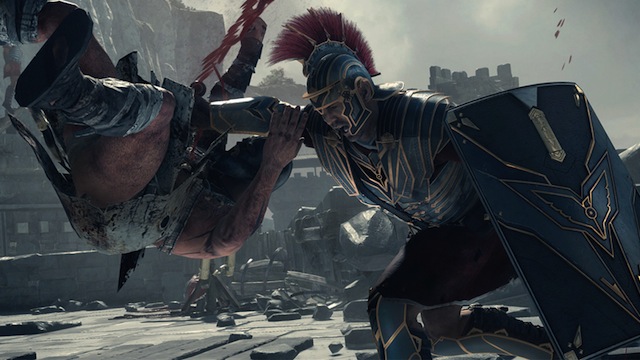
ryseRyse: Son of Rome has been lambasted in reviews, and of course I end up absolutely loving the game. It’s not a Game of the Year contender by any means, but the game isn’t terrible like so many want to say either.

That said, when I reviewed Ryse for Game Revolution, I did my best to be as fair to the game and what gamers generally like as possible. I gave the game a 3/5, and that’s because even though I found it fun, I understand that many will not find it as great as I did.

This makes sense, I swear.

Ryse is pretty darn accurate when it comes to depicting Roman tactics in battle. As a Roman history fanatic, I found this really exciting. However, being accurate with war tactics doesn’t mean that the game will be exciting to play. If Call of Duty or Battlefield were as realistic and accurate, I can guarantee you that they wouldn’t do so well. There’s a reason why so many real military soldiers (like my husband) love those games–it’s because they aren’t realistic.

Since Ryse is so accurate, the same military tactics are played out over and over, such as the traditional Roman tortoise technique. I completely admit that many gamers will find this to be tedious and boring.

I admit the same with the hand-to-hand combat, even though I found it to be quite the guilty pleasure. I can honestly see me replaying this game again to nab a few more Achievements, I had that much fun.

Here’s a small snippet of what I said in my actual review. I really did try to be honest with what gamers would like and balance it out with my love of Roman history.

Interestingly enough, the game shows that the writers and developers really did their research with Roman history and even British history. At one point, Marius has to entangle with the Horned King, which is straight out of Welsh history and mythology. The Horned warriors even executed the captured soldiers using wicker baskets, also inherent in Welsh mythology and history.

Little touches like that made me smile a bit, but then other things showed that they either didn’t completely do their research or they just didn’t care. For example, this is about Rome and Roman soldiers, yet the characters used Greek names for the gods. The writers even took the Greek myth of the sword of Damocles and wrangled it to fit what they needed for their story of vengeance.

But then the writers actually scripted for one of the Roman soldiers to yell, “The Britons are coming! The Britons are coming!” as the Romans were trying to evacuate, which made me literally laugh out loud. I swear to you that if at any point when Marius was sailing to Britannia someone ordered “Ramming speed!”, I would have given this game a perfect score on the spot.

Well, I would have wanted to, but the gameplay would have prevented me from doing so, as this is where Ryse does take quite a hit. The style does not deviate much from four types of combat, which though accurate for what Roman soldiers did in battle, doesn’t mean that it is interesting to play. After about three to four hours of game time, you’ve pretty much experienced all the combat styles the game has to offer. At least the main campaign is short.

Ryse: Son of Rome is most likely a rental for many people, but please do not knock it until you try it.

And by the way, all reviewers who trashed the game for the microtransactions obviously didn’t try out a lick of multiplayer. Yes, it is possible to purchase gold to use to level up Marius Titus and buy equipment for your gladiator, but that’s not the only way to get gold. You can get gold by playing multiplayer. The ability to purchase just speeds things up a little bit.
Filed Under: Mini-Reviews

Battlefield 4 Strategy Guide Review

December 5, 2013 By Blake Grundman Leave a Comment

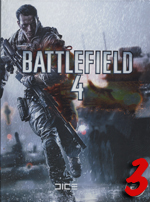
Battlefield 4 Strategy Guide reviewIt is not very often that a guide comes around and knocks the traditional formula on its ass. Then entered the Prima Games’ Battlefield 4 Strategy Guide at stage right, which gleefully overturned the tables that previously held all of your expectations about what a game guide should be. Gone are the days of a laborious single player campaign walkthrough. It isn’t like the developer spent years developing that as an integral component of a cohesive experience, right? After all, who needs that useless garbage when all people really care about in a Battlefield title is the multiplayer experience. Will this new approach bode well for the Battlefield 4 guide, or does the shift in focus take away from what strategy guides are all about?

If there were ever a guide that could be labeled as a grade school textbook, Battlefield 4’s would meet the description to a T. Sure the subject matter might be a bit more on the saucy side, but cover-to-cover, it is the comprehensive end all be all, for what is widely considered to be the most complex and diverse multiplayer shooter on the planet. But every good story has a beginning, and the writers saw fit to properly acknowledge that with an introduction section that covers the legacy of the Battlefield brand. This is also complimented by behind the scenes discussions with the key team members that have been a part of the series since the beginning. Though it seems almost too brief, it is fantastic to get insights into the original goals of the developers, the brand’s evolution and where it is going in the future.

DICE’s tight ties to the book are further evidenced in the “Road to Battlefield 4” section that follows. Each major mechanic section is actually penned by a key member of the game’s design team, including multiplayer lead Thomas Andersson. Each developer spends a significant page count emphasizing what were key modification and/or additions in the most recent outing, such as adjustments to class structures, the new “Levolution” system, “Commander Mode”, vehicles and much more. Having the individuals who essentially owned specific features of the final product break down what makes this newest version so special does wonders for imbuing even the most trivial of components with the passion of those who made it possible. This is a fantastic way to help re-introduce traditional Battlefield players to the new mechanics and inform newcomers what to expect when they first venture into the immense and intense world of online multiplayer.

Next up is the meat of the actual multiplayer guide, but first it is worth mentioning the interesting approach Prima took to the drafting process. Veteran guide writer David Knight has teamed up with four of the best Battlefield players in the world to co-author this massive tome. Though it is a little unclear as to who is writing each individual general commentary segment, there are numerous specific call-out portions that are dedicated to a specific member of the team as a “pro-tip.” These are actually scattered throughout the guide and provide insight into many different strategic elements that take place over the course of a match, but more on that later.

Leading things off is a thirty page “Battlefield Bootcamp” that is dedicated to breaking down all of the key aspect of the game, its mechanics, modes, interactive elements that extend beyond the warzone itself, and most importantly, standard multiplayer tactics. It is imperative that players read this area, especially virgins to the series. Even then, noobs will probably still be eaten alive, but at least they will be able to speak the same language with their online brothers in arms. There is nothing worse than being saddled with a clueless chunk of cannon fodder. This will help prevent you from being that lame duck.

What follows the “101 class” in the ways of online combat are sixty eight pages of infantry information. Some of the key topics touched upon are proper class selections, weapon and perk loadouts, and the various unlock progressions for each unit type. Additionally, there are also several more “pro-tips” for each class, from each of the contributors. It is very interesting to see four varying approaches to using the same variety of soldier. If nothing else, it further demonstrates how versatile and complex the online ecosystem can be in the world of Battlefield. While this alone would be substantial enough to stand on its own, the majority of this section is actually reserved for detailing the title’s countless weapons and their respective modifications. Though it is hard to say if the information in this section is actuate, over a month after its release, it is still at least a valuable reference point for those needing to compare the pros and cons of different firearms.

And what would a Battlefield game be without vehicles? The franchise’s multiplayer suite is probably best known for its extensive use of these mobile weapons of mass disruption. Just like every other chapter, each grouping of motorized mayhem is laid out efficiently, including a list of the equippable upgrades available for purchase and advanced tactics that will utilize them the most effectively. Most of the tactics call-outs are focused towards the seasoned veteran, but even rookies see their benefits in time.

Once this has all been combed through, then comes the most impressive and expansive portion of the entire book: multiplayer map analysis. To put it into perspective, the smallest map commentary still boasts an extremely healthy twenty four pages. Considering that there are ten individual maps covered in the book, this would help explain the collection’s impressive two hundred and seventy pages. All of the stages’ are initially led off with general impressions from the writing staff and explanations of its marque levolution(s). These are then followed with dissections of each multiplayer mode, all the way down to recommended squad compositions throughout a battle. The more objective commentary is also buffered with additional “pro-tips,” from the resident expert writers. While the information contained within is fantastically detailed and almost overly explicit, it did feel like there were many pieces of art that, though beautiful, could probably be deemed superfluous. This sometimes led to pages feeling more claustrophobic or visually distracting than necessary. Everybody loves a good side profile shot of a tank or downed helicopter, but when the game itself features a plethora of them already, it probably isn’t necessary to include these unless critical to the strategy being discussed in the text.

Anchoring this massive manuscript are extremely brief campaign and achievement/collectables section. How brief, you ask? Why, a mere eleven pages. Yes, it is understandable that multiplayer makes up a vast majority of the guide, but why even bother to include even a reference to the single player, when it is going to be glossed over so egregiously. There are any number of explanations as to why this might have occurred, but it doesn’t change the fact that the main character’s name is only mentioned once and all but the introduction page consists of a continuous wall of spreadsheets. Unless Prima has plans of selling a single player guide separately, to call this effort disappointing would be like calling Thomas Edison a tinkerer.

One last piece of the puzzle is the prominently promoted digital/mobile component. Sadly, this two ends up lacking the original content necessary to justify its existence, aside from potentially being updated should new balance changes be introduced into the game. It has yet to be shown if it will be further augmented when new DLC is released, but this might be a step in the right direction. Pouring additional gas on the flame, the single player is still an afterthought. Sure, at least there is now a video playthrough of each stage to watch, but there is no direction, voice over commentary or so much as sliver of additional information, aside from the video timestamp where collectables are uncovered and a list of weapons available in each stage.

For fans that are exclusively consumers of Battlefield 4’s online multiplayer, Prima Games’ official guide will prove to be a wealth of information, the likes of which have rarely existed outside of dedicated fan sites and enthusiast forums. However, those that are focused on a single player walkthrough will be much better served turning to specialty sites online. It is hard to say whether this is a step backwards or simply sidestepping the bigger issue of whether or not print guides for a constantly evolving online experience are even valid in the internet age. Regardless of this author’s opinions on the matter, it still doesn’t excuse neglecting to cover half of such a prominent title, without communicating that to the reader before purchase. Misleading the audience is never a good foot to start out on, so buyer beware.

SGR Rating: 3/5

Author: David Knight, Michael Cavanaugh, Michael Chaves, Marcus Lovejoy, and David Walsh
Publisher: Prima Games
Editions available: Paperback and Collector’s Edition
Acquired via Publisher

Filed Under: Strategy Guide Reviews

Killzone: Shadow Fall Mini-Review

November 27, 2013 By Keri Honea Leave a Comment

Killzone Shadow Fall

The OWL was quite handy.

I’ve been struggling with what I think of Killzone: Shadow Fall since I finished playing it. On the one hand, the story does spark some interesting thoughts and discussion, and the game was a lot of fun initially. However, the last two or three missions were so padded and filled with “tasks” instead of fun gameplay that it’s really marred what I think of the game.

Here’s some of what I posted on ActionTrip:

Each mission relies on the all-too-familiar linear formula we’ve seen too many first-person shooters before. On the other hand, the maps often seem rather open. At first this felt like it would give the player more options to how to approach a given situation, and sometimes this is true. However, as you progress, the openness feels almost more of a hindrance than anything else, particularly since many maps do not have an intuitive feel as to where Lucas needs to go. Thank God the player can highlight a directional marker for the objective by pressing up on the d-pad, but those missions where Lucas has to find something to move on, good luck to ye. I’m fairly certain I have worn out my up d-pad button already with how many times I’ve pressed it to figure out where in the world I needed to go.

At least the AI is quite scripted and a little dumb to help make up for this. You can always count on the Helghast to consistently pop up their heads after you shoot at them and even run straight toward you when you’re shooting. In addition, whenever Lucas has an unplanned demise, the player can definitely count on the enemies appearing exactly where they were the last time, making it very, very easy to memorize a sequence.

I really enjoyed how Killzone used the touchpad on the PS4 controller. By swiping in certain directions, you could give orders to your little flying drone (OWL). It presented a super steep learning curve at the beginning, but once you got the hang of it, became quite fun. It also made me think of several uses for the touchpad in future PS4 games to the point I’m honestly considering buying another copy of Diablo III to see how it uses it. (I probably won’t, but it’s got me thinking.)

Do I recommend Killzone? I’m not sure. This was my first Killzone game, and it really made me want to check out Killzone 2, which I bought for my husband way back in the day. The game is beautiful, that’s for sure, I can’t imagine too many people buying this immediately unless you’re a fan of the series. Not everyone is as weird as me.

If you want to see more of what I had to say about Killzone, please read my entire review!

Filed Under: Mini-Reviews

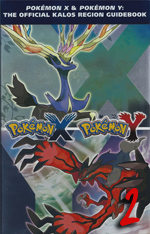
Pokémon X and Y: The Official Kalos Region Strategy Guide Review

November 26, 2013 By Chris Nitz Leave a Comment

Pokemon X & Y Strategy Guide ReviewPokémon is one of those franchises that seems to have been around for as long as I have been a gamer. I can still remember the first time I played Pokémon Blue on my Game Boy. Fast forward several years and I find I am reliving that same excitement again with Pokémon X. Sadly, where the game invokes fond memories of years past, the strategy guide sparks emotions of irritation.

As I have not played a game in this series in something ridiculous like ten years, I spent a bit of time with the beginning of the guide. Here the basics of the various capture balls, training, new touchscreen controls, and battle systems are covered. There is quite a bit of info here that helped ease me back into this fantastic world.

Wait, where is the phone directory of Pokémon?

Wait, where is the phone directory of Pokémon?

Once I was comfortable that I had a grasp of the complexities that this game contains, it was off to embark on the main story and this is where the guide excels. Those who are looking for an optimal route to becoming a Pokémon Master will find a generous amount of maps thanks to the dust jacket, two-page spread in the beginning of the book, and a pull out map. This does make navigation fairly painless and gave me no excuse as to not know where I was going next.

I found the various routes and cities detailed enough to tackle with a bit of planning. The different Trainer Battles were certainly easier as their Pokémon were clearly on display so I knew what to expect before deciding to take on a fight. It almost felt like cheating as I was able to plan, and level a specific party composition to conquer the more difficult duels.

The road to masterhood fills the bulk of this guide with the last few pages going to things such as super training, photo points, restaurants, and berry farming. These give players some good info for when they need a break and want to tackle a few of the other aspects of the game.

Now to touch on the things that really drag this guide down, such as a complete lack of post-game content. Those who realize there is more to this game than just becoming the supreme master will need to turn to other sources for things like collecting unique Pokémon, special unlocks, or mystical places to explore. As these tend to make up a fair amount of time, their lack from this guide is fairly disappointing.

One of the hardest bits to swallow is the complete lack of a Pokédex. Players wanting that info, along with the missing post game substance mentioned above, need to acquire a different guide. While I can appreciate these guides being under $20 USD/guide, that equates to having to lug around two books while traveling, navigating two books while playing, and twice the inconvenience. To me, this is just unacceptable when you realize that prior Pokémon guides included this information. This is further compounded by the lack of information on legendary or special Pokémon or any real meat to Mega Evolutions. As these all play a role in even just the basic experience of the game, this lack of content is hard to swallow.

Well that makes life a tad easier.

Well, that makes life a tad easier.

Finally, a minor nitpick is that this is a smaller form factor guide. While I appreciate this as it packs into bags a lot easier, it also means the book does not lay flat while I was using it. This made for some awkward yoga positions while playing and trying to use the guide. When you’re playing in four to six hour stretches, this becomes a major drag.

This guide is great for the main story walkthrough and getting old players, like myself, caught up and primed for hundreds of hours of gameplay. However, this book is only half completed and needs a secondary purchase to be truly useful, and is thus receiving a rating to reflect this blatant money grab. Maybe we will see a better, more comprehensive, guide come out down the road, but as of right now, skip this and use Dr. Google to get ya through this complex game.


SGR Rating 2/5

Author: The Pokémon Company International
Publisher: Prima Games
Editions Available: Hardcover and Paperback
Acquired via Publisher

Filed Under: Strategy Guide Reviews

LEGO Marvel Super Heroes Mini-Review

November 15, 2013 By Keri Honea 1 Comment

Lego Marvel Super Heroes

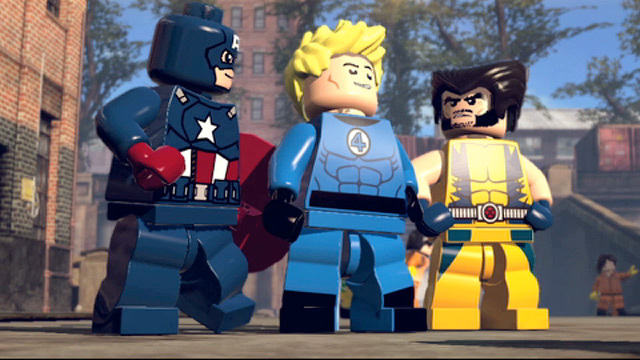
I have to admit, that when Traveller’s Tales started adding voices to their LEGO games, I was less than thrilled. My first experience was with LEGO Batman 2, and even though the dialogue was comical and I love the voice cast to pieces, I just couldn’t embrace it. There was just something charming and funny about a game that told an entire story through gestures. The amount of parody the writers were able to produce was amazing. Then they brought in movie quotes for LEGO The Lord of the Rings, which was extremely disappointing. I had hopes that they wouldn’t do the same with LEGO Marvel Super Heroes, but of course they did. And you know what? The dialogue MADE this game. In fact, it’s the only reason why I can recommend it at all.

I reviewed LEGO Marvel Super Heroes for ActionTrip.com. Here’s a snippet of what I had to say on this subject.

LEGO games are known for their strong parody on the series they emulate. Since they’ve taken on some of the most popular comics in DC and Marvel, their sources of what they can poke fun of is almost limitless. And yes, they expose that at every corner. Hulk is always asked to clean up his messes after a mission, Wolverine suddenly remembers that he has to go buy more hair gel, and Spider-man tries to come up with a reason why he’s always leaving his girlfriend alone at a coffee shop. It’s always a coffee shop.

And that’s pretty much why you would play this game. It’s not for the gameplay, even though it is quite fun.

My Extra Life teammates played a little bit of the game during their marathon campaign, and both participants have vowed to purchase the game after their brief stint. It was all about how much the game made them laugh. I even tweeted that I laughed out loud more at LEGO Marvel Super Heroes than I did Saints Row IV.

By no means is this a game of the year contender, but it’s fun. And it’s funny. Sometimes that’s all you really need or want when you play a game.

I can’t recommend it enough, even to those who haven’t played LEGO games in the past. All you need is a love of the Marvel universe, a sense of humor, and preparation for silliness.

However, I will warn you that the co-op is the worst I have ever witnessed in any split-screen game.

Depending on where your partner is in the level, the camera and split-screen will adjust to try to accommodate you both in terms of where each player is in the level. Sometimes this causes neither of you to be able to see where you need to go or lock onto what you need to in order to trigger the next event. The characters will even switch which half of the split they are on, so you can never rely on “your part” of the screen. In some instances, the camera and split-screen make the co-op downright unplayable. I had to make my son drop out of the game once, because neither camera would focus on either one of us, even when we were standing in the same spot. I have a feeling I’m going to have to tell him we can’t play this game together anymore due to these camera issues and the fact that it has caused a bit of motion sickness at times.

In fact, I’ve already told him that I’ll play LEGO Batman 2 with him whenever he wants as long as we don’t play Marvel Super Heroes together again. I’m very fortunate he’s left his Iron Man phase and is in a full-blown Batman phase.

Filed Under: Mini-Reviews

  • « Previous Page
  • 1
  • …
  • 22
  • 23
  • 24
  • 25
  • 26
  • …
  • 57
  • Next Page »

Follow us!

Subscribe!

Upcoming Strategy Guides

 Nothing here. Come back later. 😢

Latest Strategy Guide Reviews

The Walkthrough by Doug Walsh Review

Red Dead Redemption 2 Strategy Guide Review

Mega Man 11 Strategy Guide Review

God of War Strategy Guide Review

Far Cry 5 Strategy Guide Review

Friends of SGR

  • BradyGames
  • Dan Birlew – Guide Writer
  • Doug Walsh – Guide Writer
  • Future Press
  • Game Enthus
  • GameWires.com
  • Piggyback
  • Press the Buttons
  • Prima Games
  • Racing Games

Top Posts & Pages

  • Monday Gaming Diary: Keeping the LEGO Marvel's Avengers in Focus
  • Weekly Poll: How Many Video Games Do You Play at Once? Redux
  • Strategy Guide Cover of the Week: Final Fantasy X
  • Why Should I Buy? Unboxing The Witcher 3: Wild Hunt Complete Strategy Guide
  • Halo: Reach Strategy Guide Review

Copyright © 2026 · Web crafted by Warkhammer

Loading Comments...