• Home
  • About Us
  • Podcast
  • Strategy Guide Wit
  • Contact

Strategy Guide Reviews

A Strategy Guide for your Strategy Guides

  • Reviews
    • Strategy Guide Reviews
    • Video Game Reviews
    • Mini-Reviews
  • Features
    • Interviews
  • News
  • Unboxing Strategy Guides
  • Columns
    • Gaming Diary
    • Corner of Randomness
  • Videos

Portal Strategy Guide Review

April 5, 2011 By Keri Honea Leave a Comment

Portal Strategy Guide ReviewAuthors: David SJ Hodgson, Stephen Stratton, Miguel Lopez
Publishers: Prima Games
Editions Available: Paperback
Acquired by Purchase

Strategy Guide Review Policy:

My goal for these strategy guide reviews is not to discuss whether one needs the guide to complete the game. Every gamer has different strengths and skills, and one may need every bit of a guide, another may need to look up information for quick assistance once, and another may laugh at the idea of ever using a guide, even the online freebies. My goal is to determine whether the guide is 1) helpful in the first place, 2) does it encompass gamers who need hand-holding as well as those who need a quick reference and 3) how much information does it really have.

Review:

Reviewing this guide was rather unconventional as it was one of five guides crammed together in The Orange Box strategy guide. It contained guides for Half-Life 2: Episode 2, Team Fortress 2, Portal, Half-Life 2, and Half-Life 2: Episode One. However, each section really can be partitioned out of the guide without losing any contextual information as its own guide, and since I’ve only played Portal, this is the only chapter being reviewed from The Orange Box strategy guide.

And honestly, Portal could have used a guide all for itself.

The game is one of the most interesting and unique puzzle games to hit the gaming market, and these multi-dimensional brain teasers practically scream that they need a guide (especially for those with little patience). Sure, it starts you off gently enough, but just as you think you’ve mastered it, that’s when the game really begins. Thankfully, the guide flawlessly meets the required expectation and demand (and with plenty of humor to boot).

Two things were vital to this guide: great description and lots of significant screenshots. While the guide’s wording occasionally confused me as to where I should be looking or aiming, the screenshots never failed me. The screenshots were clear, perfectly zoomed in/out, and all showed exactly what a player would need. There was no staring at a screenshot, trying to figure out exactly where this was taken. This became extremely important for the last level, where it was hardly ever obvious where you need to place your portals, especially during the final fight with GLaDOS. Not to mention, all of the screenshots were dead-on correct. While playing, I tried to figure things out for myself and then looked to the guide. More often than not, the guide’s method for portal placement made things far easier than what I used.

The guide also included detailed strategies for the various advanced maps and challenges for Chambers 13-18, including how to receive all the different medals. These strategies involve quite a bit of Portal-science terminology, such as Double Fling, Floor-to-Floor, and Portal Ledge, so if you don’t remember exactly what these are referring to, don’t think you have to go flip back through the guide to hunt down those original definitions. The beginning of the guide includes a nice little glossary with examples of what these techniques mean. It also contains nice little background pieces on Chell and GLaDOS, which was perfect for me as I was too busy concentrating to constantly listen for GLaDOS’s hints in her ramblings.

The authors could have made this guide really cut and dry, but they seem to have the same twisted humor as GLaDOS. I actually did laugh out loud quite a few times. The following is one of my favorites:

Don’t worry, nothing will happen if you retrieve the Cube from the button and drop it into the incinerator. Nothing, except murder! Just kidding. Remember: It’s just a Cube. One the bright side, you’ll have plenty more chances to incinerate deserving inanimate objects in due time.

As an added bonus, the back portion contains a choice selection of concept art, which includes designs for the original portal device (which was a little surprising) and even a screenshot of the cake that was not a lie.

For such a small game, the guide packed in a lot of detail and made it as fun to read as the game was to play. The Portal strategy guide strongly deserves the 5/5.

Filed Under: Strategy Guide Reviews

Mass Effect Strategy Guide Review

March 29, 2011 By Keri Honea Leave a Comment

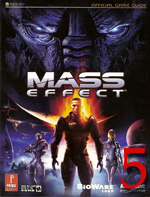
Mass Effect Strategy Guide ReviewAuthors: Brad Anthony, Stephen Stratton, Bryan Stratton
Publishers: Prima Games
Editions Available: Paperback and Collector’s Edition
Acquired by Purchase

Strategy Guide Review Policy:

My goal for these strategy guide reviews is not to discuss whether one needs the guide to complete the game. Every gamer has different strengths and skills, and one may need every bit of a guide, another may need to look up information for quick assistance once, and another may laugh at the idea of ever using a guide, even the online freebies. My goal is to determine whether the guide is 1) helpful in the first place, 2) does it encompass gamers who need hand-holding as well as those who need a quick reference and 3) how much information does it really have.

Review:

Mass Effect was NEVER a planned game for me. The reason why I even had the game was because a friend gave it to me as a “Welcome to Xbox” present in 2008. It’s sat on my shelf unused and unopened for 3 years until last year, when friends started to hound me to play. Considering I’m not a sci-fi fan at all, and I only recently got into shooters, I knew I was going to need all the help I could get, and fortunately for me, this guide came through.

The RPG schematics of ME are a bit overwhelming–to say the least–at the get-go. First you learn how to aim and shoot, switch weapons, etc. Then they suddenly throw all of these RPG stats at you with very little build-up. If you put the game down for a couple of days early on and then come back, like I did, it is very easy to become confused and overwhelmed all over again. The guide at least breaks down every nuance of the game to explain exactly what is going on in your RPG spreadsheet, which is very useful for those who want complete control of how their squad levels up from the outset. Throughout the walkthrough, the guide also offers tips on what characters can do IF players apply their Talent Points to certain skills, such as Charm/Intimidate or Tech/Electronic skills.

The layout of the guide is simple, clean, and really makes it easy to find whatever you’re looking for. By simply looking at any page, I can point out exactly which sections guide me through the game, where scenes change, where key locations/characters are (screenshots), and I can clearly see all notes, tips, and warnings. There is no excuse for a player to miss anything while playing, and this includes all of the sidequests and the paramour subplot. The only part I had to really dig for was the list of Achievements. It wasn’t listed in the table of contents, but the “How to Use This Guide” pages right after the ToC pointed out where this appendix was hiding (they all fit on one page, something I haven’t seen in awhile, which is why I kept missing it).

Most importantly, the maps are also quite extensive. There is not a map of just the Milky Way galaxy, like an overworld map, but this is hardly needed given the nature of the galaxy map in the game. Each chapter begins with a map or maps of the entire world Shepard visits, with all codes entries, medical kits, and stores plotted out. None of the weapons lockers or locked items are on the maps, but these are easily found while walking through the game, so it’s not a huge detriment that they are excluded. In the back of the guide, all of the uncharted planets and star clusters are also mapped, complete with every significant landmark or mining site displayed.

The Mass Effect strategy guide is one of the best strategy guides in existence. This team of writers truly outdid themselves with the undoubtedly cumbersome task of unearthing everything Mass Effect has to offer. Those who truly don’t want to miss a thing, from mining to sidequests to Paragon/Renegade points, this guide will not disappoint.

Final Rating: 5/5


Filed Under: Strategy Guide Reviews

Killzone 3 Strategy Guide Review

March 25, 2011 By Nicholas Michetti 1 Comment

Killzone 3 Strategy Guide reviewAuthor: Future Press
Publishers: Future Press and BradyGames
Editions Available: Paperback and Collector’s Edition
Acquired by Publisher

Strategy Guide Review Policy:

My goal for these strategy guide reviews is not to discuss whether one needs the guide to complete the game. Every gamer has different strengths and skills, and one may need every bit of a guide, another may need to look up information for quick assistance once, and another may laugh at the idea of ever using a guide, even the online freebies. My goal is to determine whether the guide is 1) helpful in the first place, 2) does it encompass gamers who need hand-holding as well as those who need a quick reference and 3) how much information does it really have.

Review:

Calling Future Press’ Killzone 3 Collector’s Edition strategy guide a strategy guide isn’t enough to express how cohesive this guide is. The term I prefer to use is “Encyclopedia Helghastica.”

What gamers who purchase this guide will first notice is the high level of craftsmanship throughout. This guide was made with care, with a nice, smooth hardcover, glossy pages, nice layout and a significant ease of finding information. The interior of the Killzone 3 guide really does feel more like a reference book, with a professional layout designed for finding whatever tips you need as quickly as you can. Scanning pages for information is easy, simple, and straightforward.

The level of detail throughout is simply astounding. The Killzone 3 Collector’s Edition guide was clearly written by someone who is extensively familiar with Killzone 3, if not a FPS pro in general, and the author explains everything with such detail that even Killzone newcomers can learn the game. Even just the basics of figuring out how to play Killzone 3 are covered. If the player’s looking for something more advanced, they can turn to the game’s extensive amount of tables throughout the guide that provide what appear to be exact measurements of damages, distances, and more. The guide even gives recommendations for controller settings for the DualShock 3 and PlayStation Move. The Killzone 3 Collector’s Edition guide clearly is meant to take even the most inexperienced of Killzone gamers and help them get far better at the game with a combination of tips, statistics, and practice.

The single player campaign walkthrough tells the player everything they need to know, from the best weapons to use to get through particular situations to the best positions to attack from and how to get Trophies in specific areas. The positions are mapped out on overhead view maps and screenshots of specific areas are included to give the player an idea of where they should be in a specific area of the game. The only problem is that the overhead maps, while marked, can sometimes make finding where the guide wants the player to go awkward because they are so zoomed out. A zoomed out view is not how the player experiences Killzone 3‘s world and the screenshots can be more helpful in terms of finding exactly where you’re supposed to be.

If the player needs even more help, they can register their guide at Future Press‘ website to view videos of the guide’s walkthrough being played in Killzone 3. Not all of the videos are up as of this writing, but the ones that are clearly were captured in high quality with good sound. Commentary with the videos would’ve been nice, but Killzone 3 is a pretty straightforward game and even has a button to show you what direction you’re supposed to go in, so this is just a minor nitpick.

As for the multiplayer, the Killzone 3 Collector’s Edition guide multiplayer section weighs in at somewhere shy of two hundred pages. No, that’s no typo; nearly two hundred pages of this guide are dedicated to Killzone 3‘s multiplayer and again, everything is covered. All of the classes are covered, with details on exactly what abilities do, what weapons the classes utilize and how each class can function best in multiplayer. The maps section, though, is perhaps the most impressive achievement in the whole guide. The maps section includes descriptions of key tactical areas with tactics players should use to take them, Warzone objective locations with offensive/defensive strategies for those objectives, what each class can do to contribute to a team victory, and the best strategies for each mode of multiplayer (Guerrilla Warfare, Operations, and Warzone). Medal and ribbon earning strategies are also detailed.

The Killzone 3 Collector’s Edition guide from Future Press is a must own for anybody who wants to get better at playing Killzone 3 or just likes playing Killzone 3 in general. The Killzone 3 CE guide was clearly built to help anyone with any degree of experience in FPSes get comfortable playing Killzone 3 and then get better at the game, in addition to helping existing Killzone 3 players improve their skills. Add the level of presentation and ease of finding information into the mix and Killzone 3 gamers honestly couldn’t ask for a better strategy guide.

Final Score: 5/5

Filed Under: Strategy Guide Reviews

Kingdom Hearts Re: Coded Mini-Review

March 16, 2011 By Keri Honea Leave a Comment

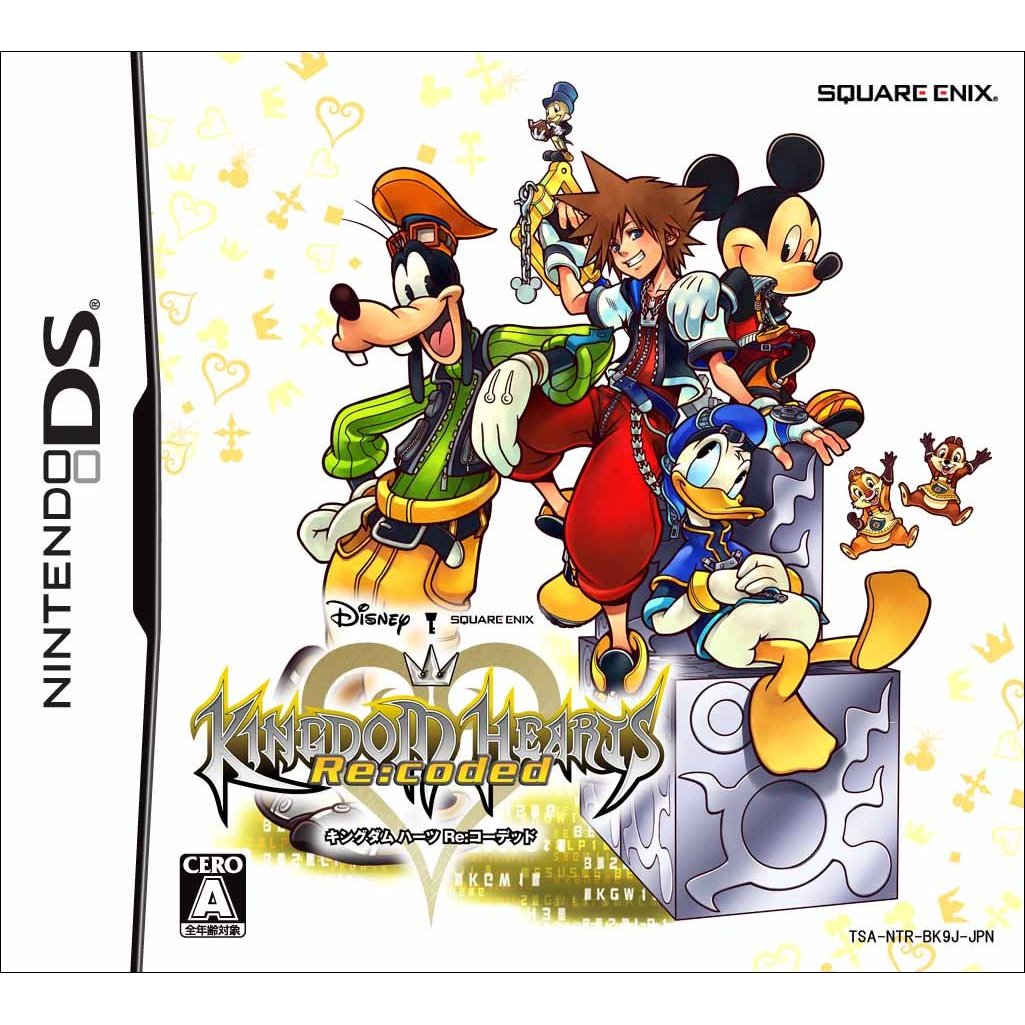
Kingdom Hearts Re:Coded boxartKingdom Hearts is undoubtedly one of Square Enix’s most beloved franchises despite the fact that the series hasn’t had a release on a major console since 2005. If I have to count Re: Chain of Memories, then it was 2008. Since KH2’s release, Kingdom Hearts has only been found on three portable games: 358/2 Days, Birth by Sleep, and now, Re:Coded. Re:Coded is actually a conglomeration of a set of episodes of phone-only games from Japan, which started in 2005 not long after KH2’s release and only finished shortly after the release of BBS. As one might expect, Re:Coded plays like a bunch of ported phone games–which is as great as it sounds–and the story plays out like the writers were writing it off the cuff–which they probably were.

For those who are just dying to replay the first Kingdom Hearts game with a bunch of twists in game mechanics, then you will love everything about the gameplay, especially if you’re a fan of retro games. Without getting into the story too much, the basic premise is that Jiminy’s Journal has been riddled with bugs and it’s up to King Mickey and the gang to debug the journal and uncover the mystery as to why the journal is completely blank for the Chain of Memories sequences. Since the CoM portions are blank, the entries from the first game will have to be fixed. So yes, get ready to revisit most of the worlds Sora visited in both the first Kingdom Hearts and  CoM.

Players do control Sora yet again–although this time he’s a virtual version (seriously, don’t ask)–and he does pretty much what he’s always done: beat up Heartless. This time though, he also has to clear all of the bug blox littered in the worlds and eliminate the sources of the bugs in each world. The sources are sometimes boss fights and sometimes they are extra levels within the world. Sora has the same arsenal of attacks, magic, and items and accessories as he usually has, although this time around, accessing them and selecting them comes straight from the user manual of BBS. Another noticeable difference is how Sora levels up, which is through his virtual motherboard complete with data chips, and this format should be very familiar to anyone who has played either Final Fantasy X or Final Fantasy XIII.

Instead of consisting of straight up action like Sora’s other games, Re:Coded offers a few throwbacks to gameplay of older, 2D games. For some boss fights, Sora will fight in a 2D side-scroller like one would find in MegaMan. At other times, Sora will have to traverse a 2D arena of platforming to get to the next world. In the Olympus Coliseum, since Sora can recruit Cloud into his party, all battles are fought via turn-based play–which made me laugh really hard. Even though I’m not a fan of 2D retro mechanics or traditional turn-based play, incorporating these here in this game about data was actually fun and refreshing from the typical KH gameplay. If I’m going to have to fight all the same bosses from the first game, might as well make the battles more interesting.

One more note: beware of boss fights. Since this is a collection of games, be prepared to sit through 3-5 boss fights in a row with no save points at various points in the game. I have to assume that these were how the episodes ended, but it didn’t make them any more bearable.

The story, something which is usually the franchise’s strong point, is possibly the weakest of the series, if not tied with 358/2 Days. The fact that Mickey created a virtual Sora to debug the journal nabbed an instant eye-roll, and the fact that the developers thought to include Maleficent and Pete at all also earned an annoyed sigh. At first it seemed like maybe they were going to explain what happened to the duo at the end of KH2, but then that was never addressed. They decided that they wanted to rule the virtual world of the journal, which really made little sense. Riku’s inclusion was also very unnecessary, but at the same time, he had to be there for proper fanservice. I just think they could have brought him in a better way than making him be Sora’s embodiment for the Journal’s heart.

As the story continued, the plot points tying it to the other games became weaker and weaker. I don’t want to spoil what happened, but basically, the ending to Re:Coded explains what was in the message in the bottle that King Mickey sent to Sora at the end of KH2. What was in that message could all be explained by playing the last two episodes of the game. The first few had little to nothing to do with the ending of the game. Somewhere along the line of writing the episodes, the developers decided to turn Re:Coded into a core game, so the game shifted toward the plotlines of CoM and BBS. The shift is very obvious when it occurs, which really gives the player the feeling that the writing of the episodes was done on the fly.

Can I recommend this game to others? Only if you’re a die-hard KH fan. If you’ve never played any of the games, do not pick up this one. In fact, I wouldn’t pick it up unless you’ve played all of the others, because otherwise the ending will make zero sense to you. In addition, you really don’t need to play this game to know what’s going on in the story. Sure, I learned what Mickey told Sora, but I would have found that out anyway at the start of Kingdom Hearts 3.

Hopefully this is the last of the un-numbered KH games so we can move on to what should be the final piece in Sora and Roxas’ story. If you don’t understand what I mean by that, then go play Birth by Sleep.

SGR Rating: 3/5

Filed Under: Mini-Reviews

Dead Space 2 Strategy Guide Review

February 22, 2011 By Eric Frederiksen Leave a Comment

Dead Space 2 Strategy GuideAuthor: Michael Knight
Publishers: Prima Games
Editions Available: Paperback and Collector’s Edition
Acquired by Publisher

Strategy Guide Review Policy:

My goal for these strategy guide reviews is not to discuss whether one needs the guide to complete the game. Every gamer has different strengths and skills, and one may need every bit of a guide, another may need to look up information for quick assistance once, and another may laugh at the idea of ever using a guide, even the online freebies. My goal is to determine whether the guide is 1) helpful in the first place, 2) does it encompass gamers who need hand-holding as well as those who need a quick reference and 3) how much information does it really have.

Review:

Dead Space 2 isn’t exactly a labyrinth, nor is it a massive open world; players don’t spend much time trying to figure out where to go. The primary conceit of Dead Space is about survival, and a good guide will address that at every turn. All the other stuff is just gravy on top.

So what about Prima’s Dead Space 2 guide? Will it help you survive your journey through the Sprawl with your limbs and your sanity intact? [Read more…]

Filed Under: Strategy Guide Reviews

  • « Previous Page
  • 1
  • …
  • 47
  • 48
  • 49
  • 50
  • 51
  • …
  • 57
  • Next Page »

Follow us!

Subscribe!

Upcoming Strategy Guides

 Nothing here. Come back later. 😢

Latest Strategy Guide Reviews

The Walkthrough by Doug Walsh Review

Red Dead Redemption 2 Strategy Guide Review

Mega Man 11 Strategy Guide Review

God of War Strategy Guide Review

Far Cry 5 Strategy Guide Review

Friends of SGR

  • BradyGames
  • Dan Birlew – Guide Writer
  • Doug Walsh – Guide Writer
  • Future Press
  • Game Enthus
  • GameWires.com
  • Piggyback
  • Press the Buttons
  • Prima Games
  • Racing Games

Top Posts & Pages

  • Thursday Gaming Diary: Host Switching
  • Monday Gaming Diary: Keeping the LEGO Marvel's Avengers in Focus
  • Monday Gaming Diary: Getting Reacquainted with Handhelds
  • The Corner of Randomness: Bad Embargo Timing
  • Medal of Honor Warfighter Strategy Guide Review

Copyright © 2026 · Web crafted by Warkhammer

Loading Comments...