• Home
  • About Us
  • Podcast
  • Strategy Guide Wit
  • Contact

Strategy Guide Reviews

A Strategy Guide for your Strategy Guides

  • Reviews
    • Strategy Guide Reviews
    • Video Game Reviews
    • Mini-Reviews
  • Features
    • Interviews
  • News
  • Unboxing Strategy Guides
  • Columns
    • Gaming Diary
    • Corner of Randomness
  • Videos

Unfinished Swan Mini-Review

January 15, 2013 By Keri Honea Leave a Comment

I bought and downloaded Unfinished Swan back when it originally released after podcasting cohort Blake went on and on and on about damn great it was. He said if I liked games like Journey and Flower, I would definitely like Unfinished Swan. Well, I hadn’t played Journey at the time, but I really liked how unique Flower was, so hey, I’ll give it a whirl. And then it sat in my PSN downloads for months.

Right before Christmas, I finally played it. It started out really promising, but by about halfway through, I was long ready for the game to be over.
swan_village

Unfinished Swan is about a young orphan whose mother never completed any of the paintings she started. When she died, he was only allowed to take one of her paintings to the orphanage (which instantly triggered all of these problems with probate code and family law and inheritance, but that’s besides the point), and he chose the painting of a swan she of course did not finish. In the middle of the night, the boy woke up to find that the swan had disappeared, and he went on a journey to go find where the swan ran off to. Along the way, he learns of his mother’s past, the swan’s past, and other stuff that was not entirely surprising by the end of the tale.

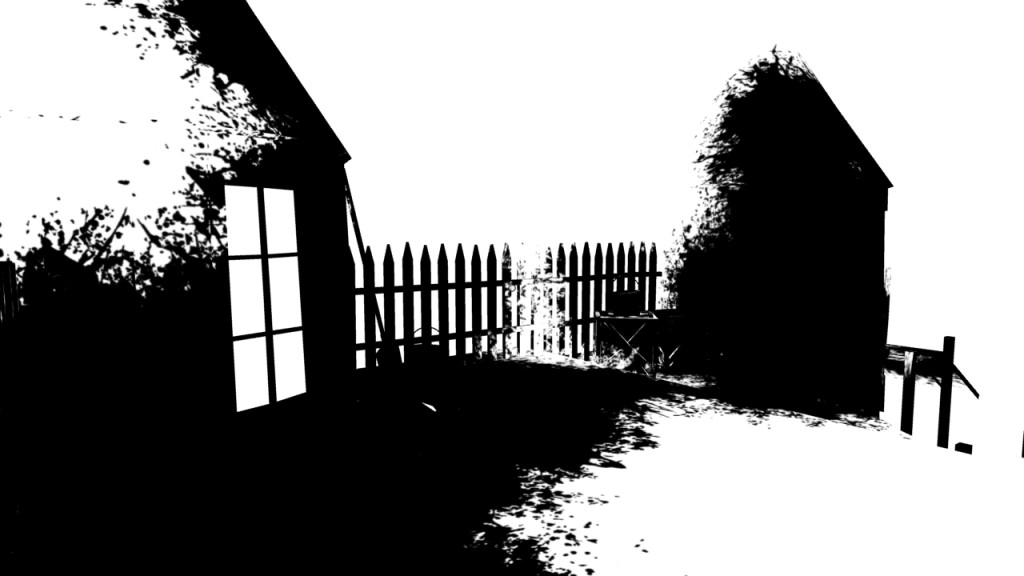
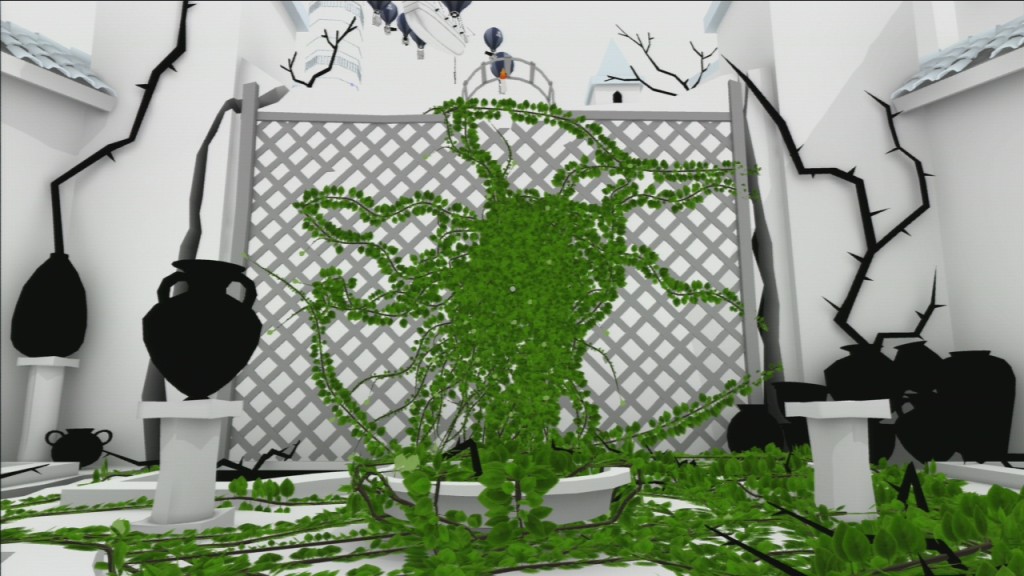
Obviously, with a game like Unfinished Swan, the story isn’t the forte. It’s all about the unique gameplay. The game essentially has four levels, each requiring a different method of playing. For starters, the first level is completely white. It’s literally blinding, it’s so white. The only way you can find your way–other than looking for the swan’s golden footprints–is to throw black paint on the white canvas. The black paint splashes on actual objects that are in the white room, that you couldn’t see since they’re all the same color. You don’t want to go too crazy with the black paint, though, or everything will turn solid black as it was solid white. So it’s all about tossing enough black paint around to see depth, shapes, and how the area really looks. In the next level, you no longer have the black paint; you now throw blobs of water in an effort to attract vines to grow up walls, across ravines, through pipes, etc. You then climb these vines.
The_Unfinished_Swan_-Wand

It sounds really intriguing and different, right? Well, it is, at first. However, the second level went way, way too long. I was really bored and ready for it to be over before I finished the second level. I had stopped hunting for the hidden collectibles at this point as well, because I just wanted it to be over. And then when the third level arrived, pitching me in a somewhat scary scenario where I had to avoid the dark as long as possible or die from most likely a horrific spider monster…you all know what a pansy I am, so I hated this part with a passion. I didn’t even try to look for collectibles here, I just wanted to survive and be done.

At least the last two levels were extremely short, so I was able to finish the game in about three hours.

While I’m glad I got to experience Unfinished Swan, if I had to do it over again, I wouldn’t have paid the full $15. Not that I will do it over again; all those balloons will stay uncollected, thank you very much.
Filed Under: Mini-Reviews

PlayStation All-Stars: Battle Royale Strategy Guide Review

December 20, 2012 By Chris Nitz 3 Comments

PlayStation All-Stars Battle Royale strategy guide reviewI sure have reviewed a mess of fighting games this year, and I am ending it with a brand new entry into the genre. PlayStation All-Stars: Battle Royale is an ambitious game in that it combines some of my favorite PlayStation icons, throws them into an arena where only one may survive, and then lets me fight it out ala Smash Bros style. Boy was I glad to have Prima‘s PlayStation All-Stars: Battle Royale strategy guide by my side for this jaunt into unfamiliar territory.
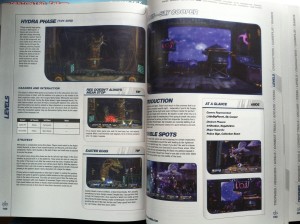
Like all good fighting game strategy guides, Prima started with a look at the game mechanics. Now what threw me for a loop is the fact that this is the first guide to include an actual Vita button scheme breakdown. I would also normally recommend that veterans skim this portion of the guide while novices invest some time reading every detail. However, with this being a totally new game, I found it to be extremely useful. It made walking into the arena that much more bearable as I was not futzing around trying to learn how this fighter worked, how the UI presented info, or how combo strings worked. So spend some time here, as there is a good amount of info that will aid any brawler.

Level breakdowns…OMG!

After readers wrap their head around how a ring-out works or how the nudge mechanics alter your movement, it is time to pick that favorite character or three and read up on their techniques, strengths, and weaknesses. The authors do a nice job of going into great detail for each playable character in this game. What I enjoyed is that it is not all charts and move listings, but rather some text allowing readers to figure out how to incorporate a particular move or combo into their fighting toolbox. Seriously, spending some time studying this portion while utilizing the training room made life so much easier.

Now we get to what is probably my favorite section of this guide: the levels chapter. This caught me by surprise, as I have not had a chance to see something like this in other fighting game guides. Things like how a stage changes over the course of battle, trouble spots, Easter eggs, and strategies all get their moment in the sun here. It not only helps players learn the battlegrounds, but it also shows how much effort went into making fun and unique arenas.

From there it is onto the extra pieces that bring this game together, starting with the various items for use. This includes a small detailed section on what an item does, its game of origin, and some stats on why one may want to use an LR-3 Railgun over a Leech Beam.

Following items is a small portion dedicated to getting people through the arcade mode. I found this rather thorough in how to handle each fight, while not being overly preachy. I did rely on the characters portion a bit as well to help me finish this mode with ease.

Completionists will undoubtedly spend a bit of time in the combat trials area. The writers break down what needs to be accomplished in order to succeed in obtaining every rank and bonus. The description is also a key to handling the various trials, but these are no joke so be prepared to get frustrated as no amount of reading can prepare one for the skills necessary.

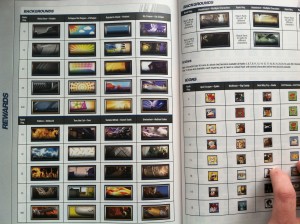
The last pages contain all the rewards, goals, and trophies. Anyone looking at how to obtain a Fat Princess icon or Sly Cooper wallpaper will find these areas invaluable. I do admit, looking through this again, I want to go back and try to score a few trophies and eye candy items. Completion junkies, this is your bread and butter.

So much eye candy to collect!

I guess the downside to this strategy guide lies in the character breakdown section, and honestly this is just a minor nitpick. Each character ends with a nice chunk on advanced strategies. I found these more as a starting point on how this fighter differs from others and some basic techniques I need to nail down before jumping online. As any fighting veteran knows, duking it out online requires a completely new skill-set versus playing AI opponents. In addition, as Sony introduces game balances, these strategies may shift and change throughout the life of this game. Again, this is not the fault of Prima but rather the nature of the beast.

While I have my issues with how PlayStation All-Stars: Battle Royale plays and behaves, this is one of the best fighting strategy guides I have reviewed. The stage section and goodies portions make it worthwhile alone. I must also say, I played the Vita version of the game and this guide required almost no translation to provide its full benefits. This is the missing manual for the game.

SGR Rating 4/5

Author: Josh Richardson, David Brothers, Sam Bishop
Publisher: Prima Games
Editions Available: Paperback
Acquired via Publisher

Filed Under: Strategy Guide Features, Strategy Guide Reviews

Assassin’s Creed III Strategy Guide Review

December 11, 2012 By Keri Honea Leave a Comment

Assassin's Creed III strategy guide reviewAssassin’s Creed III has been one of this year’s most highly anticipated games, and it’s also been one of my most highly anticipated strategy guides. After how well Piggyback bounced from the Assassin’s Creed II strategy guide to the Assassin’s Creed: Brotherhood strategy guide, my expectations were high. The Assassin’s Creed III strategy guide better be on par with Brotherhood, or words would roll in anger. When I learned that the side questing world of AC3 was the largest it’s ever been in AC games, the bar rose even higher. I shouldn’t have worried; the Assassin’s Creed III strategy guide provided everything it needed to, and then went above and beyond what was called for. What’s more, I never could have gotten nearly as far as I did with the game thanks to all of its glorious bugs without the guide holding my hand and constantly letting me know it was going to be okay. Otherwise, the game would have suffered a terminal case of defenestration.
I rarely look in the beginning of strategy guides, where all of the information about how to play is held, as I fully expect the game to teach me as I go. Usually this is the case, but as I recently lamented, sometimes it is not. With AC3, the game did teach, but sometimes the tutorial prompts flashed too quickly, so I wasn’t able to see what buttons or combinations of buttons I needed to press. For example, early on, I missed what I needed to press to prompt Haytham to reload his rifle. Since I could only kill these enemies with a gun, I couldn’t drop my useless weapon and go stabbity-stabbity. I literally pressed every button before I paused the game and checked to see what the strategy guide said. I’ve never been so thankful before for the existence of this how-to-play section, as I quite literally couldn’t have completed this sequence without some reference. It was easy to find, which was perhaps the most important aspect next to having accurate information (which it did).

Assassin's Creed III strategy guide

It’s hard to get lost with this level of detail.

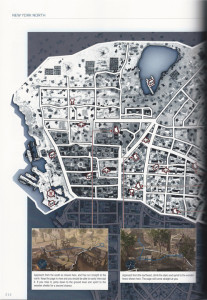
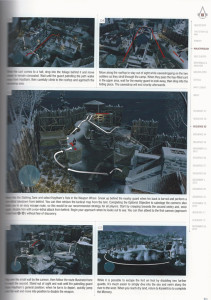
For someone who hates stealth as much as me, the walkthroughs greatly helped me maneuver all areas the first time and with little difficulty. As shown in the scan on the right, the screenshots are large and depict the recommended path for 100% synchronization clearly. Obtaining 100% synchronization (including the optional objectives) takes more skill than a strategy guide can provide, but each time I actually attempted to complete all of the optional objectives, I was able to with ease.

More often than not, the strategy guide’s walkthroughs showed me escape routes I never considered. For instance, using the page on the right, when Haytham has to escape the British fort without being seen and return to Kaniehti:io, the guide suggests that Haytham take a swim. I wouldn’t have thought of that initially for two reasons: 1) the last time I made Haytham take a dip, he died upon impact and 2) it seemed like it would cause an instant desynchronization. Also, it was so foggy, it was hard to see that there was water below instead of a rocky death.

Assassin's Creed III strategy guide

Only excuse to not find every collectible now is laziness.

Unlike previous Assassin’s Creed games, AC3’s main storyline is rather short. The quantity of side quests grossly makes up for the story’s brevity, however. In fact, I’d say that less than one quarter of the strategy guide is the main walkthrough. The side questing takes up at least one full quarter of the book. Most of the side quests are collectibles, whether it’s an actual collectible (Ben Franklin’s Almanac pages) or a collectible quest (Frontiersman Challenges). As a result, the side questing section is practically filled with maps marking locations for every possible extra quest Connor can complete while in an area.

The large maps with actual collectible markers include screenshots of where the wayward collectible is hiding. For all of the missions, such as the Liberation missions and Naval missions, each set is treated similarly to the main walkthrough. Each mission has its set of screenshots with marked pathways and strategies for completion. It even includes tips for where Connor should be equipment-wise and story-wise for easier navigation and higher success rate.

What really makes the Assassin’s Creed III strategy guide shine are the Reference & Analysis and the Extras sections, of which the AC guides in general have been stellar. The Reference & Analysis section contains detailed appendices (and an index!) of everything you can think of to find, collect, kill, etc. in the game, which is a must for those who want to skin every animal and earn every Achievement/Trophy. The strategy guide even includes tips for how to earn every Achievement/Trophy instead of simply listing them, which earns double brownie points.

The Extras section includes a detailed analysis of the story, speculation of what happened and what is to come from Piggyback, and a detailed comparison of history vs. game story. I love this last part the most, as I love breaking down fact from fiction in historical movies as it is.

The world of Assassin’s Creed III is massive, to say the least, and I can’t imagine tackling something this big without some guidance. As someone who gets easily overwhelmed with large worlds (hence why I have yet to really play Skyrim), the Assassin’s Creed III strategy guide was the perfect compass and anchor for me. Not to mention, it also kept me sane during the buggy gameplay I encountered. If you absolutely, positively want to do everything AC3 has to offer, the Assassin’s Creed III strategy guide is the best friend you’re going to have.

SGR Rating: 5/5

Author: James Price
Publisher: Piggyback
Editions available: Paperback and Collector’s Edition
Acquired via Publisher

Filed Under: Strategy Guide Reviews

Paper Mario: Sticker Star Strategy Guide Review

December 4, 2012 By Keri Honea 1 Comment

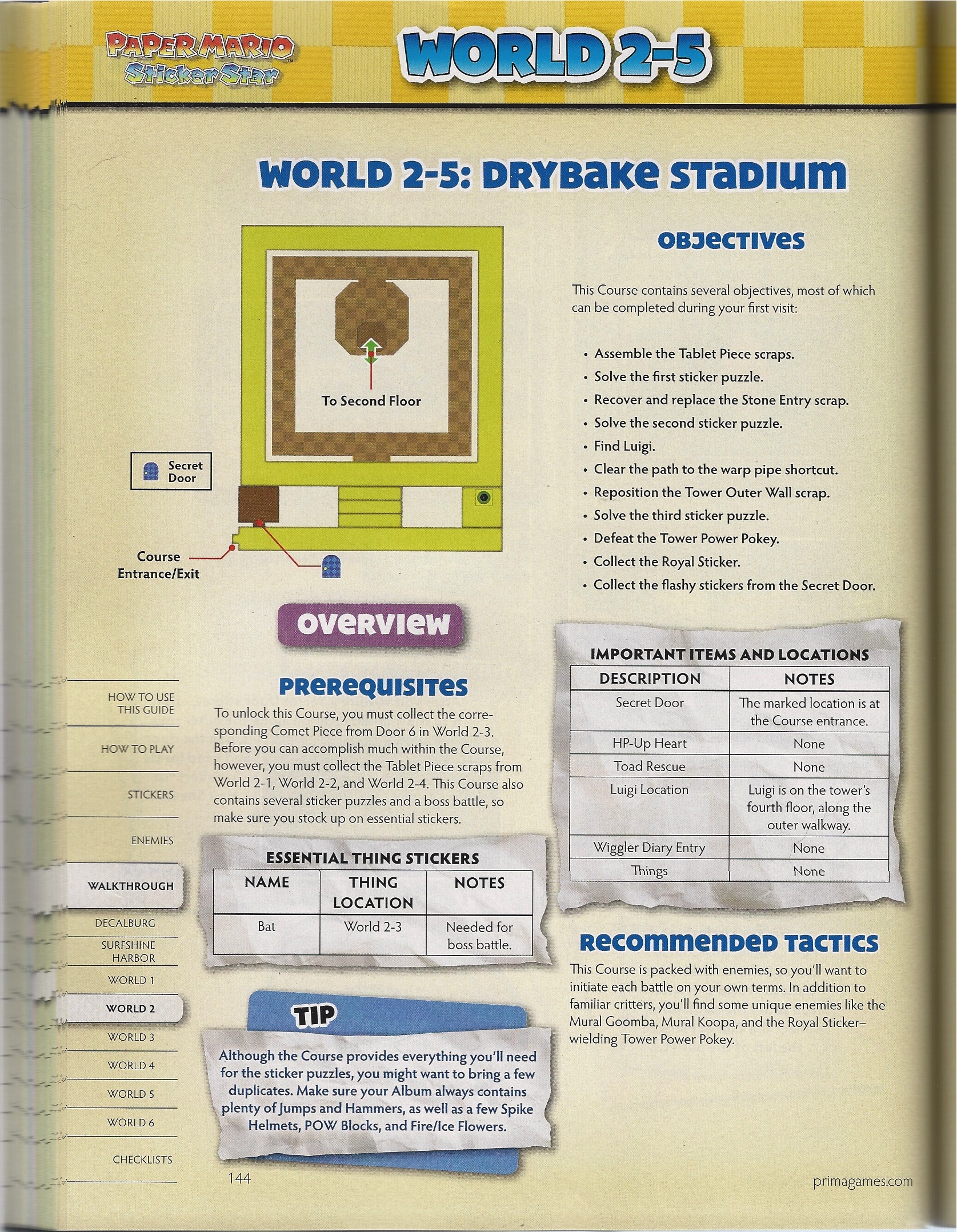
Paper Mario Sticker Star strategy guide reviewI haven’t really played a Mario game since Super Mario Bros. 3 for the NES. I played Paper Mario: The Thousand Year Door for maybe thirty minutes once, but that hardly counts. I liked what little I played of that GameCube game, and that’s the only reason why I bothered giving Paper Mario: Sticker Star a chance. Since it had been so long since I’ve touched a Mario game, I knew I would need the Paper Mario: Sticker Star strategy guide to hold my hand, as I was sure not playing a Mario game for about twenty years (I’m going to go cry in a corner now) would be more of a hindrance than a help. Nintendo is well known for building upon each game over the franchise’s lifetime (If you don’t believe me, go look at the Legend of Zelda series), so surely there were several elements they wouldn’t teach the player because it is assumed the player is already in the know. I was absolutely right about this assumption, and if it wasn’t for the strategy guide, I would have most likely rage quit the game before finishing the first world. As for the rest of the strategy guide, it nailed everything players will have to do to prepare for each level, complete all collectible side quests, and to beat each boss the first try.  I couldn’t have asked for a more perfect strategy guide for my foray back into the world of Mario.

As I previously mentioned, the game really does not provide a tutorial in how to play. There is kind of a tutorial with the turn-based combat, how to initiate battle, how to activate the battle spinner, how to peel stickers, sort your sticker album, etc. However, the game does not teach players how to successfully perform attacks in battle. Those who are familiar with traditional JRPG turn-based battle know that all you have to do is select your attack and watch what happens. In PMSS, players have to interact with the attacks to make them more successful. For example, if you use a Jump sticker, you must continually press the jump button just before Mario lands on the enemy’s head to continue the jump attack through completion. Otherwise, Mario will only jump once and move on. With hammer attacks, players have to press the A button at just the right moment to trigger a powerful hammer swing, or the hammer will slide off the handle and Mario will only smack the Goomba with the stick. The game goes over none of this, as I believe it assumes players already know this from playing other Paper Mario games. After watching my hammer become effectively useless over and over and over, I finally resorted to reading the “How to Play” section in the strategy guide. Lo and behold, I was doing it wrong, and oh hey, look at all these other things I should be doing to help out Mario live longer in battle. To quote another Nintendo game, grumble grumble.

Paper Mario: Sticker Star strategy guide

Can’t ask for better preparation than this.

In addition to interactive turn-based play, PMSS really calls on some creative thinking to fully complete some levels, meaning finding all of the Things or opening all potential pathways. For example, to find the Bowling Trophy Thing, you first have to find a Bowling Ball Thing in one level, remember that there is a bowling alley-looking area in one world several levels back, make a Bowling Ball Sticker, release it in this area, and then go rummage back through another secret area in the level to collect the Trophy Thing. Who thinks of this? What’s more, who thinks of retraversing previously visited levels this much? I’m used to side quests triggering such additional exploration, but this requires simply just going back over the level for the heck of it.

The same creativity is pretty much required when battling bosses. Certain Thing Stickers will make Mario’s life ten times easier when fighting bosses, and sometimes it’s obvious what is needed and sometimes it’s not. For example, when Mario found the Fish Hook Thing, it was obvious that I would need this against some giant fish, which was true when battling the Giant Cheep Cheep. However, I never would have thought to bring the Baseball Bat Sticker to the boss fight against the Tower Power Pokey in Drybake Stadium. Thanks to the preparation page in the beginning of each level in the guide, I came to all levels with my Sticker Album fully stocked with everything I would possibly need.

This preparation page also gives players a heads up on all side quest items available in each level, and lets players know if these items can be found in the first visit or subsequent visits, which includes Things, Wiggler Diary Entries, Luigi Locations, bullied Toads, and HP-Up Hearts. All walkthroughs for subsequent visits for the levels are at the end of the level’s main walkthrough. There is no excuse for missing anything with this strategy guide at your side, and that includes completing the monstrous Sticker Museum side quest.

The Paper Mario: Sticker Star strategy guide was a saving grace for this Mario novice. The fact that it’s one of the most organized and efficient strategy guides I have ever come across definitely made life in the Mushroom Kingdom even easier to bear. I was hoping to come through the game as unscarred as possible, and I came out of it a completionist. I can’t give higher praise than that.

SGR Rating: 5/5

Author: Nick von Esmarch
Publisher: Prima Games
Editions Available: Paperback
Acquired via Publisher

Filed Under: Strategy Guide Reviews

Halo 4 Mini-Review

November 28, 2012 By Keri Honea 1 Comment

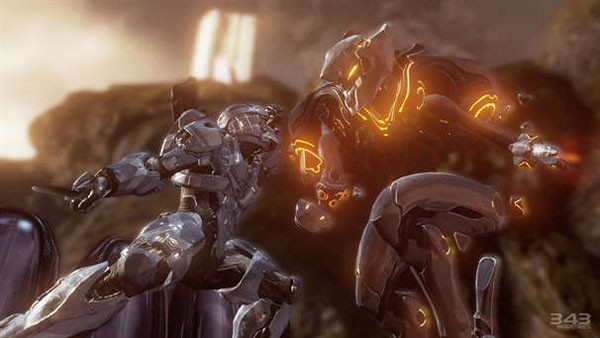
Yeah, Halo 4 came out nearly a month ago, there have been several reviews about it even before it released, blah blah blah. I haven’t said my piece about it, and I ended up leaving Gaming Angels before I could write a “proper” review, so sit down and bear with me. Or go read something else. (No, please stay…what I have to say is mind-blowing, I promise.)

I haven’t had the OHMYGODHALO4INEEDTHISGAMENOWIVEMISSEDHALOSOMUCH like so many other fans of the Halo series have had. As I’ve said countless times, I got into the series late, and I didn’t play a single Halo game until Halo Combat Evolved Anniversary released this time last year. I’ve been nearly a rabid fangirl ever since. Podcast cohort and occasional SGR writer Blake Grundman was so delighted that I found some love for his favorite game series that he gave me Halo 2, 3, and ODST for Christmas last year. This year, I have played Halo 2, Halo 3, Halo: Reach, and parts of Halo 3: ODST. So when Halo 4 came into being, I didn’t exactly have this sense of longing to play another Halo game. Halo 4 is my fifth Halo game to play this year, in fact. So in many ways, this kind of tarnished my experience, because the gameplay rang of “here we go again.”

I simply felt like I had done all of this before, and in many ways I had, rather recently. This time, however, there was no Flood (THANK GOD), which was instead replaced with the Prometheans, who were often so difficult, I found myself wondering if the Flood really was so bad (answer is yes, they were).

This in no way means that I did not like Halo 4. Quite the contrary, I loved Halo 4. I loved how it fit in with the Halo novels I am reading, the story kept me interested, and well, as much as the gameplay felt old hat to me, it was still a ton of fun. In fact, I want to form a team of four to play the game again on Legendary, as soon as I find some reasonable time to do so as well as a willing and committed party. Even the Spartan Ops co-op missions are so much fun, I’ve told several friends that I would play those episodes again with them if they needed a partner.

Also, again, despite my personal feelings of repetitiveness, I could honestly find no flaws to the game. Nothing felt padded, I didn’t notice any glitches, no plot holes were readily apparent, and the game itself looks amazing. Holy cow it looks amazing, almost Uncharted 2 levels of amazing, and the visual quality never dropped between cut scenes and battles.

If I were to pick out flaws, it would be with some of the new weaponry 343 introduced along with the Prometheans, but that’s just because I didn’t like most of the new weapons. At the same time, it’s not like I’ve loved all of the human and Covenant weapons either. I do really want to know why we’re just now getting a human weapon as awesome as the Sticky Detonator. Do you have any idea how great that would have been against Hunters four or even five games ago?

Most likely, you’ve already picked up Halo 4 and played it at least once by the time I’m writing this, especially if you were already a fan of Halo. If you’ve never played a Halo game before, I have a hard time recommending that you play this one because you may be lost when it comes to the story. But if story means very little to you and you just like a good first-person shooter that lets you kill lots of aliens with weapons of mass destruction, then Halo 4 will not disappoint. Halo 4 is not my game of the year (old hat feelings really got in the way of this), but it’s definitely in the top 5, and it’s with goo-oood company.

Filed Under: Mini-Reviews

  • « Previous Page
  • 1
  • …
  • 29
  • 30
  • 31
  • 32
  • 33
  • …
  • 57
  • Next Page »

Follow us!

Subscribe!

Upcoming Strategy Guides

 Nothing here. Come back later. 😢

Latest Strategy Guide Reviews

The Walkthrough by Doug Walsh Review

Red Dead Redemption 2 Strategy Guide Review

Mega Man 11 Strategy Guide Review

God of War Strategy Guide Review

Far Cry 5 Strategy Guide Review

Friends of SGR

  • BradyGames
  • Dan Birlew – Guide Writer
  • Doug Walsh – Guide Writer
  • Future Press
  • Game Enthus
  • GameWires.com
  • Piggyback
  • Press the Buttons
  • Prima Games
  • Racing Games

Top Posts & Pages

  • Monday Gaming Diary: Keeping the LEGO Marvel's Avengers in Focus
  • Weekly Poll: How Many Video Games Do You Play at Once? Redux
  • KH 358 blah blah who cares
  • SGR Coffee Break 45: Mindlessly Fun Games
  • Prima Games Podcast

Copyright © 2026 · Web crafted by Warkhammer

Loading Comments...